Himachal Law Journal: Service Law, Arbitration, Criminal Justice and Public Interest
Himachal Law Journal masthead beside the snow-covered Tudor-style Himachal Pradesh High Court building.

A signed blank cheque may still attract a statutory presumption, but doubtful identification cannot sustain a criminal conviction by repetition alone. The same need for legal precision runs through pension commutation, delayed promotion, contract service and the consequences of an operative conviction. On the civil side, the Himachal High Court examined revenue records and recoveries following a re-auction. Nationally, arbitration interest, investigation deadlines and insurance liability received close scrutiny. These cases turn on distinctions that may seem small until they decide an outcome: between a presumption and proof, between an earned benefit and an assumed entitlement, and between a statutory power and its limits.

Continue reading “Himachal Law Journal: Service Law, Arbitration, Criminal Justice and Public Interest” →

Himachal Law Journal: Service Rights, Pension and Civil Procedure

Himachal Law Journal masthead beside the snow-covered Tudor-style Himachal Pradesh High Court building.

How many years of service does a rule see? The Himachal High Court considered whether years spent on contract count after regularisation, whether maternity leave interrupts qualifying service, and whether a retiring employee may still claim an increment. The answers emerge not from labels but from the rules that give those years legal significance. Other cases ask whether an acquittal displaces disciplinary findings, when pleadings may be amended after trial begins, and how recruitment eligibility and criminal evidence must be assessed. From the service book to the witness box, this edition examines the difference between a convenient description and an enforceable legal right.

Continue reading “Himachal Law Journal: Service Rights, Pension and Civil Procedure” →

Who Guards the Guards? A Citizen, a Forest and the Ward Office That Put Shimla’s Watchdogs on Trial

There are public interest cases that begin with petitions, affidavits and carefully numbered grounds. This one began with a citizen who looked at what was happening below Sanjauli and decided that somebody ought to know.

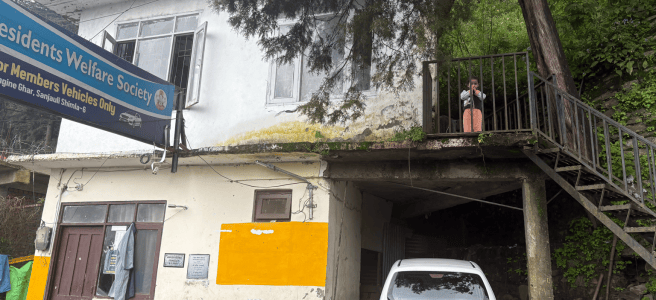
The complaint concerned Bangala Colony in Shimla. The allegations were hardly subtle. Construction was said to be taking place on forest and public land. Green areas were being cemented. Deodar trees were allegedly being damaged. Pathways were being obstructed. Garbage and wastewater had become part of the grievance. Structures, the complaint said, were steadily occupying land that was not meant to be privately built upon.

The citizen first approached the local administration. When an effective answer did not follow, the grievance reached the Himachal Pradesh High Court. The sender chose anonymity, citing apprehensions about personal safety.

The Court did not treat anonymity as a substitute for evidence. It did something more useful. It sent someone to look.

Continue reading “Who Guards the Guards? A Citizen, a Forest and the Ward Office That Put Shimla’s Watchdogs on Trial” →

Himachal Law Journal: Investigation, Compulsory Retirement and Service Law

Himachal Law Journal masthead beside the snow-covered Tudor-style Himachal Pradesh High Court building.

When is a case closed enough to resist further investigation, and when is a personnel file complete enough to justify compulsory retirement? The Himachal High Court examined both questions alongside securities fraud inquiries and disputes over partnership property. In service law, the issues were no less pointed: two decades of perennial work on an honorarium, a probationary termination carrying stigma, and recruitment requirements narrowed by a departmental clarification. Criminal procedure raised further limits on summoning and malicious prosecution. An official file, however thick, does not itself answer whether the law has been followed.

Continue reading “Himachal Law Journal: Investigation, Compulsory Retirement and Service Law” →

Himachal Law Digest | 8 September 2026

Himachal Law Journal masthead beside the snow-covered Tudor-style Himachal Pradesh High Court building.

A service record can settle a career-long question, but it cannot be rewritten whenever an employee wishes. The Himachal High Court examined the limits on changing a recorded date of birth and the standing of one employee to challenge another’s confidential-report grading. In a different setting, the Court considered maternity leave for a commissioning mother after surrogacy. These decisions may occupy separate corners of service law, yet each turns on the same discipline: identifying whose right is at stake, what the governing rule permits and whether administrative labels can decide the answer.

Continue reading “Himachal Law Digest | 8 September 2026” →

Himachal Law Digest | 7 September 2026

Himachal Law Journal masthead beside the snow-covered Tudor-style Himachal Pradesh High Court building.

A cheque may bear a signature and still fail to support a complaint filed too early. Conversely, calling a signed cheque ‘security’ or ‘blank’ does not, by itself, make the statutory presumption disappear. Two Himachal High Court decisions examine those different stages of liability under the Negotiable Instruments Act. A third considers an insurer’s attempt to avoid responsibility by alleging a fake driving licence. Across these disputes, neither a convenient description nor a bare allegation replaces the proof and procedure the law requires.

Continue reading “Himachal Law Digest | 7 September 2026” →

Himachal Law Journal: Increments, Recruitment Rules and Compassionate Appointment

Himachal Law Journal masthead beside the snow-covered Tudor-style Himachal Pradesh High Court building.

A retirement date, a school certificate and a family’s financial emergency do not sound like companions. Yet each marks the boundary of a claim to public employment benefits. An HRTC conductor sought increments after retirement, a recruitment candidate relied on a diploma despite a mandatory school qualification, and an applicant invoked compassionate appointment after the immediate crisis had passed. Together, the decisions distinguish entitlements earned under the rules from exceptions the rules do not make.

Continue reading “Himachal Law Journal: Increments, Recruitment Rules and Compassionate Appointment” →

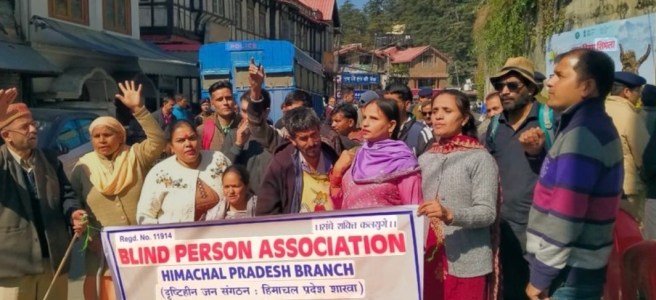
From Protest to Recruitment: How Himachal’s Blind Community Took the Disability Rights Gap to the High Court

Nearly three years of protest, repeated demands over reserved vacancies, an unfinished disability-rights framework, and now a clear judicial direction: take effective steps to fill vacant Class-IV posts for visually impaired persons and issue the necessary advertisement.

Continue reading “From Protest to Recruitment: How Himachal’s Blind Community Took the Disability Rights Gap to the High Court” →

Himachal Law Journal: September

Himachal Law Journal masthead beside the snow-covered Tudor-style Himachal Pradesh High Court building.

Can a promotion produce a cadre post out of thin air? Can execution reopen a dispute already decided? And must the State be permitted to invoke an arbitration clause while withholding dues it admits are payable? Three Himachal rulings answer those questions by examining the source and limits of legal power. The archive widens the inquiry to contractual service seniority, safeguards for desilting the Uhl River and merit in judicial appointments. The lesson is as practical as it is legal: rules are meant to decide disputes, not provide fresh ways to postpone them.

Continue reading “Himachal Law Journal: September” →

Himachal Law Journal: Probationer Termination and Speedy-Trial Bail

Himachal Law Journal masthead beside the snow-covered Tudor-style Himachal Pradesh High Court building.

A probationer may be new to the job, but not to natural justice. An accused may still be awaiting trial, but that does not put the right to a speedy trial on hold. Two Himachal High Court decisions approach fair procedure from opposite ends of the legal system. One examines whether a termination in the guise of probation concealed punishment requiring an inquiry. The other confronts delay when custody threatens to become the very punishment a trial is meant to determine. Different rights, the same insistence: official convenience cannot replace due process.

Continue reading “Himachal Law Journal: Probationer Termination and Speedy-Trial Bail” →

Himachal Law Journal: UGC Rules, Regularisation and Recruitment

Himachal Law Journal masthead beside the snow-covered Tudor-style Himachal Pradesh High Court building.

Can the State set aside UGC requirements when selecting a Vice Chancellor? Can twenty years of perennial work still be described as temporary? And can a departmental clarification quietly amend recruitment rules? In these Himachal High Court decisions, administrative convenience repeatedly meets the inconvenient detail of binding law. The remaining cases ask whether accepting a lower compassionate post defeats further claims, whether compliance with a court order can be reduced to mere reconsideration, and whether an examination scheduling delay can justify demotion. For those whose careers depend on a rule, its wording is often the whole case.

State Cannot Control Vice-Chancellor Selection Contrary to UGC Rules: HP High Court

The Himachal Pradesh High Court has invalidated key provisions governing the appointment of Vice-Chancellors to the State’s two agricultural universities. The Court held that the State could not redesign the selection process in a manner inconsistent with the UGC Regulations, 2018, and clarified that the Governor, when acting as Chancellor, performs an independent statutory function.