The Proposal to Charge Electricity and Water at Commercial Rates for Homestays: A Critical Examination

In a surprising and controversial move, the Himachal Pradesh government recently announced a proposal to impose commercial rates for electricity and water on homestays. This decision was revealed in various news outlets indicating that a proposal to provide electricity and water facilities in the state’s homestays at commercial rates has been placed before the Cabinet Sub-Committee constituted to amend the Home Stay Rules 2024.

For years, homestays have been a lifeline for middle-class and lower-income families, providing a vital source of supplementary income and contributing to the local economy. However, this new policy threatens to undermine the very foundation of homestays, turning what was once an accessible and inclusive form of tourism into a financially burdensome endeavour. The government argues that aligning utility rates with commercial standards is necessary for regulatory consistency and financial sustainability. However, this rationale fails to consider the unique nature of homestays, which operate on a small scale and offer tourists an authentic, home-like experience rather than a commercial service. The proposal raises critical questions about economic inequality, property rights, and the future of sustainable tourism in Himachal Pradesh. In this blog, we will delve into the multifaceted implications of this proposal, examining how it stands to impact local livelihoods, exacerbate economic disparities, and contradict the very principles of the Incredible India scheme.

Continue reading “The Proposal to Charge Electricity and Water at Commercial Rates for Homestays: A Critical Examination” →


Gender Bias in Hindu Succession Act: Examining Inequality in Property Rights

In India, inheritance laws vary significantly based on religious affiliations, with Hindus governed by the Hindu Succession Act, 1956 (HSA). A unique aspect of this Act is its differentiation between the intestate succession rights of males and females. Specifically, the intestate succession of a female Hindu depends on the source from which she acquired the property. This article critiques this aspect of the HSA, arguing that it is discriminatory and unconstitutional, and discusses recent legal developments that may bring about significant change.

Continue reading “Gender Bias in Hindu Succession Act: Examining Inequality in Property Rights” →

State’s Compliance and Waste Management Directives by High Court in Suleman Vs UOI

In a significant decision dated May 9, 2024, the High Court of Himachal Pradesh, presided over by Judges J. Tarlok Singh Chauhan and J. Sushil Kukreja, delivered a comprehensive order addressing multiple matters concerning the compliance with the earlier order, examining the Action taken report of Municipal Corporation Shimla, and issuing directions in furtherance of its March 23 Order for solid waste management. This article deals with the above three aspects of the order in three Parts.

Continue reading “State’s Compliance and Waste Management Directives by High Court in Suleman Vs UOI” →

The Aquatic Arteries of the Himalayas: Judicial intervention to preserve rivers from a grave threat of sewage treatment plants.

Pristine peaks of the Himalayas in Himachal Pradesh are renowned for their breathtaking landscapes and vibrant ecosystems. However, beneath the serene surface, a crisis brews in its veins—the rivers and streams that carve through this mountainous terrain are under siege. Pollution, unchecked and unbridled, threatens not only the rich wildlife that depends on these waters but also the communities for whom these rivers are lifelines. The purity of these waters is integral to the ecological balance and cultural heritage of not only this region but also the rest of the country as the Himalayas provide water to most of the parts of the Indian sub-continent. The water bodies face peril from industrial discharge, inadequate waste management, and faltering sewage treatments.

Continue reading “The Aquatic Arteries of the Himalayas: Judicial intervention to preserve rivers from a grave threat of sewage treatment plants.” →

Himachal Pradesh High Court’s Landmark Order: A Beacon for Waste management Stewardship


Shimla, Himachal Pradesh – In a landmark decision that underscores the judiciary’s commitment to environmental sustainability, the High Court of Himachal Pradesh through Hon’ble Justice Tarlok Singh Chauhan, has issued a comprehensive order, setting a new precedent for waste management and environmental protection in the state. The order, stemming from the case “Suleman vs. Union of India,” encompasses a wide array of directives aimed at enhancing waste management practices, promoting sustainable environmental policies, and ensuring strict compliance with environmental laws.(check earlier directions here https://lawumbrella.org/2023/11/26/high-court-of-himachal-pradesh-orders-stringent-implementation-of-solid-waste-management-laws/)

Continue reading “Himachal Pradesh High Court’s Landmark Order: A Beacon for Waste management Stewardship” →

High Court of Himachal Pradesh Orders Stringent Implementation of Solid Waste Management Laws

Shimla, Himachal Pradesh: In a significant development in the ongoing environmental case of Suleman vs. Union of India 2369 of 2018, the Himachal Pradesh High Court, presided over by Justice Tarlok Singh Chauhan, has taken a decisive step towards addressing the persistent issue of garbage and solid waste management in the state.

In the latest hearing on November 16, 2023, the court expressed concern over the lack of progress due to the disjointed efforts of various stakeholders. In an unprecedented move, the Chief Secretary to the Government of Himachal Pradesh, Mr. Prabodh Saxena, was summoned for a personal appearance. Accompanied by other high-ranking officials, Mr. Saxena assured the court of the state’s commitment to developing a clear roadmap for implementing environmental laws.

Continue reading “High Court of Himachal Pradesh Orders Stringent Implementation of Solid Waste Management Laws” →

Himachal Disaster – Balancing Immediate Action with Sustainable Solutions

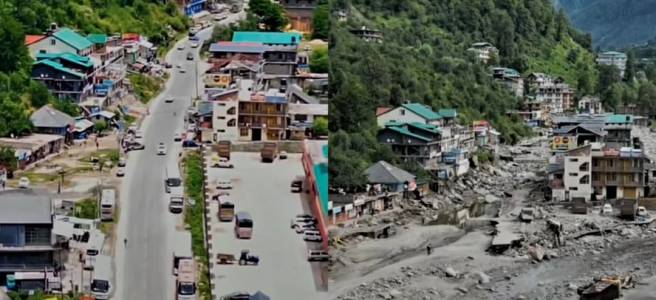
The situation calls for attention in the aftermath of continuous heavy rains and landslides that have resulted in the loss of more than 300 lives during the monsoon season in Himachal Pradesh. The persistent downpours have led to rising groundwater levels, causing the soil beneath human settlements to become saturated and prone to mudslides. Experts have expressed concerns that this could potentially trigger more landslides.

According to official data from the state government, Himachal Pradesh has witnessed 180 landslides and flash floods. The significant increase in rainfall, recorded at 157 percent above the average, stands as the primary driver behind these calamities. The Himalayan terrain, characterized by its soil composition and vegetation, has struggled to absorb excessive rainfall, leading to heightened instances of landslides and soil erosion.

The crisis stems from the following primary causes:

Continue reading “Himachal Disaster – Balancing Immediate Action with Sustainable Solutions” →