A government may recognise a worker’s entitlement to revised pay, pension or gratuity. But can it then leave payment indefinitely to a future decision of the executive? In Madhu Deshta v. State of Himachal Pradesh, the Himachal Pradesh High Court has examined that question through the constitutional protection of property, equality among pensioners and the limits of fiscal discretion.
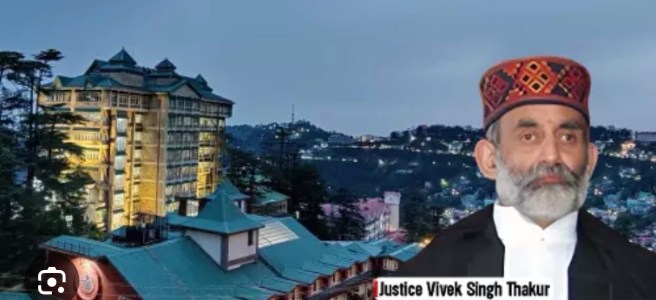
The Division Bench, comprising Justice Vivek Singh Thakur and Justice Ranjan Sharma, delivered its common judgment on 31 October 2026 in CWP No. 8504 of 2025 and connected matters (neutral citation 2026:HHC:47923). The judgment was authored by Justice Ranjan Sharma.
Primary source: Read the original Himachal Pradesh High Court judgment (245 pages). LawUmbrella archival PDF.
The case concerns a distinction fundamental to service law. The Government’s authority to determine when a financial benefit is introduced is not identical to its power to withhold payment after the benefit has accrued under the applicable rules. The High Court found that the impugned provisions had given the State an open-ended discretion to postpone recognised monetary entitlements. It read down the offending part of Rule 13 of the Revised Pay Rules, quashed provisions affecting revised retirement benefits, and directed payment by fixed dates, with interest for the covered litigants.
From pay revision to unpaid arrears
Madhu Deshta served as a Lecturer in Political Science in the School Education Department of Himachal Pradesh. She retired on 31 January 2021, having received pension and gratuity on the basis of unrevised pay. On 3 January 2022, the State notified the Himachal Pradesh Civil Services (Revised Pay) Rules, 2022, giving revised pay with effect from 1 January 2016. For employees who had retired in the intervening period, the revision also had consequences for pension and related retirement benefits.
The Office Memorandum of 25 February 2022 provided for revised pension, gratuity, commuted pension and family pension. Yet Rule 13 of the pay rules said that pay arrears would be released in such manner and at such time as approved by the Government. Paragraph 10 of the Office Memorandum similarly left the release of retirement arrears to a future governmental decision.
The State then released portions of the arrears through successive instructions. On 17 September 2022, it authorised limited releases of pay arrears and a partial release of certain pensionary arrears. Subsequent instructions differentiated between pensioners by age, including more favourable treatment of retirees aged 75 years and above and, later, other older pensioner groups. Madhu Deshta challenged the deferral provisions and sought payment of outstanding benefits with interest. The Court selected her petition as the lead matter for the common questions arising in many connected cases.
Judgment: paragraphs 2–6, especially the factual account in paragraph 3.
The State’s defence: a substantial fiscal liability
The State’s position was that the arrears could not be discharged in a single payment without considerable fiscal difficulty. The Finance Department placed before the Court an estimated arrears liability of ₹16,600 crore, stating that ₹8,045 crore had been released or adjusted and approximately ₹8,555 crore remained outstanding at the stage described in its affidavit. These were the figures reported to the Court, not a fresh calculation of the liability on the judgment date.
The State also pointed to committed expenditure on salaries and pensions, fiscal constraints, and the consequences of Revenue Deficit Grant arrangements. It defended staggered payments and priority for certain classes of retirees as measures responding to those constraints. These submissions brought the familiar principle of judicial restraint in financial policy into direct contact with the enforcement of statutory monetary entitlements.
The Court did not hold that fiscal considerations are immaterial whenever a government frames a pay policy. It distinguished the decision to introduce or structure a benefit from the subsequent obligation to pay what the governing rules had already conferred. The State had itself granted revised pay from 1 January 2016. The dispute was whether the financial difficulties subsequently invoked could sustain an indefinite power to defer the resulting dues. On the facts and rules before it, the Court held that they could not.
Rule 13: when discretion defeats the right
Rule 13 was the central challenge. While the Revised Pay Rules recognised an entitlement to revised pay, the disputed language entrusted the timing and manner of releasing arrears to future government approval. Employees could therefore possess a recognised monetary right without a definite date by which the corresponding sum would be paid.
Administrative discretion is not, by itself, unlawful. The question is whether the discretion is guided by the governing legal framework and whether its exercise remains compatible with the rights it is intended to implement. The High Court found that the expressions in Rule 13 gave the authorities an unfettered and unguided power capable of making the rest of the revision framework ineffective.
The Court therefore read down the offending expressions and declared them inoperative. It did not strike down the Revised Pay Rules, 2022, as a whole. That distinction matters: the judgment removes the open-ended withholding mechanism while preserving the statutory framework under which the financial entitlement accrued.
“neither a bounty nor a charity but salary earned is a legal entitlement”
High Court of Himachal Pradesh, Madhu Deshta
Judgment: paragraph 11 and operative direction 28(ii), pages 239–240.
Article 300-A: accrued service benefits as property
Article 300-A of the Constitution protects against deprivation of property except by authority of law. The Court treated accrued salary and pensionary amounts as protected monetary entitlements, rather than discretionary grants. In doing so, it discussed the Supreme Court’s pension jurisprudence, including Deokinandan Prasad v. State of Bihar, (1971) 2 SCC 330, D.S. Nakara v. Union of India, (1983) 1 SCC 305, and State of Jharkhand v. Jitendra Kumar Srivastava, (2013) 12 SCC 210.
The importance of these authorities is not that every claim labelled as an arrear automatically succeeds. It is that where a monetary benefit has accrued under the applicable legal framework, its character is not transformed into a matter of grace merely because the employer is the State. The executive must act under, rather than outside, the rules that confer the benefit.
For that reason, the challenge concerned more than slow processing. The impugned provisions allowed the administration to determine the effective enjoyment of property rights through a discretionary postponement that the Court found unreasonable and constitutionally unsustainable.
Pension, gratuity, commutation and leave encashment
The Court did not treat every retirement benefit as governed by the same statutory provision. It considered the relevant rules separately. Paragraph 10 of the Office Memorandum dated 25 February 2022 deferred payment of revised pension, family pension and gratuity arrears. The Court found this inconsistent with the applicable Central Civil Services (Pension) Rules, 1972, and quashed paragraph 10.
In relation to commuted pension, the Court examined paragraph 8.2 of the same Office Memorandum, which contemplated phased release of revised commutation arrears. In the context of Dr. Jagdev & Others v. State, CWP No. 11716 of 2024, it held that this arrangement was contrary to the applicable Central Civil Services (Commutation of Pension) Rules, 1981, and set aside the offending provision.
The Court also invalidated the withholding or delayed release of admissible revised leave encashment arrears contrary to the applicable Central Civil Services (Leave) Rules, 1972. The analysis extended to admissible revised family pension, recognising the statutory character of the entitlements of eligible family members.
These holdings turn on the hierarchy between statutory service rules and executive implementation instructions. An Office Memorandum cannot defeat the payment right established by the legal rules it is intended to implement.
Judgment: paragraphs 12–18 and directions 28(iii)–(v).
Article 14 and unequal treatment among pensioners
The State’s age-based releases raised a separate equality question. While certain groups of retirees had received a greater share of their revised benefits, other persons covered by the same pay-revision framework continued to await payment. The Court considered whether these distinctions satisfied Article 14.
In particular, it considered All Manipur Pensioners Association v. State of Manipur, (2020) 10 SCC 625, addressing differential treatment within a class of pensioners. The High Court found the impugned pick-and-choose arrangements constitutionally unsustainable in the circumstances of these proceedings.
The decision should not be recast as a universal prohibition upon prioritising vulnerable pensioners. Its holding concerns the particular classifications and payment arrangements adopted here, where the underlying revised benefits had already accrued under the governing framework. A classification still requires an intelligible basis and a rational connection with its lawful purpose.
Judgment: paragraph 19.
Financial difficulty and the limits of policy deference
The State cited authorities requiring restraint in the judicial review of fiscal and policy decisions. The Court examined those submissions, including the distinction between policy choices about the commencement of benefits and the withholding of accrued dues. It referred to State of Rajasthan v. Mahendra Nath Sharma, (2015) 9 SCC 540, while considering the place of financial burden in service-entitlement litigation.
The Court’s answer was specific: the revision had already been adopted with effect from 1 January 2016. Fiscal difficulties could not be invoked through the impugned provisions to postpone the payment of crystallised entitlements indefinitely. That reasoning preserves an important boundary. The judiciary was not substituting its own preferred pay structure; it was examining whether the Government could administer its own statutory promises in a way that deprived beneficiaries of the resulting rights.
Judgment: paragraphs 21–26.
Interest for delayed payment
An employee who receives the principal years late has also lost the use of that money during the intervening period. The Court considered this loss in light of the compensatory function of interest, including the principles discussed in S.K. Dua v. State of Haryana, (2008) 3 SCC 44, and the Supreme Court’s decision in Bihar State Ardh Sarkari Arajpati Karamchari Maha Sangh v. State of Bihar, decided on 28 September 2026.
The Court awarded simple interest at 6% per annum from 1 June 2022 on the admissible amounts covered by its directions, including unpaid amounts due to be released under the judgment. It did not calculate interest from 1 January 2016 merely because the pay revision operated retrospectively from that date. It allowed time following the 2022 notifications for employees to exercise options and for the relevant administrative formalities to be completed, and selected 1 June 2022 as the date of payability for its interest award.
The chosen rate and starting point are therefore the relief granted in these proceedings. They should not be presented as a uniform rate applicable without distinction to every delayed service-payment dispute.
Judgment: paragraph 20 and direction 28(viii).
What the High Court actually directed
The operative part, paragraph 28, is the necessary starting point for applying the judgment. It grants the following substantive relief:
- Revised pay: the offending timing and manner expressions in Rule 13 were read down and declared inoperative.
- Revised pension and gratuity: paragraph 10 of the Office Memorandum dated 25 February 2022 was quashed.
- Commuted pension: the phased-payment provision in paragraph 8.2 of that Office Memorandum was quashed.
- Leave encashment: action delaying or withholding admissible revised leave encashment contrary to statutory rules was set aside.
- Payment: admissible revised pay and retiral arrears were directed to be discharged in two equal instalments, on or before 15 December 2026 and 28 February 2027.
- Interest: 6% per annum from 1 June 2022, as directed in paragraph 28(viii).
- Connected cases: corresponding directions were extended mutatis mutandis to connected proceedings involving the State and relevant Boards and Corporations, subject to admissibility under the applicable rules.
The Court also dismissed LPA No. 557 of 2025 (State of Himachal Pradesh v. Mini Sharma) and the two connected miscellaneous proceedings identified in paragraph 28(x). Six execution petitions were de-tagged for separate listing. Several proceedings that had already been disposed of were also de-tagged; they were not re-decided by the common judgment.
There is an important difference between the State’s impugned mechanism and the Court’s own instalment direction. The former left payment to unrestricted future executive decisions. The latter fixed two definite dates for discharging the arrears. The judgment thus rejects indefinite postponement without requiring an immediate lump-sum release of the entire outstanding liability.
A critical limitation: litigants and non-litigants
Paragraphs 28(xi) and 28(xii) distinguish persons who had pursued legal remedies from employees and retirees who had not filed proceedings. Non-litigants are expressly recognised as entitled to claim the substantive benefits otherwise payable to them. However, the judgment does not extend to them the interest awarded to litigating petitioners in the batch.
This distinction is central to the judgment’s practical effect. It would be inaccurate to say that every government employee or pensioner automatically receives 6% interest under this ruling. Paragraph 20 also addresses employees and retirees who had taken legal recourse through proceedings pending or already decided, and must be read together with the operative directions.
A textual inconsistency remains in paragraph 28(xi): the judgment bears the pronouncement date 31 October 2026, while that paragraph places 30 October 2026 in parentheses when referring to the date of the judgment. The significance of that discrepancy for any filing at the boundary should not be assumed without appropriate clarification from the court record.
The reach of the judgment
The ruling does not require governments to introduce retrospective pay revision in every case. It does not invalidate the entire Revised Pay Rules, 2022, or prohibit all administrative arrangements for scheduled payment. Nor does it confer an identical interest award upon employees who did not litigate.
Its operative force depends upon the existence of an accrued entitlement under the applicable legal framework. For employees of Boards and Corporations, particular care is required to identify the relevant adoption of pay or pension revisions, the rules that govern the employee, the amount admissible and the application of the Court’s directions to the connected proceeding.
The decision is a Division Bench judgment of the Himachal Pradesh High Court. The Supreme Court authorities discussed within it supply the broader constitutional and service-law principles, while the particular relief and implementation schedule arise from the High Court’s order in this case.
Conclusion: a right cannot be left indefinitely unfulfilled
The Madhu Deshta judgment concerns a familiar distance between recognition of a monetary entitlement and its actual receipt. The Government had granted revised pay and consequential retirement benefits, but the disputed provisions allowed payment to be deferred through open-ended executive discretion.
The High Court held that this discretion could not defeat accrued service rights protected by the governing rules and the Constitution. It read down the offending part of Rule 13, quashed the relevant retirement-benefit provisions, prescribed payment deadlines and awarded compensatory interest for the covered litigants.
The decision does not deny the constraints of public finance. It insists that those constraints be addressed within the limits of law. The State may decide to introduce a financial benefit. Once the entitlement has accrued under the rules, however, its payment cannot be left indefinitely to executive discretion.
Case details and original judgment
Case: Madhu Deshta v. State of Himachal Pradesh & Others
Case number: CWP No. 8504 of 2025 and connected matters
Neutral citation: 2026:HHC:47923
Bench: Justice Vivek Singh Thakur and Justice Ranjan Sharma
Judgment by: Justice Ranjan Sharma
Reserved: 1 July 2026
Pronounced: 31 October 2026
Disposition: Lead petition and covered connected writ matters allowed, subject to the specific procedural directions in paragraph 28.
Primary source: Original High Court judgment. Archive: Full judgment PDF hosted by LawUmbrella.
Principal Supreme Court authorities
- Deokinandan Prasad v. State of Bihar, (1971) 2 SCC 330.
- D.S. Nakara v. Union of India, (1983) 1 SCC 305.
- S.K. Dua v. State of Haryana, (2008) 3 SCC 44.
- State of Jharkhand v. Jitendra Kumar Srivastava, (2013) 12 SCC 210.
- State of Rajasthan v. Mahendra Nath Sharma, (2015) 9 SCC 540.
- All Manipur Pensioners Association v. State of Manipur, (2020) 10 SCC 625.
- Bihar State Ardh Sarkari Arajpati Karamchari Maha Sangh v. State of Bihar, judgment dated 28 September 2026.
Related articles
Counting of Contract Service for Seniority and Benefits: An Analysis of the Taj Mohammad Case
Himachal Law Journal: Service Rights, Criminal Justice, Ecology and Supreme Court Developments
Browse the LawUmbrella High Court Cases archive
Follow LawUmbrella
Follow LawUmbrella for considered analysis of Himachal Pradesh High Court decisions, service jurisprudence, constitutional law and public interest litigation.
LawUmbrella Legal Research Desk. This article analyses the common judgment dated 31 October 2026. It is intended for legal information and research. Readers should consult the official judgment and the applicable service rules before relying upon any proposition in proceedings or advice.


