An Analysis of the Supreme Court’s Judgement in the Shimla Development Plan Case

In a landmark decision that has significant implications for urban development, environmental law, and the jurisprudence of legislative powers, the Supreme Court of India delivered a judgment on January 11, 2024, involving the State of Himachal Pradesh. The case centered around the Himachal Pradesh Town & Country Planning Act of 1977 and its application in the Shimla Planning Area, bringing to the forefront complex issues of urban planning, environmental sustainability, and the scope of judicial intervention in legislative matters.

The genesis of the case can be traced back to the establishment of the Shimla Planning Area under the 1977 Act, which set the stage for subsequent development plans in the region. These plans and notifications, however, became a subject of legal scrutiny by the NGT, particularly keeping in view the environmental concerns. The National Green Tribunal (NGT) had previously issued a judgment on November 16, 2017 banning all construction activities in the green and core areas and also within 3 meters of national highways. It also restricted the number of stories to two-and-a-half in other areas where construction was permitted to up to 4 to 5 stories. The Hon’ble Supreme Court has now overturned this Judgment.

(to read the critique of the 2017 NGT Judgment please refer to https://himachalwatcher.com/2019/07/31/the-curse-of-ngt-judgment-undoing-of-urban-planning/)

Continue reading “An Analysis of the Supreme Court’s Judgement in the Shimla Development Plan Case”

“The Impact of Flex: Environmental Concerns and Calls for Change”

Flex banners have long been a prominent feature of our urban landscapes, adorning streets, buildings, and public spaces with advertisements and announcements. However, the unchecked use of these banners has raised significant concerns related to environmental preservation, plastic waste management, and public safety. In this blog, we will delve into the issue of flex banners, their composition, their environmental impact, and the need for stricter regulations to address these pressing concerns.

Continue reading ““The Impact of Flex: Environmental Concerns and Calls for Change””

Article 16 of the Indian Constitution – Equality and the Evolution of Reservation Policies

The Indian Constitution, a living document, embodies the ethos of democracy and social justice. Its various provisions are designed to ensure not just legal equality but also to promote substantive equality among its citizens. Article 16 stands as a cornerstone in this endeavor, focusing on equality of opportunity in employment. This article presents an intricate balance between the principle of non-discrimination (Article 16(1)) and affirmative action (Article 16(4)), showcasing the Indian state’s commitment to creating a level playing field for all, especially the oppressed classes.

Continue reading “Article 16 of the Indian Constitution – Equality and the Evolution of Reservation Policies”

Non-issuance of NOC and leave to pursue a higher specialization despite qualifying for the NEET exam- The significance of fair, non-arbitrary administrative decisions.

After completing his MBBS from Indira Gandhi Medical College, Shimla, Dr. Anupam Sharma joined as a General Duty Officer (GDO) in the Health Department of Himachal Pradesh. He served at various health centers before being selected for a post-graduate course in general surgery at the same college. After completing his postgraduate studies, Dr. Sharma was appointed as a Senior Resident in the Department of General Surgery at Dr. Y.S. Parmar Government Medical College in Nahan.

Dr. Sharma’s aspirations to further his expertise led him to appear for the NEET Super Specialty Examination (M.CH & DNB SS)-2023, which he cleared successfully. To pursue this higher specialization, he required a No Objection Certificate (NOC) and Extra-Ordinary Leave from his current position, as per the protocols set by the Health Department. However, Dr. Sharma faced a roadblock despite applying for the NOC and the leave. The Health Department did not address his request, leading to a significant professional setback. This non-action by the authorities prompted Dr. Sharma to approach the Himachal Pradesh High Court to seek legal redress.

Continue reading “Non-issuance of NOC and leave to pursue a higher specialization despite qualifying for the NEET exam- The significance of fair, non-arbitrary administrative decisions.”

Legal Perspectives on Re-Evaluation of Answer Sheets – Key Judgments

Introduction: The question regarding the ability of a court to mandate the re-evaluation of examination papers in the absence of a specific statutory provision is a matter of great legal significance. The Supreme Court of India has consistently maintained that re-evaluation of examination papers is not a right that candidates can demand unless there is an explicit provision in the relevant rules or statutes. The jurisprudence pertaining to the re-evaluation of answer scripts in India is marked by a strong reluctance to interfere in the absence of statutory provisions. Nevertheless, the Supreme Court has made exceptions in situations where there are clear errors in evaluation or when statutory rights, such as those enshrined in the Right to Information (RTI) Act, are implicated. Together, these judgments underscore the importance of maintaining a balanced approach that respects the autonomy of educational institutions while ensuring fairness and accuracy in the evaluation process.

Continue reading “Legal Perspectives on Re-Evaluation of Answer Sheets – Key Judgments”

A Dive into Ex Parte Decree Nuances: Legal Insights from Shakuntla Devi’s Court Battle

The story begins with Dhani Chand, a man bound in matrimony to Kushla Devi. As often happens in the complex tapestry of human relationships, their union unraveled, leading Dhani Chand to seek solace in the arms of the law. He filed a petition for the dissolution of marriage, a plea to untie the nuptial knot that had bound him to Kushla. The case, registered as HMP No. 54-P/III/2004, was a silent cry for release from the vows once cherished.

However, fate played its cruel hand when the summons, the heralds of this legal battle, failed to find Kushla. Lost in the labyrinth of administrative procedures, the notices sought Kushla at an incorrect address. Unaware and unreachable, Kushla remained oblivious to the legal storm brewing in the courts of Dharamshala.

The court, following the rhythm of law rather than the melody of human nuances, proceeded ex parte. Dhani Chand’s plea was heard in the absence of Kushla, and the decree of divorce was granted, severing the bonds that once promised eternal companionship.

Continue reading “A Dive into Ex Parte Decree Nuances: Legal Insights from Shakuntla Devi’s Court Battle”

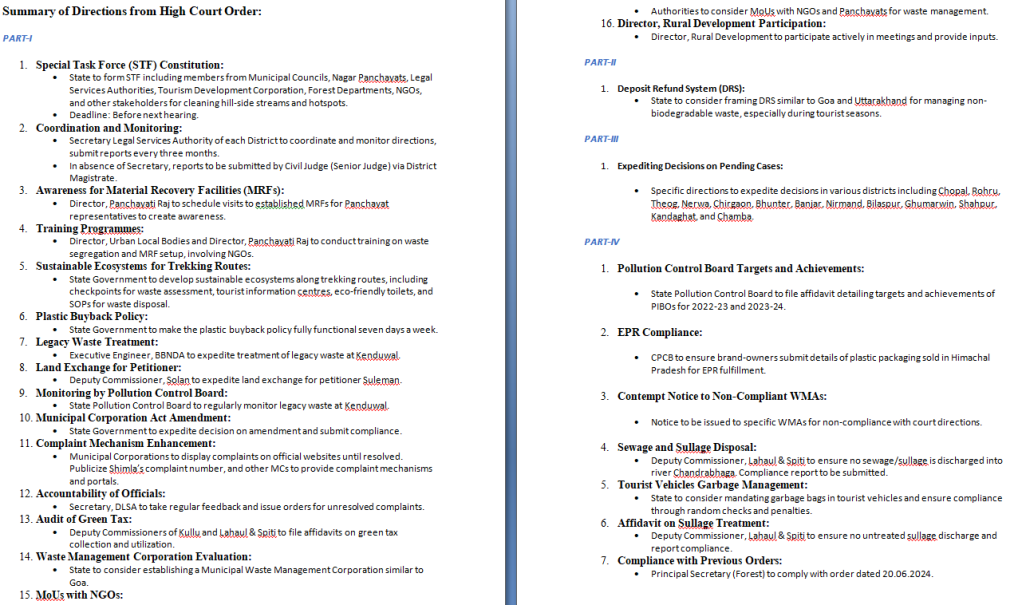
High Court of Himachal Pradesh Orders Stringent Implementation of Solid Waste Management Laws

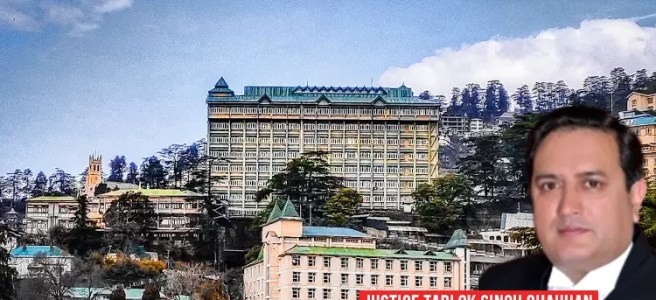
Shimla, Himachal Pradesh: In a significant development in the ongoing environmental case of Suleman vs. Union of India 2369 of 2018, the Himachal Pradesh High Court, presided over by Justice Tarlok Singh Chauhan, has taken a decisive step towards addressing the persistent issue of garbage and solid waste management in the state.

In the latest hearing on November 16, 2023, the court expressed concern over the lack of progress due to the disjointed efforts of various stakeholders. In an unprecedented move, the Chief Secretary to the Government of Himachal Pradesh, Mr. Prabodh Saxena, was summoned for a personal appearance. Accompanied by other high-ranking officials, Mr. Saxena assured the court of the state’s commitment to developing a clear roadmap for implementing environmental laws.

Continue reading “High Court of Himachal Pradesh Orders Stringent Implementation of Solid Waste Management Laws”

Examining the Arbitrariness in Public Resource Allocation: A Critical Analysis of the Una Plot Case


In the state of Himachal Pradesh, a legal conundrum caught the judiciary’s attention. At its core, the case of Anil Spatia and Others vs. State of Himachal Pradesh CWP No. 7364 of 2012 revolved around the contentious allocation of a valuable industrial plot in Mehatpur, Una District. Initially designated for a noble public utility—an ESI Dispensary—this plot, number 145, unexpectedly became the center of a commercial lease to a private cement industry. This pivot from public service to private enterprise raised critical questions about fairness, transparency, and adherence to constitutional principles in the allocation of public resources. As the High Court of Himachal Pradesh delved into the intricacies of this case, it wasn’t just about a piece of land; it was a narrative about ensuring justice and equity in the face of potential administrative overreach. The courtroom drama that ensued was not only a legal battle but also a reflection of the enduring struggle to balance public good against private interests.

Continue reading “Examining the Arbitrariness in Public Resource Allocation: A Critical Analysis of the Una Plot Case”

Can Contractual Employees once regularized, be entitled to the same benefits as their regularly employed counterparts? – The case of HRTC employees (2023)

In a pivotal judgment by the Himachal Pradesh High Court in Vikram Singh vs. State, CWPOA No. 2343 of 2020, Justice Bipin Chander Negi tackled the significant issue of regularization of contractual employees in the Himachal Road Transport Corporation (HRTC). This saga began with the HRTC’s inclusion of ‘contractual recruitment’ in 2003, a move that led to the hiring of 153 drivers under fixed-term contracts. The heart of the dispute lay in the inconsistent regularization of these drivers, some after 6 years of service, compared to others regularized merely after a year. The case presents a detailed examination of the equitable treatment of contractual employees in government services, addressing the nuances of employment law.

Continue reading “Can Contractual Employees once regularized, be entitled to the same benefits as their regularly employed counterparts? – The case of HRTC employees (2023)”

The Right to Fair Compensation invoked in a case of land acquisition by the State

In the judgment of Basti Ram and Another vs. State of Himachal Pradesh, CWP No. 966 of 2021, the High Court of Himachal Pradesh, presided over by Justice Ajay Mohan Goel, addressed an issue concerning the right to fair compensation for land acquisition. Decided on November 1, 2023, this case underscores the constitutional rights of property owners under Article 300A and the necessity of following due legal process in land acquisition.

Continue reading “The Right to Fair Compensation invoked in a case of land acquisition by the State”

Does A person have Construction Rights on a Jointly Owned Land Which Is Not Partitioned?

The legal case of Ghanshyam vs. Rishi Ram, presided over by Justice Sandeep Sharma, presents a scenario of a co-ownership dispute. Decided on November 2, 2023, this case delves into the intricacies of family partitions, the rights of co-owners, and the legitimacy of construction on jointly held land. This analysis aims to unravel the legal reasoning adopted by the court and the implications for co-ownership laws.

Detailed Analysis:

Continue reading “Does A person have Construction Rights on a Jointly Owned Land Which Is Not Partitioned?”

Banwa Land Dispute: A Case Study of Property Rights, legitimacy of revenue records, and injunctions under CPC

The Banwa land dispute, adjudicated by Justice Sandeep Sharma of Himachal Pradesh High Court, offers a compelling insight into property rights and judicial processes in the State of H.P. The case, originating from a disagreement over land ownership in Village Banwa, Tehsil Arki, District Solan, progressed through various judicial phases, ultimately leading to a pivotal judgment. This report delves into the complexities of the case, unraveling the enduring impact of historical land records and the vital importance of timely legal action in land disputes. The plaintiffs’ failure to contest or correct the revenue records at crucial junctures significantly weakened their claim. This judgment cites precedents, explains the law of granting a temporary injunction, the scope of supervisory jurisdiction under Article 227 of the Constitution of India, and further reaffirms the legal tenet that mere possession or ancestral claims do not override well-documented and long-standing records unless adequately contested and legally rectified. Let’s dive right in!

Continue reading “Banwa Land Dispute: A Case Study of Property Rights, legitimacy of revenue records, and injunctions under CPC”