The Himachal Pradesh High Court has invalidated key provisions governing the appointment of Vice-Chancellors to the State’s two agricultural universities. The Court held that the State could not redesign the selection process in a manner inconsistent with the UGC Regulations, 2018, and clarified that the Governor, when acting as Chancellor, performs an independent statutory function.
Internet Shutdowns and Fundamental Rights: The Test Under Articles 19 and 21
An internet shutdown is often described as a temporary step taken to control a difficult situation. For the person unable to make a payment, attend a class, contact a hospital, report the news or access a court website, however, the shutdown is anything but abstract. It is the law entering everyday life through a blank screen.
Continue reading “Internet Shutdowns and Fundamental Rights: The Test Under Articles 19 and 21”When “Provisional” Became Final: Himachal High Court Restores Direct Recruits’ Seniority
In a significant Himachal Pradesh High Court seniority judgment, the Court examined when a provisional seniority list becomes final in operation. The dispute brought a procession of objections, representations, review petitions, appeals and promotions made while everyone was still arguing about who should have been promoted first.
Continue reading “When “Provisional” Became Final: Himachal High Court Restores Direct Recruits’ Seniority”Posted in a Hard Area, Working in Shimla: Himachal High Court Closes the Record-Keeping Gap
An employee may be posted on paper at a tribal or difficult station but actually work at a more convenient location. Until now, an incomplete service record could allow the employee to continue receiving the administrative benefit of the hard-area posting. The Himachal Pradesh High Court has directed the State to close that gap.
Continue reading “Posted in a Hard Area, Working in Shimla: Himachal High Court Closes the Record-Keeping Gap”When a PIL Conceals a Private Contest: Himachal High Court’s ₹2 Lakh Warning
Public-interest litigation relaxes the traditional rules of standing, but it also places an unusually high burden of candour on the person invoking it. In Ajay Bhaik v. State of Himachal Pradesh, the Himachal Pradesh High Court found that this burden had not been met—and forfeited the petitioner’s deposit of ₹2 lakh.
Continue reading “When a PIL Conceals a Private Contest: Himachal High Court’s ₹2 Lakh Warning”From Funding to Forfeiture: Inside India’s FCRA Amendment Bill, 2026
Guest Author: Kaustubh Pratap Singh
Law Student, HP University
Editorial update (29 August 2026): Since this article was written, the Foreign Contribution (Regulation) Amendment Bill, 2026 has been referred to a Joint Parliamentary Committee on 12 August 2026. The discussion below analyses the Bill as introduced in the Lok Sabha on 25 March 2026.
Introduction
The Foreign Contribution (Regulation) Act, 2010 (“the Act” or “FCRA, 2010”) is the principal statute governing the acceptance and utilisation of foreign contribution and foreign hospitality by individuals, associations, and companies in India. Its long title records that it was enacted “to consolidate the law to regulate the acceptance and utilisation of foreign contribution or foreign hospitality by certain individuals or associations or companies and to prohibit acceptance and utilisation of foreign contribution or foreign hospitality for any activities detrimental to the national interest.”
Read moreHP’s Contract Employee Act and Its Constitutional Downfall
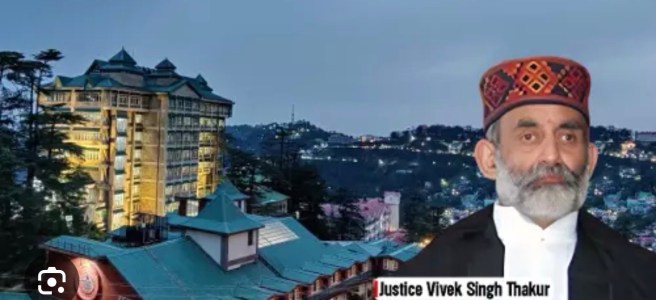
In a landmark constitutional ruling delivered on 25 April 2026, a Division Bench of the High Court of Himachal Pradesh quashed the Himachal Pradesh Recruitment and Conditions of Service of Government Employees Act, 2024 (Act No. 23 of 2025) in its entirety. The impugned Act had been enacted to neutralise decades of judicial precedent protecting the service benefits of contract and ad hoc employees appointed dehors Recruitment and Promotion Rules. The Court held the Act unconstitutional on the grounds that it violated the separation of powers, attacked judicial independence, was manifestly arbitrary under Article 14 of the Constitution, violated the constitutional scheme of public employment under Articles 16 and 309, and exceeded the legislative competence of the State Legislature. The judgment is an authoritative restatement of the limits on legislative power to override judicial decisions and carries significant implications for public employment law across the country.
Continue reading “HP’s Contract Employee Act and Its Constitutional Downfall”
Himachal Pradesh High Court Cracks Down on CSR Non-Compliance; Directs Action Against Defaulting Companies
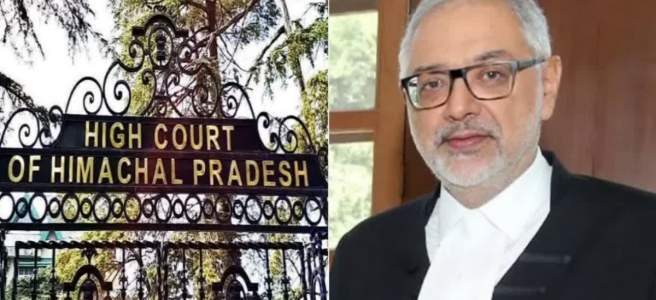
The High Court of Himachal Pradesh has taken a stringent view on the ineffective utilization and monitoring of Corporate Social Responsibility (CSR) funds, particularly in the context of post-disaster rehabilitation in the State. The Court was hearing a suo motu public interest matter concerning compliance with CSR obligations by companies operating in Himachal Pradesh.
Continue reading “Himachal Pradesh High Court Cracks Down on CSR Non-Compliance; Directs Action Against Defaulting Companies”High Court Cracks Down on Unscientific Desilting at Barot–Shanan Project; Imposes Safeguards to Protect Trout Habitat
Shimla, April 8, 2026
In a significant environmental ruling, the High Court of Himachal Pradesh has issued stringent directions regulating desilting operations at the Shanan Hydroelectric Project in Barot, holding that unscientific discharge of silt into the Uhl River has caused serious ecological damage, including fish mortality and degradation of a nationally important trout habitat.
Continue reading “High Court Cracks Down on Unscientific Desilting at Barot–Shanan Project; Imposes Safeguards to Protect Trout Habitat”Himachal High Court Intensifies Oversight of Statewide Solid Waste Management in Suleman Case; Pushes Deposit Refund Scheme, Legacy Waste Clearance, and Accountability of Authorities
Shimla, March 18, 2026
The High Court of Himachal Pradesh has continued its close monitoring of solid waste management across the State in the long-pending Suleman vs Union of India & Ors. batch of matters, issuing further directions to ensure effective implementation of waste management systems, financial accountability, clearance of legacy waste dumps, and enforcement of the recently notified Deposit Refund Scheme (DRS), 2025.
The latest order dated 18 March 2026, passed by the Bench headed by the Hon’ble Chief Justice, forms part of a series of continuing directions issued since 2018 to ensure compliance with the Solid Waste Management Rules, 2016, Plastic Waste Management Rules and the principle of environmental accountability across Himachal Pradesh.
Continue reading “Himachal High Court Intensifies Oversight of Statewide Solid Waste Management in Suleman Case; Pushes Deposit Refund Scheme, Legacy Waste Clearance, and Accountability of Authorities”Straying from the Law to Cage Compassion – Supreme Court’s diktat on street dogs – Part 2

Just when it seemed the Supreme Court had overreached beyond repair with its August stray-dog directions,
the Court returned on 7 November with a new order that appears to walk back the worst excesses, only to quietly introduce an entirely new layer of illegality. Yes, the Court has now “restored” the lawful principle of sterilise–vaccinate–return mandated under the ABC Rules, 2023, implicitly acknowledging that the earlier “zero-release” diktat was untenable. But beneath this veneer of correction lies a fresh wave of judicial law-making: new categories of dogs invented out of thin air (“aggressive dogs”), sweeping bans on dogs in institutions not authorised by any statute, mass-removal directions never contemplated by Parliament, and an expansion of executive-style micromanagement across schools, hospitals, stadiums, highways, bus depots, and railway stations.
Continue reading “Straying from the Law to Cage Compassion – Supreme Court’s diktat on street dogs – Part 2”Himachal High Court Pulls Up Authorities Over Parking Chaos, Restricted Roads and Decline of Shimla’s Walking Culture

In an age when cities across the world are rediscovering the joy of walking, Shimla didn’t need reminding. It was built for it. The Mall Road was never just a stretch of tarmac; it was the city’s living room, where the rhythm of footsteps replaced the honk of horns, and strolling with an umbrella and jacket was a way of life. Walking wasn’t an afterthought here, it was the culture.
But the walker’s town is stumbling. What was once a paradise for pedestrians is now tripping over cars that creep into every nook and cranny. Drop-off passes double as overnight parking permits, and even sealed roads are no longer sacred. A town designed for shoes is being hijacked by wheels. And if the sidewalks are choking, the playgrounds are gasping. Grounds that once rang with cricket shots and the laughter of children have been swallowed by rows of parked vehicles. Instead of being the lungs of the town, these spaces are turning into parking lungs for cars. In Shimla today, the choice seems stark: a game of football, or another dozen SUVs. Guess who’s winning?
Continue reading “Himachal High Court Pulls Up Authorities Over Parking Chaos, Restricted Roads and Decline of Shimla’s Walking Culture”
