Straying from the Law to Cage Compassion – Supreme Court’s diktat on street dogs – Part 2

Just when it seemed the Supreme Court had overreached beyond repair with its August stray-dog directions,

https://lawumbrella.org/2025/08/13/straying-from-the-law-to-cage-compassion-supreme-courts-diktat-on-street-dogs-of-national-capital/

the Court returned on 7 November with a new order that appears to walk back the worst excesses, only to quietly introduce an entirely new layer of illegality. Yes, the Court has now “restored” the lawful principle of sterilise–vaccinate–return mandated under the ABC Rules, 2023, implicitly acknowledging that the earlier “zero-release” diktat was untenable. But beneath this veneer of correction lies a fresh wave of judicial law-making: new categories of dogs invented out of thin air (“aggressive dogs”), sweeping bans on dogs in institutions not authorised by any statute, mass-removal directions never contemplated by Parliament, and an expansion of executive-style micromanagement across schools, hospitals, stadiums, highways, bus depots, and railway stations.

Continue reading “Straying from the Law to Cage Compassion – Supreme Court’s diktat on street dogs – Part 2”

Himachal High Court Pulls Up Authorities Over Parking Chaos, Restricted Roads and Decline of Shimla’s Walking Culture

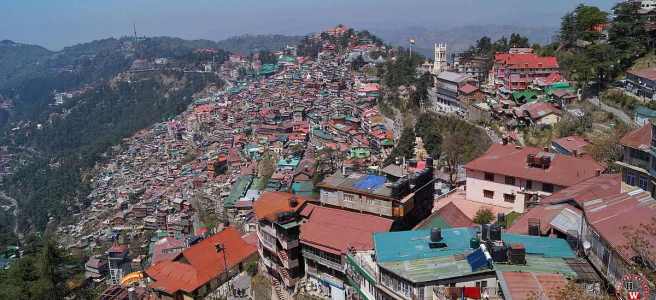
In an age when cities across the world are rediscovering the joy of walking, Shimla didn’t need reminding. It was built for it. The Mall Road was never just a stretch of tarmac; it was the city’s living room, where the rhythm of footsteps replaced the honk of horns, and strolling with an umbrella and jacket was a way of life. Walking wasn’t an afterthought here, it was the culture.

But the walker’s town is stumbling. What was once a paradise for pedestrians is now tripping over cars that creep into every nook and cranny. Drop-off passes double as overnight parking permits, and even sealed roads are no longer sacred. A town designed for shoes is being hijacked by wheels. And if the sidewalks are choking, the playgrounds are gasping. Grounds that once rang with cricket shots and the laughter of children have been swallowed by rows of parked vehicles. Instead of being the lungs of the town, these spaces are turning into parking lungs for cars. In Shimla today, the choice seems stark: a game of football, or another dozen SUVs. Guess who’s winning?

Continue reading “Himachal High Court Pulls Up Authorities Over Parking Chaos, Restricted Roads and Decline of Shimla’s Walking Culture”

High Court seeks Rigorous Compliance of sanitation issues: Respect for shared spaces and lessons from Japan

The scene portrayed above is from a Japanese movie, Perfect Days (2023), directed by Wim Wenders. The film portrays the life of a Tokyo toilet cleaner, Hirayama, who finds profound meaning and dignity in his seemingly mundane job. The philosophy of Perfect Days emphasizes finding dignity, meaning, and beauty in tasks, like cleaning toilets, reflecting the profound connection between care for shared spaces and human respect. As essential public services, sanitation and toilets embody this philosophy by upholding public health, equality, and dignity for all. Together, they remind us that even the simplest actions in maintaining hygiene can have transformative societal impacts.
The High Court’s various directives in CWPIL 6 of 2017 and the philosophy of Perfect Days converge on a universal truth: dignity resides in the care we show for our shared spaces and responsibilities. Just as Hirayama’s work elevates public toilets to sanctuaries of care, the court’s insistence on accountability and sustainable practices transforms sanitation into a symbol of collective respect and progress.

Continue reading “High Court seeks Rigorous Compliance of sanitation issues: Respect for shared spaces and lessons from Japan”

Retrospective Regularization and Pay Fixation Benefits: A Win for Forest Guards

In a case that highlights the perils of administrative inefficiency and its impact on the fundamental right to equality, the Himachal Pradesh High Court delivered a landmark judgment in favor of Forest Guards who were left behind in the race for regularization. At the heart of the matter was a seemingly small, yet significant delay in regularizing the petitioners’ services—a delay that cost them the financial and professional benefits their counterparts in the Dharamshala Circle enjoyed. The courtroom battle underscored a critical question: should employees suffer because of administrative lapses beyond their control? The court’s answer was a resounding no.

Continue reading “Retrospective Regularization and Pay Fixation Benefits: A Win for Forest Guards”

The Indian Constitution: A Masterpiece of Borrowed Wisdom and Indigenous Innovation

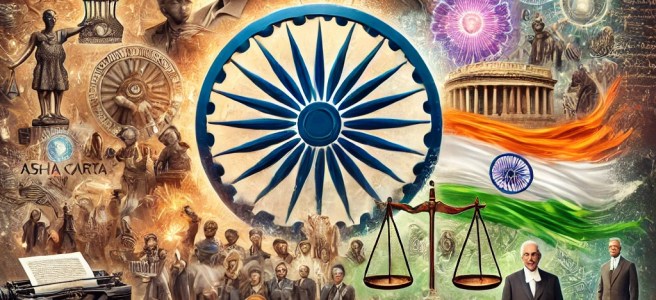
The Indian Constitution is more than a legal framework—it is a testament to the nation’s ability to weave together diverse influences into a coherent whole. It is, in essence, a symphony of ideas, where the wisdom of the ages merges seamlessly with the demands of modernity. As I reflect on this magnificent document, I am reminded of a sculptor chiseling away at a block of marble, revealing a form that is not only beautiful but enduring, adaptable, and deeply reflective of the people it serves.

At its core, the Constitution is a polyglot—a creation born out of a dialogue between India’s ancient civilizational ethos and the great constitutional experiments of the world. It reflects the evolution of human governance, from the flickering flames of Magna Carta to the revolutionary principles of liberty, equality, and fraternity espoused during the French Revolution. Yet, it is uniquely Indian, embodying the spirit of a civilization that has, for millennia, placed a high value on justice, equity, and the welfare of all living beings.

In borrowing from these various traditions, the Indian Constitution becomes more than just a document. It becomes a living organism, growing and evolving as our nation changes. In the words of Justice Felix Frankfurter, “The ultimate touchstone of constitutionality is the Constitution itself and not what we have said about it.” It is in this spirit that we must explore how this monumental text has guided us, not just in times of prosperity, but in moments of profound challenge and transformation.

Continue reading “The Indian Constitution: A Masterpiece of Borrowed Wisdom and Indigenous Innovation”

Consumer Protection, Medical Negligence and Compensation- Supreme Court Verdict

Imagine undergoing what should be a routine surgical procedure, only to find yourself in a prolonged battle against pain and suffering caused by the very professionals entrusted with your care. This was the harsh reality faced by Jyoti Devi, whose simple appendectomy spiralled into a nightmare of continuous agony and medical mishandling. The Supreme Court of India speaking through Justice Sanjay Karol in Jyoti Devi vs Suket Hospital & Ors. not only provided her long-overdue justice but also reinforced critical principles of medical negligence and consumer protection in India. This case shines a spotlight on the importance of holding healthcare providers accountable and ensuring that victims receive fair and adequate compensation for their suffering. Let’s dive right in!

Continue reading “Consumer Protection, Medical Negligence and Compensation- Supreme Court Verdict”

Counting of Contract Service for Seniority and Benefits: An Analysis of Taj Mohammad Case

The case of Taj Mohammad vs. The State of Himachal Pradesh, adjudicated by the High Court of Himachal Pradesh, marks a significant moment in the interpretation of service rules within the State. The case intricately examines the implications of counting contractual service for seniority and other benefits in government employment, a topic of immense relevance to thousands of public sector employees. The case confirms the vital rights of public sector employees transitioning from contractual to regular appointments. The Court’s decision maintained that the entire service period, including the contractual stage, should count towards seniority and related benefits. The judgment aligns with the principles of fairness and equality set by the Indian Constitution and emphasizes that regularization of employment should retrospectively recognize the entirety of an employee’s service. This case is of substantial significance for its implications on seniority and regularization of contractual employees, in government departments.

Continue reading “Counting of Contract Service for Seniority and Benefits: An Analysis of Taj Mohammad Case”

State’s Compliance and Waste Management Directives by High Court in Suleman Vs UOI

In a significant decision dated May 9, 2024, the High Court of Himachal Pradesh, presided over by Judges J. Tarlok Singh Chauhan and J. Sushil Kukreja, delivered a comprehensive order addressing multiple matters concerning the compliance with the earlier order, examining the Action taken report of Municipal Corporation Shimla, and issuing directions in furtherance of its March 23 Order for solid waste management. This article deals with the above three aspects of the order in three Parts.

Continue reading “State’s Compliance and Waste Management Directives by High Court in Suleman Vs UOI”

State’s Duty to Honor Pension Commitments | Suneet Singh Jaryal Case

In a recent decision, the High Court of Himachal Pradesh adjudicated the case of Suneet Singh Jaryal v. State of Himachal Pradesh, focusing on the denial of pensionary benefits to a retired government employee. The case underscores the legal obligations of state entities to fulfill financial commitments to their employees post-retirement, emphasizing the constitutional rights underpinning timely pension disbursements.

Continue reading “State’s Duty to Honor Pension Commitments | Suneet Singh Jaryal Case”

An Analysis of the Supreme Court’s Judgement in the Shimla Development Plan Case

In a landmark decision that has significant implications for urban development, environmental law, and the jurisprudence of legislative powers, the Supreme Court of India delivered a judgment on January 11, 2024, involving the State of Himachal Pradesh. The case centered around the Himachal Pradesh Town & Country Planning Act of 1977 and its application in the Shimla Planning Area, bringing to the forefront complex issues of urban planning, environmental sustainability, and the scope of judicial intervention in legislative matters.

The genesis of the case can be traced back to the establishment of the Shimla Planning Area under the 1977 Act, which set the stage for subsequent development plans in the region. These plans and notifications, however, became a subject of legal scrutiny by the NGT, particularly keeping in view the environmental concerns. The National Green Tribunal (NGT) had previously issued a judgment on November 16, 2017 banning all construction activities in the green and core areas and also within 3 meters of national highways. It also restricted the number of stories to two-and-a-half in other areas where construction was permitted to up to 4 to 5 stories. The Hon’ble Supreme Court has now overturned this Judgment.

(to read the critique of the 2017 NGT Judgment please refer to https://himachalwatcher.com/2019/07/31/the-curse-of-ngt-judgment-undoing-of-urban-planning/)

Continue reading “An Analysis of the Supreme Court’s Judgement in the Shimla Development Plan Case”

“The Impact of Flex: Environmental Concerns and Calls for Change”

Flex banners have long been a prominent feature of our urban landscapes, adorning streets, buildings, and public spaces with advertisements and announcements. However, the unchecked use of these banners has raised significant concerns related to environmental preservation, plastic waste management, and public safety. In this blog, we will delve into the issue of flex banners, their composition, their environmental impact, and the need for stricter regulations to address these pressing concerns.

Continue reading ““The Impact of Flex: Environmental Concerns and Calls for Change””

Article 16 of the Indian Constitution – Equality and the Evolution of Reservation Policies

The Indian Constitution, a living document, embodies the ethos of democracy and social justice. Its various provisions are designed to ensure not just legal equality but also to promote substantive equality among its citizens. Article 16 stands as a cornerstone in this endeavor, focusing on equality of opportunity in employment. This article presents an intricate balance between the principle of non-discrimination (Article 16(1)) and affirmative action (Article 16(4)), showcasing the Indian state’s commitment to creating a level playing field for all, especially the oppressed classes.

Continue reading “Article 16 of the Indian Constitution – Equality and the Evolution of Reservation Policies”