An Analysis of the Supreme Court’s Judgement in the Shimla Development Plan Case

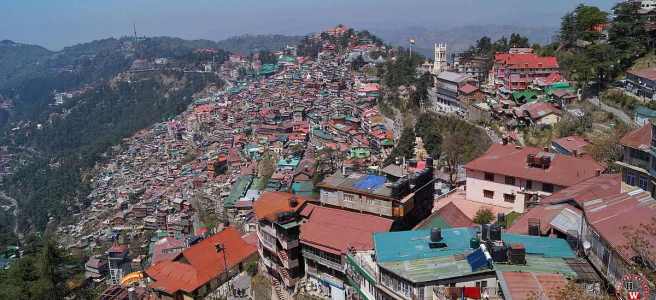
In a landmark decision that has significant implications for urban development, environmental law, and the jurisprudence of legislative powers, the Supreme Court of India delivered a judgment on January 11, 2024, involving the State of Himachal Pradesh. The case centered around the Himachal Pradesh Town & Country Planning Act of 1977 and its application in the Shimla Planning Area, bringing to the forefront complex issues of urban planning, environmental sustainability, and the scope of judicial intervention in legislative matters.

The genesis of the case can be traced back to the establishment of the Shimla Planning Area under the 1977 Act, which set the stage for subsequent development plans in the region. These plans and notifications, however, became a subject of legal scrutiny by the NGT, particularly keeping in view the environmental concerns. The National Green Tribunal (NGT) had previously issued a judgment on November 16, 2017 banning all construction activities in the green and core areas and also within 3 meters of national highways. It also restricted the number of stories to two-and-a-half in other areas where construction was permitted to up to 4 to 5 stories. The Hon’ble Supreme Court has now overturned this Judgment.

(to read the critique of the 2017 NGT Judgment please refer to https://himachalwatcher.com/2019/07/31/the-curse-of-ngt-judgment-undoing-of-urban-planning/)

Continue reading “An Analysis of the Supreme Court’s Judgement in the Shimla Development Plan Case”

“The Impact of Flex: Environmental Concerns and Calls for Change”

Flex banners have long been a prominent feature of our urban landscapes, adorning streets, buildings, and public spaces with advertisements and announcements. However, the unchecked use of these banners has raised significant concerns related to environmental preservation, plastic waste management, and public safety. In this blog, we will delve into the issue of flex banners, their composition, their environmental impact, and the need for stricter regulations to address these pressing concerns.

Continue reading ““The Impact of Flex: Environmental Concerns and Calls for Change””

Article 16 of the Indian Constitution – Equality and the Evolution of Reservation Policies

The Indian Constitution, a living document, embodies the ethos of democracy and social justice. Its various provisions are designed to ensure not just legal equality but also to promote substantive equality among its citizens. Article 16 stands as a cornerstone in this endeavor, focusing on equality of opportunity in employment. This article presents an intricate balance between the principle of non-discrimination (Article 16(1)) and affirmative action (Article 16(4)), showcasing the Indian state’s commitment to creating a level playing field for all, especially the oppressed classes.

Continue reading “Article 16 of the Indian Constitution – Equality and the Evolution of Reservation Policies”

Legal Perspectives on Re-Evaluation of Answer Sheets – Key Judgments

Introduction: The question regarding the ability of a court to mandate the re-evaluation of examination papers in the absence of a specific statutory provision is a matter of great legal significance. The Supreme Court of India has consistently maintained that re-evaluation of examination papers is not a right that candidates can demand unless there is an explicit provision in the relevant rules or statutes. The jurisprudence pertaining to the re-evaluation of answer scripts in India is marked by a strong reluctance to interfere in the absence of statutory provisions. Nevertheless, the Supreme Court has made exceptions in situations where there are clear errors in evaluation or when statutory rights, such as those enshrined in the Right to Information (RTI) Act, are implicated. Together, these judgments underscore the importance of maintaining a balanced approach that respects the autonomy of educational institutions while ensuring fairness and accuracy in the evaluation process.

Continue reading “Legal Perspectives on Re-Evaluation of Answer Sheets – Key Judgments”

A Dive into Ex Parte Decree Nuances: Legal Insights from Shakuntla Devi’s Court Battle

The story begins with Dhani Chand, a man bound in matrimony to Kushla Devi. As often happens in the complex tapestry of human relationships, their union unraveled, leading Dhani Chand to seek solace in the arms of the law. He filed a petition for the dissolution of marriage, a plea to untie the nuptial knot that had bound him to Kushla. The case, registered as HMP No. 54-P/III/2004, was a silent cry for release from the vows once cherished.

However, fate played its cruel hand when the summons, the heralds of this legal battle, failed to find Kushla. Lost in the labyrinth of administrative procedures, the notices sought Kushla at an incorrect address. Unaware and unreachable, Kushla remained oblivious to the legal storm brewing in the courts of Dharamshala.

The court, following the rhythm of law rather than the melody of human nuances, proceeded ex parte. Dhani Chand’s plea was heard in the absence of Kushla, and the decree of divorce was granted, severing the bonds that once promised eternal companionship.

Continue reading “A Dive into Ex Parte Decree Nuances: Legal Insights from Shakuntla Devi’s Court Battle”

Himachal Disaster (2023) and Landmark Cases on Environmental Accountability:  

Nestled amidst the majestic Himalayas, Himachal Pradesh is often hailed as the ‘Abode of Gods.’ Its pristine landscapes, lush forests, and meandering rivers have long been a haven for nature enthusiasts. However, recent environmental challenges, particularly indiscriminate construction activities, improper waste disposal, and consequential disasters, have cast a shadow over this paradise. These pressing concerns not only highlight the immediate vulnerabilities of Himachal but also serve as a microcosm of the broader environmental challenges India faces. As we delve into India’s environmental legal journey, it’s imperative to understand the Himachal disaster as a poignant backdrop, a stark reminder of the delicate balance between development and conservation. This article, while tracing the evolution of environmental jurisprudence in India, underscores the urgency of addressing these challenges, with Himachal’s situation serving as a clarion call for action.

Continue reading “Himachal Disaster (2023) and Landmark Cases on Environmental Accountability:  “

Transfer of Judges – A Tool to Undermine the Institution of Justice

The article was first published 3 years ago on February 27, 2020 at https://himachalwatcher.com/2020/02/27/transfer-of-judges-a-tool-to-undermine-the-institution-of-justice/

Justice S. Murlidhar of the Delhi High Court, who was hearing a petition on the Delhi Riots, sharply condemned both the government and police on Wednesday. His scathing remarks questioned the workings of the police. Following it, orders for his immediate transfer came late at night the same day to the Punjab and Haryana High Court.

Continue reading “Transfer of Judges – A Tool to Undermine the Institution of Justice”

Bail or Jail; High Court of Tripura Grapples With Drug Menace

The Article first appeared on April 29, 2019

Tripura, a small 10,039 sq km state, is encircled on three sides by Bangladesh and is three hours by train from its capital Dhaka and main port city Chittagong. An increase in drug/substance abuse has been noted in this small state. It is seen that hard drugs are being smuggled into the state from Bangladesh and Burma. Indian made cough syrup is peddled in Bangladesh while the Burmese Ya ba tablets come to Tripura.

Continue reading “Bail or Jail; High Court of Tripura Grapples With Drug Menace”

CAA and NRC – A Dissent on Grounds of Equality and Fraternity

(The Article was first published on December 22, 2019) 

In the past few days, there has been unrest in the country over two actions of the parliament i.e firstly, due to introduction of a law called Citizen Amendment Act (CAA), which deals with granting of citizenship to refugees, and secondly, due to the declaration that India will soon have a register of citizens (NRC) where all citizens will have to prove their citizenship with documentary evidence.

Continue reading “CAA and NRC – A Dissent on Grounds of Equality and Fraternity”