
“The legal profession is not merely an occupation; it is the guardian of justice, the voice of the oppressed, and the first line of defense against tyranny. An independent Bar is the cornerstone of an independent judiciary—compromise it, and you compromise the very foundation of democracy.”
If the Advocates (Amendment) Bill, 2025 had a motto, it would be: “Speak less, comply more, and never question authority.” Wrapped in the language of “reform,” this Bill is less about improving the legal profession and more about taming it. It reads like a playbook for turning fierce, independent advocates into government-approved legal service providers, carefully selected to avoid ruffling any executive feathers. By expanding control over the Bar, criminalizing dissent, and creating a chilling effect on legal activism, the Bill seems designed to ensure that lawyers think twice before taking up cases that challenge the powers that be. In a democracy, advocates are meant to be the watchdogs of justice—but with these amendments, the government appears keen to turn them into obedient house pets, barking only when permitted. The message is clear: fall in line, or risk professional extinction. But history has shown that the legal fraternity does not take kindly to such attempts at subjugation—and the overwhelming resistance to this Bill proves that the fight for an independent Bar is far from over.
The independence of the judiciary and the autonomy of the legal profession are the cornerstones of any democratic society. Advocates serve as the guardians of constitutional rights, ensuring that justice prevails even in the face of executive overreach. However, the recently withdrawn Advocates (Amendment) Bill, 2025 raised serious concerns about the erosion of these fundamental principles. While presented as a move to modernize legal practice and enhance professional accountability, the Bill contained provisions that threatened the self-regulation of the legal profession, curtailed advocates’ rights, and increased government influence over legal institutions. The legal fraternity opposes the proposed amendments as an assault on the sanctity of the profession and a dangerous step towards weakening the judiciary’s independence. Bill has been introduced without effective consultation. From restricting lawyers’ ability to protest against judicial and executive excesses to expanding the definition of legal practitioners in ways that could dilute professional ethics.
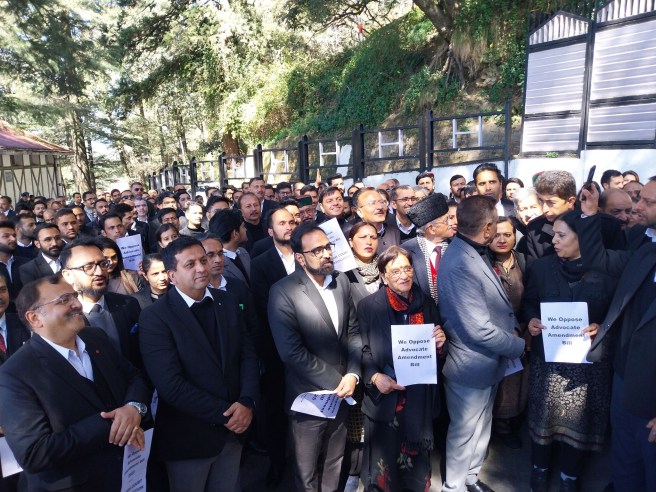
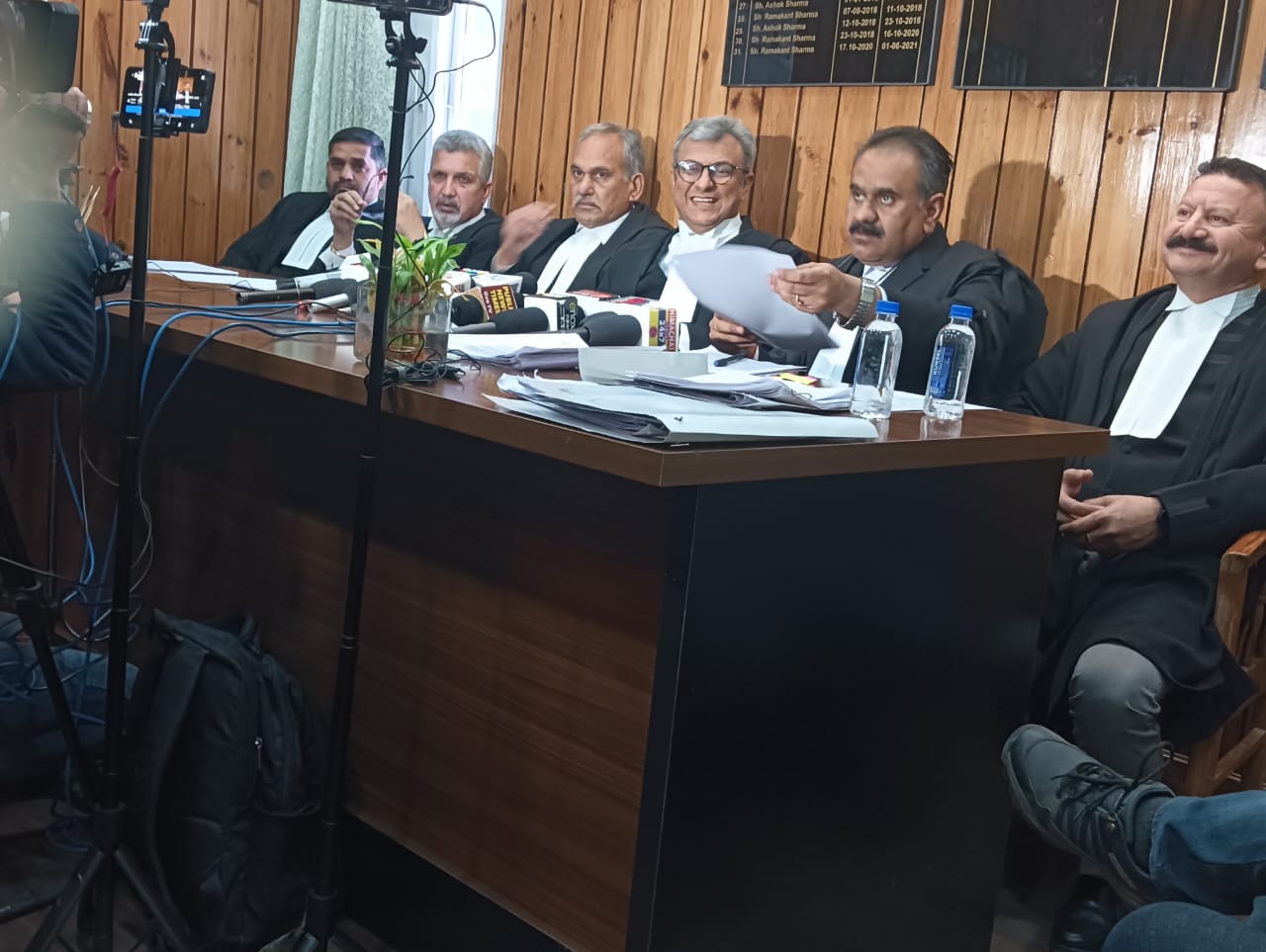
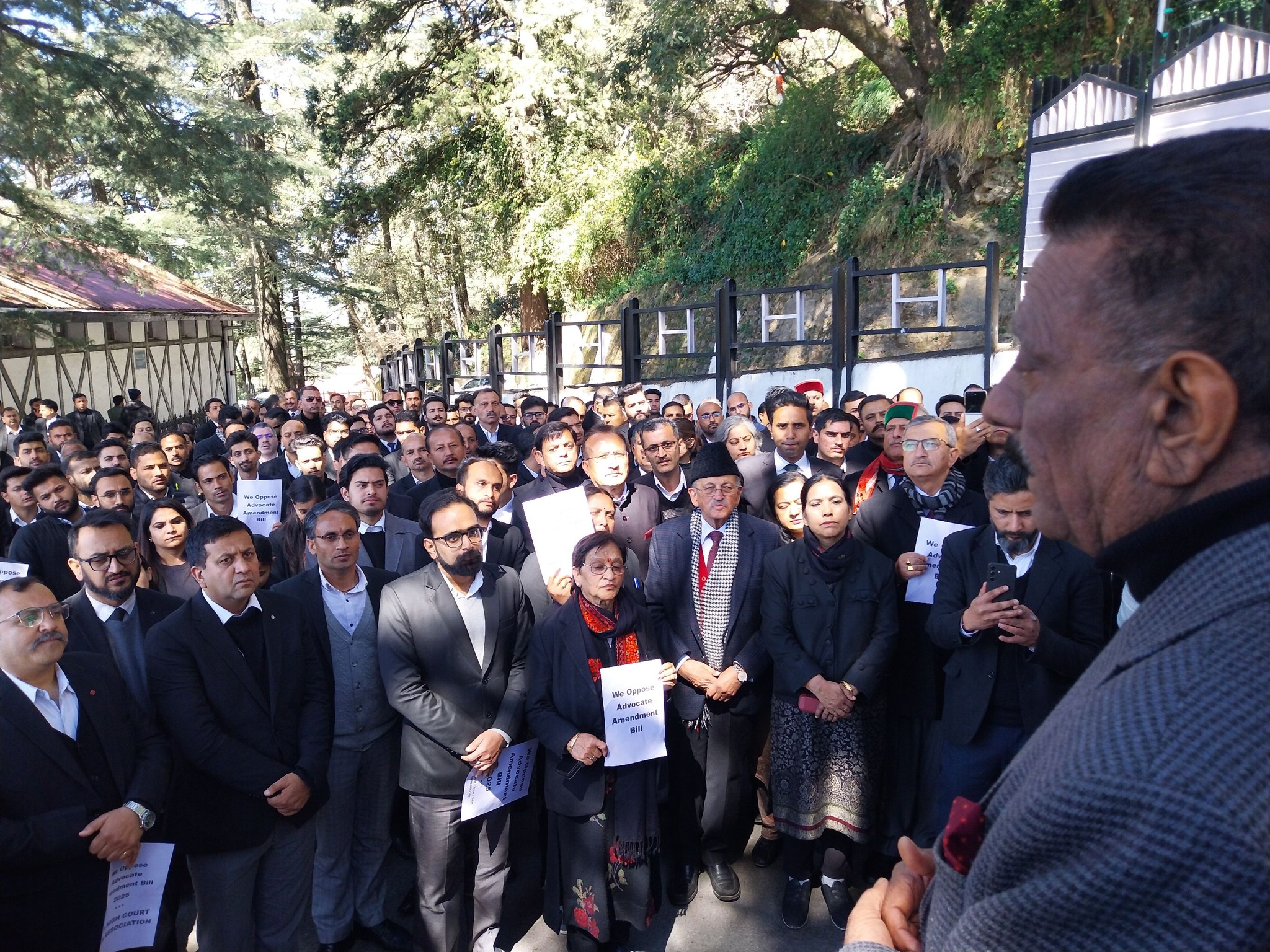
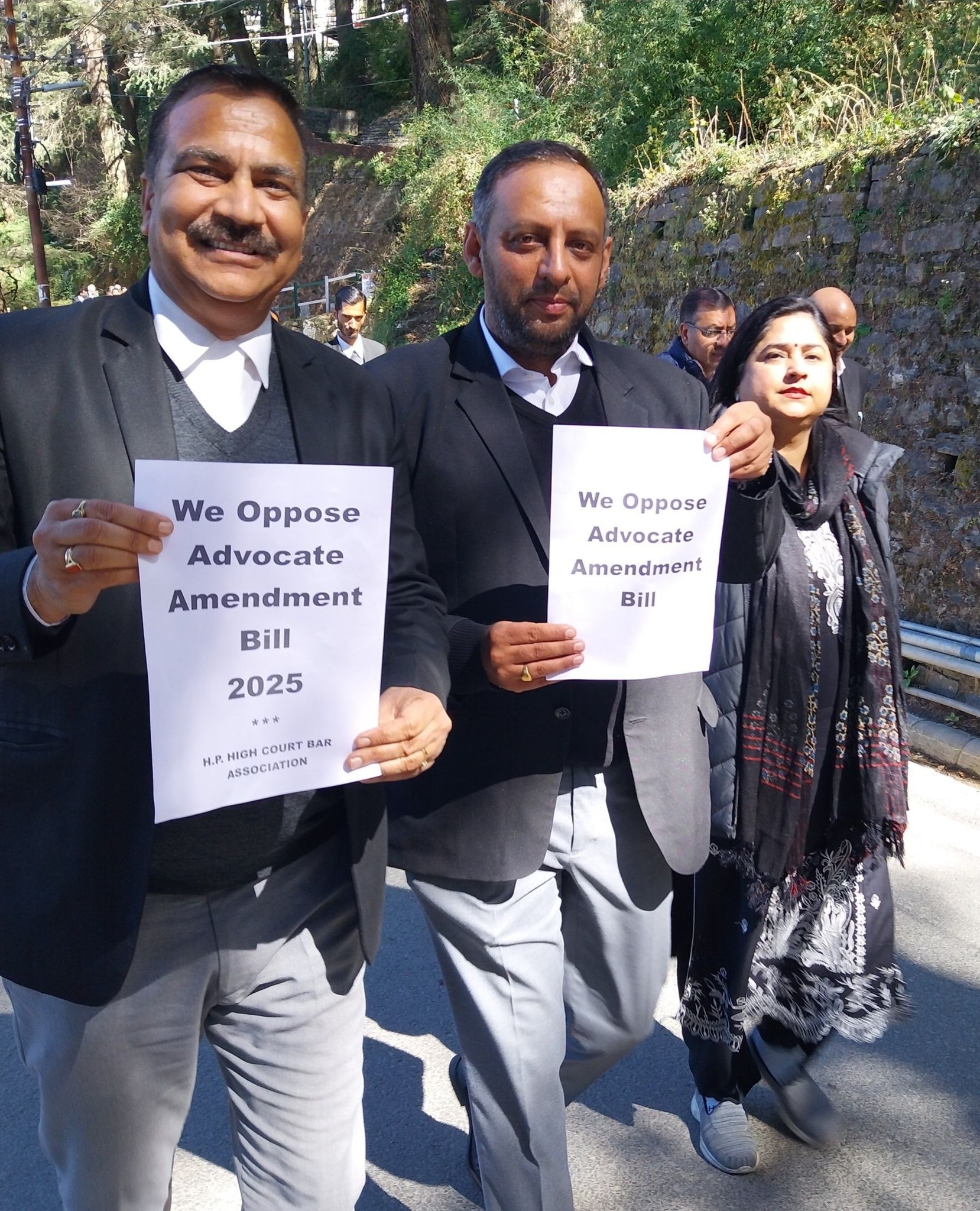
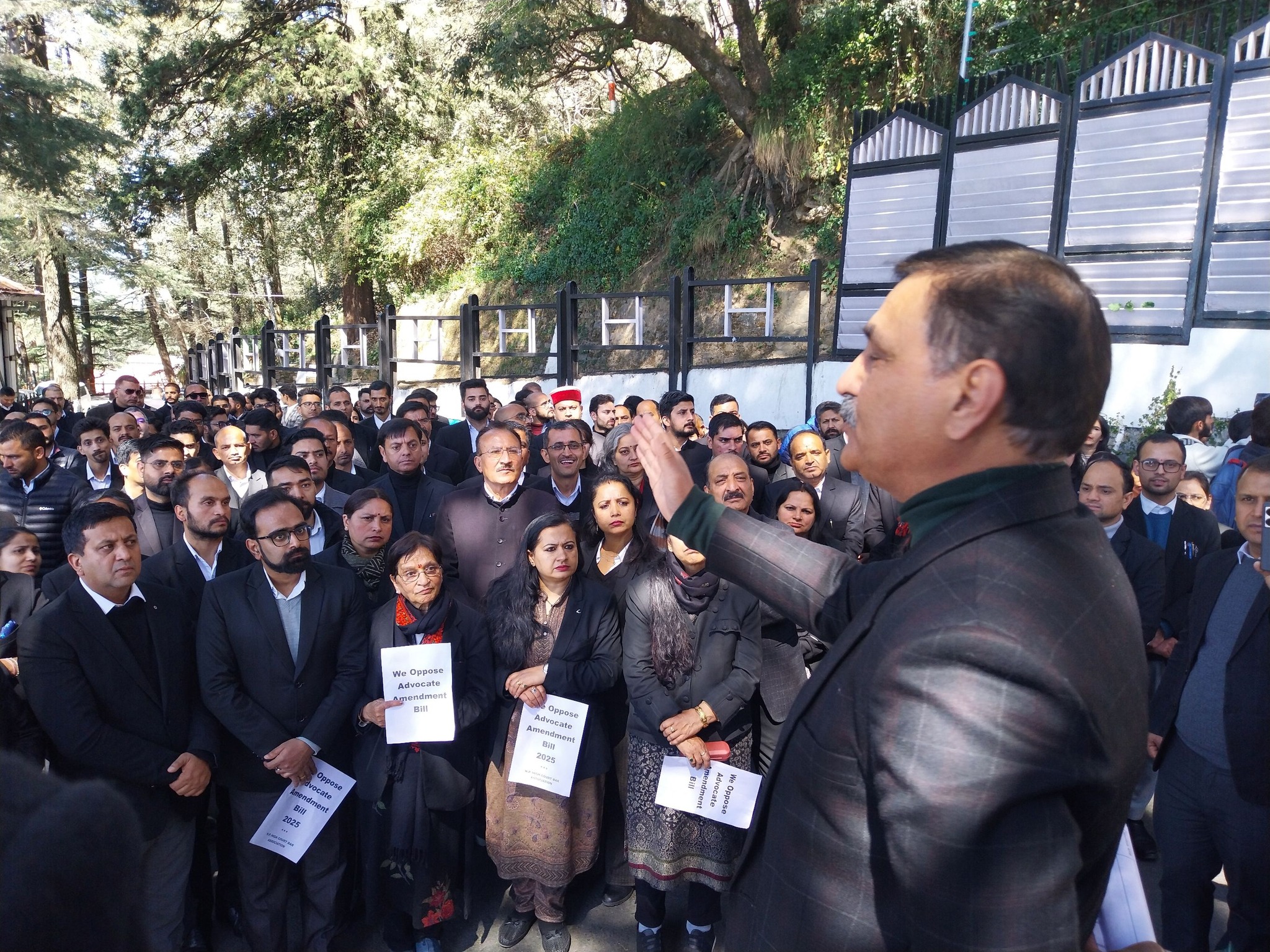
To highlight the dangers of executive interference in legal regulation, the unjust curtailment of advocates’ rights, and the broader consequences for judicial independence and for the protection of legal autonomy over executive control Himachal Pradesh High Court Bar Association (HPHCBA) on March 6, 2025, called upon its members to assemble for a peaceful protest against the proposed amendments. All esteemed members of the Association gathered in the Bar Room and then marched in a peaceful procession from the High Court to the Governor’s House. The protest aimed to present a formal resolution, objections, and a memorandum opposing the Bill to His Excellency the Governor of Himachal Pradesh, with a request to forward the concerns to the President of India and the Union Minister for Law and Justice. This demonstration reflected the deep unease within the legal community, highlighting the amendments as a direct threat to the autonomy of legal practitioners and the fundamental values of justice.
Below is a brief analysis of the amendments, the details will be discussed in the second part to this article:
1. Executive Interference in the Legal Profession
One of the fundamental principles of democracy is the independence of the judiciary, which includes the autonomy of legal practitioners who act as a crucial pillar in the justice delivery system. The Bill proposed several changes that appeared to undermine this principle by increasing the executive’s control over legal practice.
- The government’s push to alter the composition of the BCI, including the proposal to co-opt women members rather than ensuring their direct election, raised questions about executive influence over legal regulatory bodies.
- While gender inclusivity is vital, the method of appointment was problematic, as it allowed room for discretionary appointments, potentially influenced by political considerations.
- The autonomy of the BCI is crucial in maintaining a self-regulated legal profession, free from executive control. Any amendments that increase the role of the government in determining the composition of the Bar Council undermine this autonomy.
2. Enhanced Penalties for Misconduct: A Tool for Silencing Dissent?
The Bill proposed increased penalties for “misconduct,” including suspension, removal from the state roll, and hefty fines of up to Rs 3 lakh. While accountability in the legal profession is necessary, these provisions left ample room for misuse.
Vague Definition of “Misconduct”
The Bill did not provide a clear, exhaustive definition of what constitutes “misconduct.” This ambiguity could have been exploited to target advocates who take up cases against the government or challenge powerful interests. Historically, many lawyers have faced professional backlash for representing politically sensitive clients. An undefined “misconduct” provision could have been used to silence such lawyers.
Potential for Selective Enforcement
With the government wielding greater influence over legal regulatory bodies, the enhanced penalties could have been applied selectively to punish lawyers who criticize the establishment. This raises concerns about the chilling effect on legal activism and advocacy for human rights, civil liberties, and public interest litigation.
3. Threat to Advocates’ Role as Guardians of Constitutional Rights
The legal profession is not merely an occupation; it is a vocation with a constitutional mandate. Advocates play a crucial role in safeguarding fundamental rights, challenging unlawful policies, and holding the executive accountable. The proposed amendments risked reducing advocates to mere service providers rather than protectors of justice.
Curtailing Advocates’ Ability to Take Up Public Interest Cases
With stricter penalties, reduced professional autonomy, and limitations on collective action, advocates may have been deterred from taking up cases against the government, thereby weakening the enforcement of constitutional rights.
Many landmark judgments in India—such as Vishaka v. State of Rajasthan (which led to the POSH Act) and Olga Tellis v. Bombay Municipal Corporation (which protected slum dwellers from eviction)—were the result of fearless advocacy. The amendments could have discouraged lawyers from engaging in such public interest litigation.
Weakening the Bar’s Independence Affects Judicial Independence
A robust and independent legal profession is crucial for an independent judiciary. If lawyers are controlled, intimidated, or co-opted by the executive, it naturally affects the independence of judges as well. The judiciary relies on strong legal representation to challenge unconstitutional laws and government excesses. Weakening the Bar weakens this fundamental check and balance.
4. Prohibition of Strikes and Boycotts: A Blow to Advocates’ Rights
One of the most contentious provisions of the Bill was the proposed prohibition of lawyer strikes and boycotts, citing the disruption of judicial proceedings. While ensuring the smooth functioning of courts is essential, this move ignored the historical role that such protests have played in defending judicial independence and resisting executive excesses.
Undermining the Right to Protest
Strikes and boycotts have historically been used by the legal fraternity to resist judicial corruption, defend rule of law, and oppose government overreach. In India, lawyers have often been at the forefront of democratic movements—be it during the Emergency (1975-77) or protests against judicial interference by the executive. By criminalizing these forms of protest, the government sought to weaken the legal profession’s ability to resist policies that threaten the judiciary’s independence.
Erosion of Professional Solidarity
A profession as deeply connected to justice as law requires mechanisms for internal resistance. Strikes and boycotts are an essential means for lawyers to collectively voice grievances against executive excesses, judicial corruption, or oppressive policies. The prohibition on collective action could have fragmented the legal community, reducing its ability to stand up against injustice.






Conclusion: A Threat Disguised as Reform
The Advocates (Amendment) Bill, 2025, has managed to do the impossible—unite the entire legal fraternity in unanimous outrage. Lawyers across the country, from Supreme Court stalwarts to first-year juniors, have slammed the bill and HP High Court Bar has shut the door on any negotiations, making it clear that this Bill deserves nothing less than a complete burial. This isn’t about minor tweaks or harmless policy changes; it’s a full-scale assault on judicial independence, a blatant attempt to tighten the executive’s grip on the Bar, and a dangerous precedent that could turn fearless advocates into mere extensions of state machinery. The government might have hoped for a polite debate, but the response has been loud and unyielding—no compromises, no revisions, just a full repeal. Any talk of reconsideration is seen for what it is: an attempt to pacify resistance while keeping the most dangerous provisions intact. The legal fraternity is well aware of this strategy, and they aren’t falling for it. Their stance is simple—this Bill must go, entirely and immediately without any scope of inviting objections or reconsideration.

 LawUmbrella