Imagine Sherlock Holmes sitting in his Baker Street flat, scratching his head over the enigma of judicial transfers in India. “It’s quite elementary, my dear Watson,” he might say, “except when it’s not. The transfers happen without consent, reasons are shrouded in secrecy, and the silent majority watches as the plot thickens!”
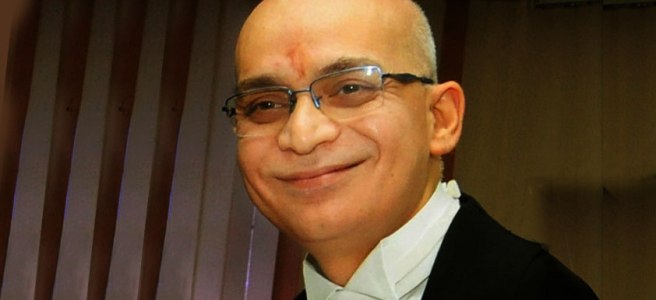
As we celebrate the appointment of Justice Rajiv Shakdher as the Chief Justice of the Himachal Pradesh High Court, it’s impossible not to reflect on his journey, which has been marked by moments of resilience, independence, and forthrightness. Justice Shakdher, who earned a stellar reputation as an outstanding judge in the Delhi High Court, faced one of the most controversial transfers in recent judicial history—a decision that drew widespread discontent from the Bar.
In 2016, Justice Shakdher was transferred from the Delhi High Court to the Madras High Court without his consent, a move that was widely perceived as punitive. Speaking candidly during his farewell at the Delhi High Court, Justice Shakdher admitted that he was deeply unhappy at the time. His statement, “The events of April 2016… much to my disappointment, sadness… I was shifted to another court. Today is a day of confessions, and I want to make one: I was deeply unhappy,” resonated with many. The transfer, coming on the heels of his bold judgment that quashed the government’s lookout notice against activist Priya Pillai, sparked protests from prominent legal luminaries like Fali Nariman and Soli Sorabjee. The Bar viewed the transfer as a direct challenge to the independence of the judiciary.
His return to the Delhi High Court in 2018 was seen as a vindication, with the Bar standing firmly behind him, affirming his belief that
““So, to cut a long story short, it is the Bar which constantly evaluates you, it’s almost like the unseen hand of God which protects you. Whether we believe it or not, they know the right from the wrong, and there is a silent majority… who stand with you when the chips are down… They stood by me and there was a message communicated to the Bench, to the Collegium,” Justice Shakdher said on Tuesday”
Justice Shakdher’s story reminds us of another judge, Justice S. Murlidhar, whose transfer also stirred controversy. Justice Murlidhar, known for his citizen-centric judgments, was in the midst of hearing a case related to the 2020 Delhi Riots when a late-night order transferred him to the Punjab and Haryana High Court. Like Justice Shakdher, Justice Murlidhar had made waves with his no-nonsense approach, including sharp criticisms of the Delhi Police’s handling of the riots and their failure to register FIRs against those inciting violence. His transfer, which came just hours after his stern questioning of the authorities, led to protests from the legal fraternity, who saw it as a threat to judicial independence.
These two incidents serve as a stark reminder and present an opportunity to critically examine the issue of judicial transfers in India and raise crucial questions about judiciary’s transparency, fairness, and independence.
The Collegium & Sherlock Holmes
Former Supreme Court Judge Justice Madan Lokur had raised questions on the manner of functioning of the collegium. The Judge observed:
“The mystery behind the change in the appointment of the chief justice from one high court to another will need a Sherlock Holmes to unravel”.
Holmes himself would need a three-pipe problem to figure out whether these transfers were for “better administration of justice” or something much more elementary—like an inconvenient judgment that ruffled too many feathers.
As a rule of practice, it is only when a person is appointed as a high court judge for the first time that he or she is sent out of his practicing court. Once a permanent High Court judge is appointed and posted, he is transferred to another High Court only upon elevation as Chief Justice. In the above mentioned case, there had been a departure from this rule of practice. In such circumstances where the norms are not being followed and an unconventional procedure is followed, then it becomes imperative that reasons are recorded in writing stating the cause of such a departure. Not only do reasons have to be recorded, but even the consent of the judge needs to be obtained. These principles flow from the basic structure of the constitution, i.e. “independence of the judiciary”.
Transfer of Judges – A Threat to The Independence of Judiciary
If the judiciary has to be a bulwark for the protection of the “rights of the individual” and mete out even-handed justice without fear and favour” then it should be independent.
The exercise of the judicial function is one that requires, more than any other work, a proper balance of mind and an undisturbed and peaceful life. The administration of justice cannot be properly done by a disgruntled judge. If transfer hangs over his head like Damocles’ sword, the balance of justice slips out of his hand. An immediate and unnoticed transfer may cause so great inconveniences that it may compel him to quit rather than comply with the transfer order.
In the judge’s case, the Supreme Court held that the consent of the judge was not necessary for his transfer from one High Court to another. According to the Court, there are three safeguards against arbitrariness in the use of the President’s power to transfer judges under Article 222. They are:
- There must be full and effective consultation with the
Chief Justice of India. - The power of transfer can be exercised in the public interest only and not by way of punishment.
- Judicial review of the decision of the President to
transfer a judge.
However, do these safeguards suffice to preserve the independence of the judiciary, one of the cardinal faiths of the Constitution? Judges, unlike government servants, hold an office under the Constitution, and there is no master-servant relationship between the government and the judge. A close study of Sankal Chand’s case and the Judges case would reveal that the Supreme Court has miserably failed to bring out the clear distinction between transfers by punishment and transfers in the public interest or the present matter, as the order put it, “for better administration of justice“. These expressions are not capable of any precise definition and, in a given set of circumstances, may be applied differently by different people. In many cases, it would not be possible to rule out some elements of a penal character. The present procedure, as it stands, has, instead of limiting the scope of transfers, only enhanced its scope by giving a very elastic definition of public interest and ‘better administration of justice”.
The object/Reason and purpose of transfer need to be spelled out in order.
The great Mr Palkhiwala, after examining the Judges’ case had rightly pointed out that the dichotomy was not between transfers in the public interest and “for better administration of justice” and transfers by punishment. Still, the dichotomy was between transfers in’ public interest and transfers for ‘extraneous considerations’. According to him, the object of the transfer and not the result, or effect of the transfer is the decisive factor. The object of the purpose needs to be clearly spelled out in such orders, and this cannot be done in a slip-shod manner.
The consent of the Judge must be sought
Justice Bhagwati in Sankal Chand’s case and reiterated in the Judges case that the “transfer is made consensual” was the only effective safeguard for a judge against arbitrary transfer, and only if such an interpretation is accepted can the noble concept of independence of the judiciary be preserved. This view is shared by many eminent jurists, judges, lawyers, etc. The Lord Chief Justice of England, Hon. Lord Lane, speaking on “Standards of Judicial Independence,” expressed the view that a judge ought not to be liable to be transferred from one High Court to another without necessarily seeking his consent. Justice H. R. Khanna, a former judge of the Supreme Court, regretted that the Law Commission’s recommendation that no judge should be transferred without his consent unless a panel consisting of the Chief Justice of India and his four seniormost colleagues find cause for such a course has fallen into deaf ears.
The two Hon’ble judges not only ‘did not give their consent‘ but had also taken a critical view of the functioning of the Government, police and the ruling party at the time. The timing of the transfer during the pendency of a sensitive matter was highly suspicious and created a chilling effect on judges and judicial functioning.
Better administration of justice can be achieved by providing detailed reasons to the Hon’ble Judge and the people of India. Transfers without reason and consent can instill fear in the minds of the judges, the first casualty of which would be justice itself.
The constitutional provision (Article 222) on the transfer of judges has a direct and proximate connection with the independence of the judiciary. This provision, like many other constitutional provisions, can be made use of for achieving many useful purposes as well as evil purposes until a clear and reasonable interpretation is given to the Article, keeping in mind the principle of “independence of the judiciary.” Its abuse will have many dangerous effects on the judiciary and its independence. If the judiciary loses its independence and becomes subservient, the net result would be that the Constitution would lose its prominence. Justice Khanna has aptly put it like this:
“Once the independence of the judiciary is undermined and the seats of Justice came to be occupied by men with pliable conscience’ and subservient to the political wing of the State, the first casualty would necessarily be the supremacy of the Constitution, for it, would be open to every branch of the State to ride roughshod over the provisions of the Constitution.”
—————————————————
Deven Khanna,
Advocate,
H.P High Court

 LawUmbrella