Shimla, August 8, 2024 – The division bench of the High Court of Himachal Pradesh presided over by J. Tarlok Singh Chauhan and J. Sushil Kukreja, in its ongoing commitment to environmental preservation, has issued a series of significant directives aimed at enhancing solid waste management across the state. Building on its earlier orders on March 23, May 9, 2024 and July 18, 2024., the court has now introduced new measures to ensure that these efforts reach the most critical areas and involve every level of society. The court’s new order, dated August 8, 2024, builds on these earlier measures with additional, targeted directives. Let’s dive right in:
Plastic Buy-Back Policy: A Groundbreaking Initiative:
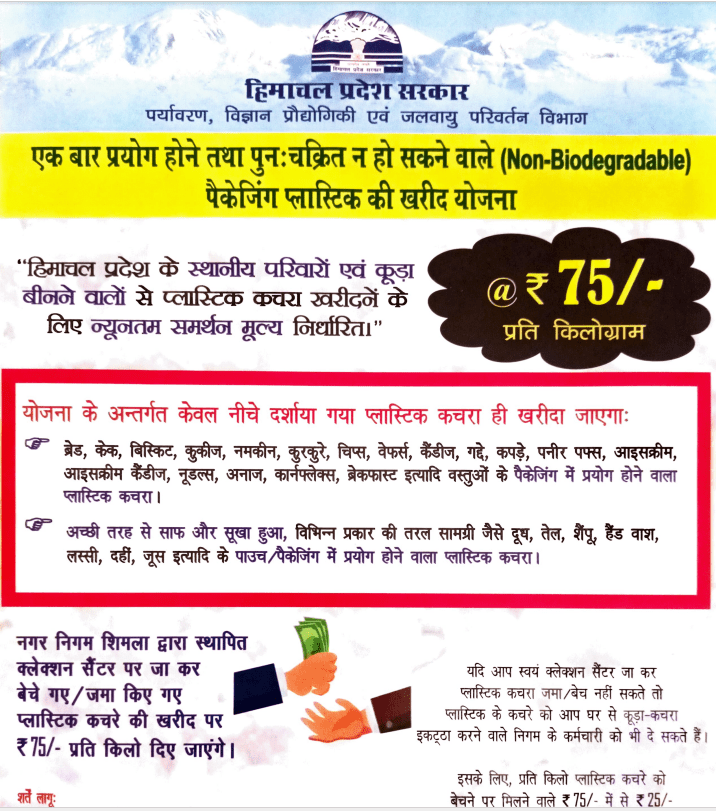
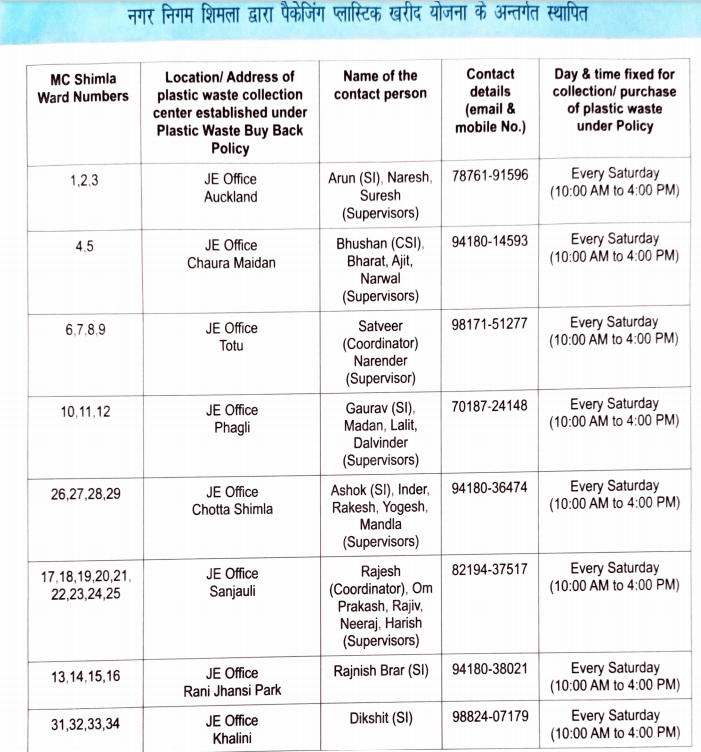
At the forefront of the court’s latest directives is the implementation of the plastic buy-back policy, a transformative initiative designed to tackle the pervasive issue of plastic waste, particularly in the form of discarded packaging such as chip bags, candy wrappers, and tobacco packets. Under this policy, individuals, including rag pickers and the economically disadvantaged, can collect plastic waste and exchange it at designated buy-back depots managed by the Shimla municipality. In return, they will receive Rs. 75 for every kilogram of plastic collected, a substantial increase from the previous rate of Rs. 7 per kilogram. This policy is poised to have a profound impact on both the environment and the community. For the rag pickers and those struggling to make ends meet, it offers a new source of income, turning what was once worthless trash into a valuable commodity. Children, too, will be encouraged to view plastic waste differently, understanding that every wrapper they encounter holds value. Beyond the financial benefits, this policy is expected to lead to a significant reduction in plastic pollution, clearing streets, jungles, streams, and rivers of the harmful waste that currently blights these areas.
Religious Sites Under Scrutiny:
Recognizing the heavy footfall at Himachal Pradesh’s religious sites, the court has underscored the importance of strict compliance with the Solid Waste Management Rules, 2016, in these areas. The directive specifically mentions places like Mata Chintpurni, Mata Jawalaji, and Mata Chamunda, among others. Given that these sites are significant generators of solid waste, the court has suggested starting a pilot project to enhance waste management at Mata Chintpurni temple in Una, Mata Naina Devi Ji temple in Bilaspur, and Gurudwara Manikaran Sahib in Kullu. The objective is to set a precedent that can be replicated at other religious locations, ensuring that these sacred spaces remain clean and environmentally sustainable.
Expedited Land Transfer and Training Programs:
The Divisional Commissioner of Shimla has been directed to accelerate the decision regarding the land transfer case of petitioner Suleman, with a requirement to communicate the outcome by the next hearing. In tandem, the Director of Rural Development is to organize comprehensive training programs aimed at local authorities, including Panchayats and Block Coordinators. These programs will be conducted in collaboration with Advocate Deven Khanna and NGOs, focusing on the roles and responsibilities of stakeholders in solid waste management and the establishment of MRFs.
Collaboration with Central Authorities:
The court has mandated regular meetings involving the Ministry of Environment and Climate Change and the Central Pollution Control Board, alongside state departments and Advocate Deven Khanna. These meetings, held at the Urban Development Department office, will address ongoing challenges, such as stalled Forest Conservation Act (FCA) land cases that hinder the allocation of land for solid waste management projects. Additionally, the Central Pollution Control Board has been tasked with identifying companies responsible for introducing plastic into the state, ensuring they are held accountable under Extended Producer Responsibility (EPR) laws. Advocate Deven Khanna pointed out that the state has yet to receive any funds from these companies under the EPR, an issue that requires immediate resolution.
Material Recovery Facilities (MRFs) and Monitoring Plastic Use:
The Director of Industries has been instructed to provide the State Pollution Control Board with a complete list of companies that use single-use or non-biodegradable plastic in their packaging. This list should be in addition to the companies already known to the board. The purpose is to enforce strict compliance with the Solid Waste Management (SWM) and Municipal Solid Waste (MSW) Rules and to ensure these companies are held accountable under Extended Producer Responsibility (EPR). The court highlighted the urgent need to create more Material Recovery Facilities (MRFs) in Shimla, as the existing plant at Baryal is struggling to manage the waste load. The Urban Development Department has been directed to file its policy for creating new MRFs and report on the status of funding for implementing the SWM Rules, 2016.
Special Task Force for Environmental Cleanup:
The court noted the establishment of a Special Task Force, as previously requested, which was officially notified by the government on July 3, 2024. This task force comprises members from the Municipal Corporation (MC), Town and Country Planning Department (TDS), Forest Department, NGOs, and other stakeholders. The task force is charged with focusing on cleaning hillsides, streams, and other environmental hotspots. The court directed that this task force work closely with the MC Shimla to ensure these areas are thoroughly cleaned and maintained.
Meetings with Local Authorities and Stakeholders:
The Mission Director (SBM-G)-cum-Director of Rural Development, Himachal Pradesh, has already issued instructions to the Deputy Commissioners of Chamba, Kullu, Kangra, Shimla, and Lahaul Spiti. These instructions emphasize the need for local bodies to be informed about the Solid Waste Management Rules, 2016, and to implement a transparent system for levying charges at specified locations. The court expects these local bodies to establish sustainable waste management systems with the involvement of all stakeholders.
Involvement of Central Authorities:
The court has directed the Ministry of Environment and Climate Change and the Central Pollution Control Board to attend meetings held every fortnight at the Urban Development Department office. These meetings, which also include Advocate Deven Khanna and other state departments, are intended to resolve bottlenecks in Forest Conservation Act (FCA) land cases that have stalled solid waste management projects. The Central Pollution Control Board has also been asked to provide the names of companies that bring plastic into the state, so liability under EPR can be appropriately placed on these companies. These directions reflect a holistic approach by the court, ensuring that every aspect of solid waste management is addressed, from legal compliance and inter-agency cooperation to public awareness and community involvement. The court’s emphasis on timely and effective implementation underscores the critical importance of these measures in protecting the environment and public health in Himachal Pradesh.
TRAINING AT HIPA OF THE GOVERNMENT OFFICIALS ON SOLID WASTE MANAGEMENT
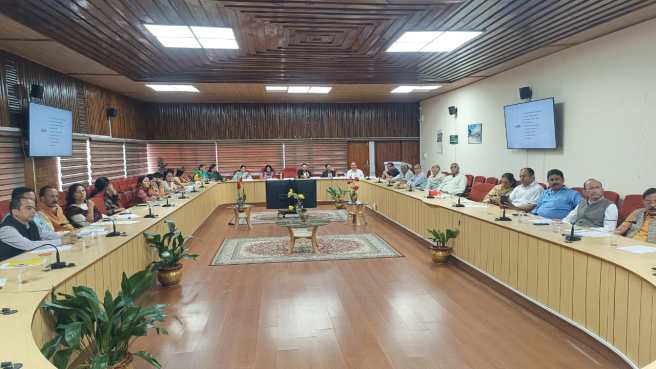
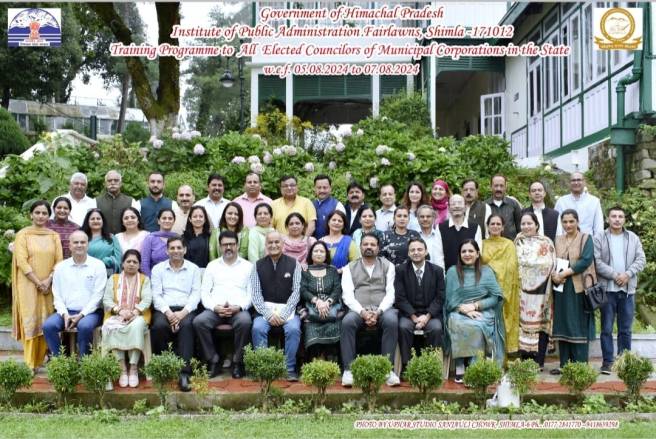
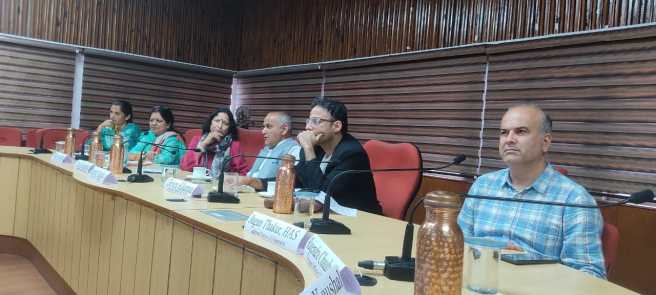
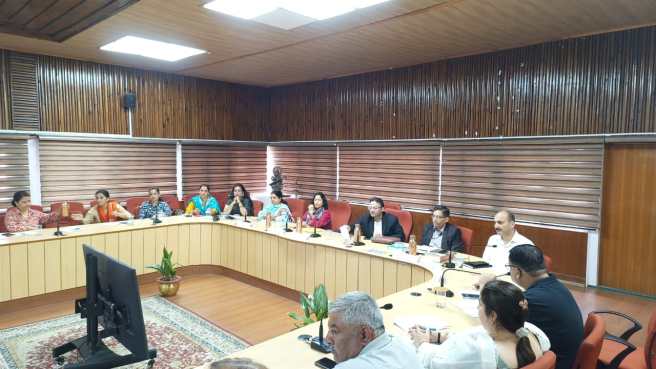

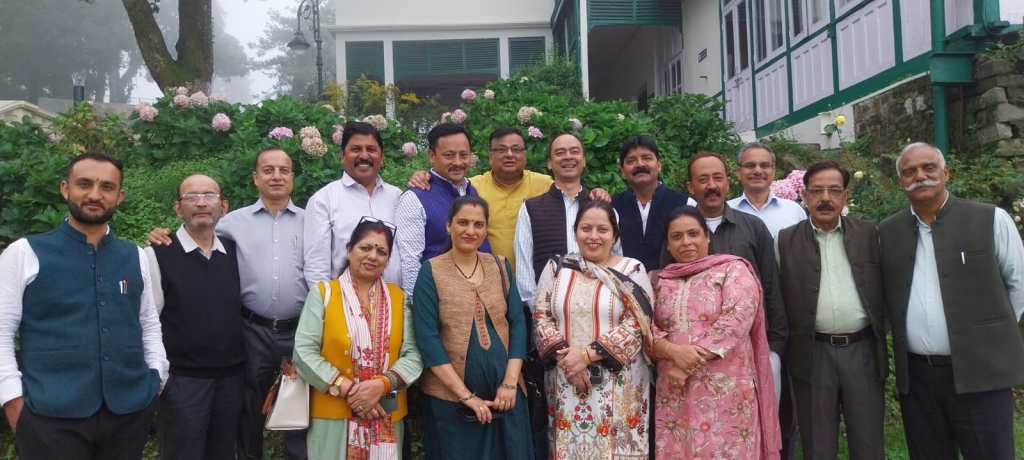
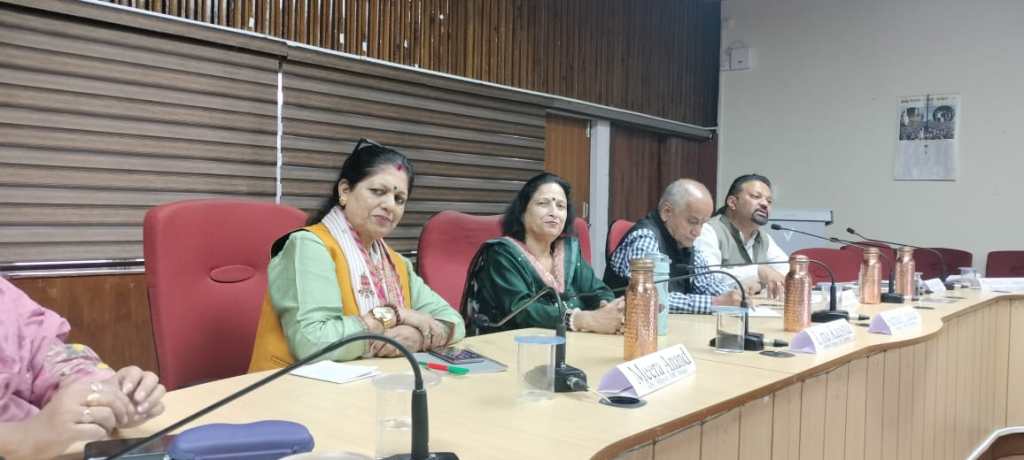


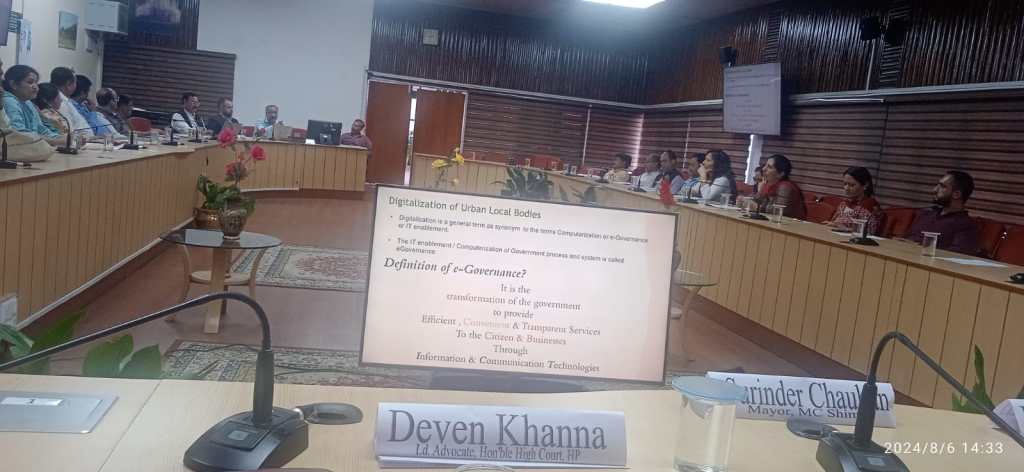
High Court of Himachal Pradesh in its earlier order had also mandated a critical training program for key municipal officials, including Mayors, Deputy Mayors, and Councilors of the Municipal Corporations of Shimla and Solan. This three-day training module, conducted at the Himachal Pradesh Institute of Public Administration (HIPA), was designed to address the challenges in solid waste management by providing in-depth knowledge and practical insights to the participants. The program was an essential step towards empowering these officials to implement and enforce environmental laws effectively, in line with the court’s directives.
Training Module for Mayors, Deputy Mayors, and Councilors of Municipal Corporations, Shimla and Solan (05.08.2024 to 07.08.2024):
Day 1: Understanding the Legal Framework and Implementation Strategies
- Inaugural Session: The training commenced with an inaugural session led by the Secretary (Urban Development) and Director (Urban Development). This session set the stage for the three-day program by outlining the significance of environmental laws and the critical role that municipal leaders play in their enforcement. Advocate Deven Khanna from the Himachal Pradesh High Court provided an overview of Suleman’s Case and his battle for dignity and the legal imperatives for municipalities to comply with solid waste management regulations.
- Implementation of Environmental Laws: Following the inauguration, Advocate Deven Khanna delivered a detailed presentation on the implementation of environmental laws, with a focus on aligning municipal actions with the directions of the Hon’ble Court. The discussion emphasized the legal responsibilities of municipal bodies and the importance of adhering to the court’s orders to avoid penalties and legal repercussions.
- Plastic Buy-Back Policy: Sh. D.C. Thakur, Environment Officer from the Department of Environment, Science, and Technology (DEST), introduced the plastic buy-back policy. He explained how this innovative policy is designed to combat plastic pollution by incentivizing the collection of plastic waste, particularly from vulnerable areas such as jungles, streams, and urban streets. The policy not only serves as a waste management tool but also as a socio-economic initiative, providing income opportunities for rag pickers and economically disadvantaged individuals.
- Material Recovery Facilities (MRFs): Experts Sh. Shashank Prabhu and Sakshi Sharma, alongside Speaker Waste Warrior Sh. Jagan Thakur, HAS, provided insights into the operation and importance of Material Recovery Facilities. They discussed the processes involved in segregating and processing recyclable waste, the role of MRFs in reducing landfill waste, and the need for expanding these facilities across the state to meet the growing demands of solid waste management.
Day 2: Technical Aspects and Advanced Waste Management Techniques
- Swachh Survekshan and Swachh Bharat Mission: The second day began with a session by the Additional Director (Urban Development), focusing on Swachh Survekshan and the Swachh Bharat Mission. These national initiatives aim to promote cleanliness, hygiene, and sanitation across India, with a particular emphasis on solid waste management in urban areas. The session covered the parameters of Swachh Survekshan surveys, best practices for improving municipal rankings, and strategies for achieving Swachh Bharat goals.
- Solid Waste Management Rules, Regulations, and Byelaws: Sh. Rajendra Chauhan, Project Officer, Urban Development Department (UDD), provided a comprehensive overview of the rules, regulations, and byelaws governing solid waste management. This session was crucial for understanding the legal frameworks that municipalities must operate within, including the responsibilities of municipal bodies, the role of various stakeholders, and the penalties for non-compliance.
- Sewerage Treatment Plants: Sh. Sanjay Kaushal, Assistant General Manager (Sewerage) at Shimla Jal Prabandhan Nigam Limited (SJPNL), discussed the technical aspects of sewerage treatment plants. He explained the processes involved in treating wastewater, the importance of maintaining these facilities to prevent environmental contamination, and the integration of sewerage management with overall solid waste management efforts.
- Digitization of Municipal Services: The final day included a session on the digitization of municipal services, presented by Sh. Pradeep Verma, Junior System Analyst-cum-Programmer at the UDD. This session focused on the integration of digital platforms like UPYOG for managing garbage collection and waste processing. The discussion covered the benefits of digitization in enhancing transparency, improving service delivery, and facilitating better communication between municipal authorities and the public.
Day 3: Innovative Solutions and Future Strategies
- Decentralized Waste Management in Urban Areas: Sh. Pradeep Sangwan, Founder of Healing Himalayas, presented on decentralized waste management strategies. He highlighted the benefits of managing waste at the local level, reducing the burden on centralized waste processing facilities, and engaging communities in waste segregation and recycling efforts. This session provided practical examples of successful decentralized waste management projects, demonstrating their effectiveness in urban environments.
- Plastic Waste Management and Extended Producer Responsibility (EPR): Sh. Chandan Singh, Executive Engineer, led a session on plastic waste management with a specific focus on Extended Producer Responsibility (EPR). This session detailed how companies producing plastic products are held accountable for the lifecycle of their products, including their disposal. The discussion emphasized the role of municipalities in enforcing EPR regulations and collaborating with the State Pollution Control Board to track and manage plastic waste effectively.
- Closing Session: The training concluded with a closing session led by the Director of the Urban Development Department. The session reviewed the key takeaways from the training and outlined the next steps for participants to implement what they had learned. The Director emphasized the importance of ongoing education and collaboration among municipal officials to continuously improve solid waste management practices across the state.
This three-day training at HIPA equipped municipal leaders with the knowledge and tools they need to address the complex challenges of solid waste management effectively. By bringing together legal experts, environmental specialists, and innovative practitioners, the program ensured that participants were well-prepared to lead their communities in the fight against pollution and to promote sustainable urban development.
Conclusion: A Bold Step Towards a Cleaner Himachal
The High Court of Himachal Pradesh’s recent directives mark a decisive moment in the state’s journey toward sustainable environmental management. By mandating rigorous training for municipal leaders, implementing the pioneering plastic buy-back policy, and focusing on both urban and religious sites, the court has laid the groundwork for a comprehensive approach to tackling solid waste. This multi-faceted strategy, which combines legal enforcement, community engagement, and innovative solutions, is set to transform how waste is managed across Himachal Pradesh. The emphasis on educating and empowering local authorities through the HIPA training program ensures that the state’s leaders are not just aware of their responsibilities but are also equipped with the knowledge and tools to drive real change. Meanwhile, the plastic buy-back policy stands out as a game-changer, offering both environmental and socio-economic benefits that resonate with the everyday lives of citizens, from the streets of Shimla to the remotest corners of the state. As these directives take root, the people of Himachal Pradesh can look forward to cleaner streets, revitalized natural landscapes, and a renewed commitment to preserving the beauty of their environment. The court’s orders are not just about compliance; they are about creating a legacy of sustainability that will benefit generations to come. In the words of those leading the charge, this is more than a legal obligation—it’s a shared responsibility to protect and cherish the natural heritage of Himachal Pradesh.

 LawUmbrella
2 thoughts on “Buy-back policy, HIPA Training, Special Task Force, and other directions by the High Court to Combat Solid Waste Issue”