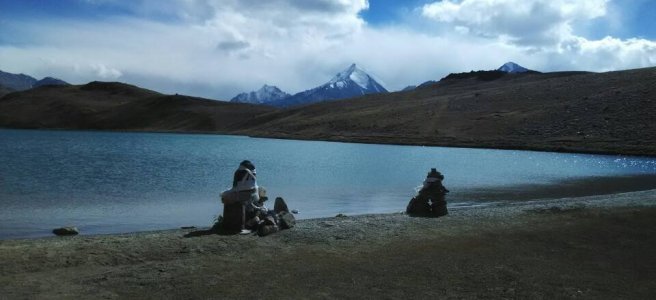
Pristine peaks of the Himalayas in Himachal Pradesh are renowned for their breathtaking landscapes and vibrant ecosystems. However, beneath the serene surface, a crisis brews in its veins—the rivers and streams that carve through this mountainous terrain are under siege. Pollution, unchecked and unbridled, threatens not only the rich wildlife that depends on these waters but also the communities for whom these rivers are lifelines. The purity of these waters is integral to the ecological balance and cultural heritage of not only this region but also the rest of the country as the Himalayas provide water to most of the parts of the Indian sub-continent. The water bodies face peril from industrial discharge, inadequate waste management, and faltering sewage treatments.
In response to this environmental emergency, Courts, have stepped in as a guardians of these vital waterways. Earlier the High Court of Himachal Pradesh in its order, stemming from the case “Suleman vs. Union of India,” encompassed a wide array of directives aimed at enhancing waste management practices, especially penalties for throwing waste in streams and rivers etc. (check earlier directions here:https://lawumbrella.org/2024/03/28/himachal-pradesh-high-courts-landmark-order-a-beacon-for-waste-management-stewardship/). And now the National Green Tribunal has passed an important order for Sewage treatment Plants.
The National Green Tribunal’s latest order is a call to restore the rivers of Himachal Pradesh to their former glory. It outlines a rigorous approach to tackle this crisis, focusing on the stringent oversight of Sewage Treatment Plants (STPs), many of which operate without compliance with environmental norms. By mandating comprehensive reports and corrective measures, the Tribunal aims not just to curb pollution but to chart a course towards sustainable management and conservation of water resources. This initiative promises to be a crucial step in healing the aquatic arteries of Himachal Pradesh, ensuring they continue to sustain life and beauty in this celestial landscape. Here’s a detailed analysis of the Tribunal’s recent order.
Background
This case originated from disturbing trends identified in water quality, affecting many rivers and streams across the state. The suo-moto application arose following the Central Pollution Control Board’s (CPCB) assessment at 136 locations across Himachal Pradesh. The findings revealed significant pollution in nine rivers and streams, which failed to meet prescribed water quality parameters. These rivers included:
- Ashwani Khad
- Bald of Baddi
- Giri of Sirmaur
- Markanda of Rampur
- Pabbar of Rohru
- Ratta of Nalagarh
- Shikari Khad of Rohru
- Sarsa of Nalagarh
- Sukhna Khad of Parwanoo
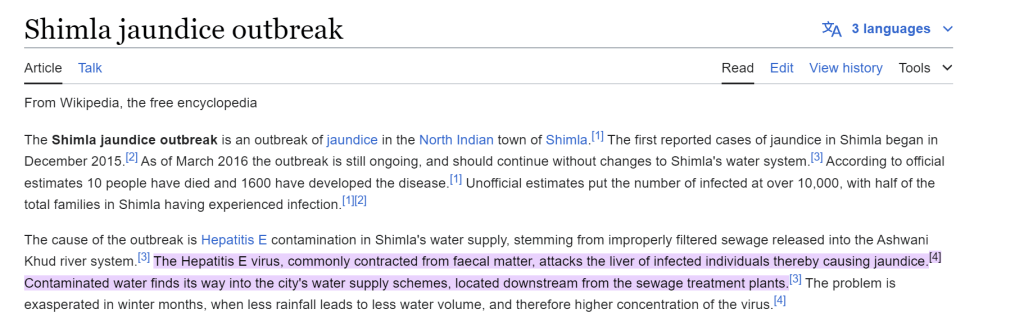
Below is the image from Wikipedia detailing the jaundice outbreak in Shimla due to the untreated water of Ashwanikhad.
Initial Observations and Concerns
“In the order dated 26.02.2024, Tribunal had taken note of the fact that water quality assessed by CPCB at 136 locations across 37 rivers in the region had revealed disturbing trends and the samples from 9 rivers and streams had witnessed the failure to meet the prescribed parameters.”
The NGT’s order dated 26.02.2024 highlighted the need for comprehensive data on the performance of Sewage Treatment Plants (STPs) operating in the catchment areas of these rivers. The Tribunal sought specific information from the CPCB and the Chief Secretary of Himachal Pradesh, emphasizing:
- STP Locations and Consent Status: Data on STPs’ Consent to Operate (CTO) status, location, capacity, and contact details.
- Affidavit on Progress: An affidavit from the Chief Secretary, disclosing completed work and further proposed actions.
CPCB’s Interim Report Findings (06.05.2024)
The interim report by CPCB identified significant non-compliance among several STPs, revealing:
“The above report clearly reveals that most of the STPs are operating without CTO and are found to be non-conformant with the norms. Along with the report, the results of analysis of samples collected from various STPs located in the catchment river stretch in the tabulated form has been filed as under.”
The Tribunal’s findings indicated a disturbing trend of non-compliance among several STPs, many of which have been operating without valid Consent to Operate (CTO). According to the interim report filed by the CPCB on May 6, 2024, out of 15 monitored STPs, most were found to be non-compliant with prescribed norms, exacerbating the pollution levels and posing serious threats to the aquatic life and health of residents.
- STP Non-compliance: 14 out of 15 monitored STPs were found operating without valid CTOs or were non-compliant with prescribed standards. Notably:
- Ashwani Khad: Three STPs (Lalpani, Malyana, Dhalli).
- Pabbar River: Two STPs (Rohru, Jubbal).
- Sukhna Khad: One STP (Zone-1, Parwanoo).
- Ratta River: One STP (Nalagarh).
- Bald/Sarsa River: One STP (CETP cum STP, Baddi).
- Performance Issues:
- Key Parameters: High levels of pH, BOD, COD, TSS, Total Nitrogen, and Coliform.
- Disinfection and Sludge Disposal: Poorly maintained disinfection facilities and incomplete sludge disposal records.
- Inconsistent Monitoring: Non-operational STP (Bhakra Beas Management Board, Pandoh) due to limited sewage availability.
- Pending Analysis Results: Six STPs of River Beas still await analysis results.
Chief Secretary’s Affidavit Deficiencies
The affidavit filed by the Superintending Engineer, Jal Shakti Vibhag, Circuit Solan, on behalf of the Chief Secretary, lacked crucial details:
- CTO Status: Absence of specific authorization and disclosure regarding STP CTOs.
- Operational Compliance: Inadequate information on compliance, capacity utilization, and STP functionalities.
NGT’s Directions
In its order, the NGT has demanded immediate action, calling for a detailed report from the CPCB that includes the status of each STP’s compliance with environmental norms. The Tribunal has also required the Chief Secretary of Himachal Pradesh to provide a full account of measures taken to address these concerns in a forthcoming affidavit. Should the Chief Secretary fail to provide this information, he will be required to appear before the Tribunal via a virtual session.
The Tribunal’s directions are clear: within three weeks, the CPCB is to submit a comprehensive final report, which should also propose remedial actions for the restoration of water quality. Moreover, the NGT emphasizes the need for tapping untreated or partially treated STP water, outlining specific restoration measures necessary to mitigate the ongoing damage.
Summary of Directions
- Final Report by CPCB:
- Three weeks to submit a comprehensive final report with all pending analysis results.
- Suggested remediation measures for water quality restoration.
- Chief Secretary’s Further Affidavit:
- Full particulars of STPs, including operational status and analysis reports.
- Direct appearance via virtual mode if the affidavit remains incomplete.
Key Takeaways and Implications of the Order
- Non-Compliance Issues: Widespread non-compliance and lack of environmental permits indicate systemic issues in monitoring and regulation.
- Accountability and Reporting: The Tribunal emphasized the need for transparent reporting, urging timely submission of comprehensive data.
- Restoration Measures: CPCB’s remediation suggestions are pivotal for reviving Himachal Pradesh’s rivers, including tapping untreated water drains.
Conclusion
The NGT’s intervention highlights the urgent need for rigorous environmental regulation and restoration of Himachal Pradesh’s polluted rivers. The upcoming final reports from the CPCB and the Chief Secretary will provide a clearer understanding of the situation and guide future actions to restore water quality effectively. The Tribunal’s proactive role sets a precedent for addressing pollution concerns across India’s river systems.
—————————————————
Deven Khanna,
Advocate,
Direct (M): + 91 – 7018469792
Office: +91 – 0177 – 2674760

 LawUmbrella