Straying from the Law to Cage Compassion – Supreme Court’s diktat on street dogs – Part 2

Just when it seemed the Supreme Court had overreached beyond repair with its August stray-dog directions,

https://lawumbrella.org/2025/08/13/straying-from-the-law-to-cage-compassion-supreme-courts-diktat-on-street-dogs-of-national-capital/

the Court returned on 7 November with a new order that appears to walk back the worst excesses, only to quietly introduce an entirely new layer of illegality. Yes, the Court has now “restored” the lawful principle of sterilise–vaccinate–return mandated under the ABC Rules, 2023, implicitly acknowledging that the earlier “zero-release” diktat was untenable. But beneath this veneer of correction lies a fresh wave of judicial law-making: new categories of dogs invented out of thin air (“aggressive dogs”), sweeping bans on dogs in institutions not authorised by any statute, mass-removal directions never contemplated by Parliament, and an expansion of executive-style micromanagement across schools, hospitals, stadiums, highways, bus depots, and railway stations.

Continue reading “Straying from the Law to Cage Compassion – Supreme Court’s diktat on street dogs – Part 2”

Straying from the Law to Cage Compassion – Supreme Court’s diktat on street dogs of national capital

When the Supreme Court’s August 2025 order on street dogs dropped, it landed with all the subtlety of a bulldozer in a butterfly garden. In one sweep, the Bench declared that every single community dog in Delhi-NCR must be rounded up, carted off to shelters, and never set paw on its old street again dismissing, without ceremony, any voice of dissent from animal welfare groups. The problem? India already has a law for this, the Prevention of Cruelty to Animals Act and the Animal Birth Control Rules, 2023 and that law says precisely the opposite: sterilise, vaccinate, and return them to their home turf, not exile them indefinitely. In the courtroom drama of “public safety versus compassion,” the scriptwriter here seems to have thrown the statute book out of the window.

Continue reading “Straying from the Law to Cage Compassion – Supreme Court’s diktat on street dogs of national capital”

Consumer Protection, Medical Negligence and Compensation- Supreme Court Verdict

Imagine undergoing what should be a routine surgical procedure, only to find yourself in a prolonged battle against pain and suffering caused by the very professionals entrusted with your care. This was the harsh reality faced by Jyoti Devi, whose simple appendectomy spiralled into a nightmare of continuous agony and medical mishandling. The Supreme Court of India speaking through Justice Sanjay Karol in Jyoti Devi vs Suket Hospital & Ors. not only provided her long-overdue justice but also reinforced critical principles of medical negligence and consumer protection in India. This case shines a spotlight on the importance of holding healthcare providers accountable and ensuring that victims receive fair and adequate compensation for their suffering. Let’s dive right in!

Continue reading “Consumer Protection, Medical Negligence and Compensation- Supreme Court Verdict”

An Analysis of the Supreme Court’s Judgement in the Shimla Development Plan Case

In a landmark decision that has significant implications for urban development, environmental law, and the jurisprudence of legislative powers, the Supreme Court of India delivered a judgment on January 11, 2024, involving the State of Himachal Pradesh. The case centered around the Himachal Pradesh Town & Country Planning Act of 1977 and its application in the Shimla Planning Area, bringing to the forefront complex issues of urban planning, environmental sustainability, and the scope of judicial intervention in legislative matters.

The genesis of the case can be traced back to the establishment of the Shimla Planning Area under the 1977 Act, which set the stage for subsequent development plans in the region. These plans and notifications, however, became a subject of legal scrutiny by the NGT, particularly keeping in view the environmental concerns. The National Green Tribunal (NGT) had previously issued a judgment on November 16, 2017 banning all construction activities in the green and core areas and also within 3 meters of national highways. It also restricted the number of stories to two-and-a-half in other areas where construction was permitted to up to 4 to 5 stories. The Hon’ble Supreme Court has now overturned this Judgment.

(to read the critique of the 2017 NGT Judgment please refer to https://himachalwatcher.com/2019/07/31/the-curse-of-ngt-judgment-undoing-of-urban-planning/)

Continue reading “An Analysis of the Supreme Court’s Judgement in the Shimla Development Plan Case”

Legal Perspectives on Re-Evaluation of Answer Sheets – Key Judgments

Introduction: The question regarding the ability of a court to mandate the re-evaluation of examination papers in the absence of a specific statutory provision is a matter of great legal significance. The Supreme Court of India has consistently maintained that re-evaluation of examination papers is not a right that candidates can demand unless there is an explicit provision in the relevant rules or statutes. The jurisprudence pertaining to the re-evaluation of answer scripts in India is marked by a strong reluctance to interfere in the absence of statutory provisions. Nevertheless, the Supreme Court has made exceptions in situations where there are clear errors in evaluation or when statutory rights, such as those enshrined in the Right to Information (RTI) Act, are implicated. Together, these judgments underscore the importance of maintaining a balanced approach that respects the autonomy of educational institutions while ensuring fairness and accuracy in the evaluation process.

Continue reading “Legal Perspectives on Re-Evaluation of Answer Sheets – Key Judgments”

Transfer of Judges – A Tool to Undermine the Institution of Justice

The article was first published 3 years ago on February 27, 2020 at https://himachalwatcher.com/2020/02/27/transfer-of-judges-a-tool-to-undermine-the-institution-of-justice/

Justice S. Murlidhar of the Delhi High Court, who was hearing a petition on the Delhi Riots, sharply condemned both the government and police on Wednesday. His scathing remarks questioned the workings of the police. Following it, orders for his immediate transfer came late at night the same day to the Punjab and Haryana High Court.

Continue reading “Transfer of Judges – A Tool to Undermine the Institution of Justice”

Academic Merit of the candidate must also reckon the services rendered for the Common Good

In view of ensuring  ‘Right to Health’, adequate medical facilities and an adequate number of doctors in the rural areas, an important order has been passed by the Patna High Court in the current circumstances of  a ‘Pandemic’. The Order is in line with judiciaries endeavor to fulfill its obligation towards securing social justice for the poor and especially for the people living in rural parts of our country.

Continue reading “Academic Merit of the candidate must also reckon the services rendered for the Common Good”

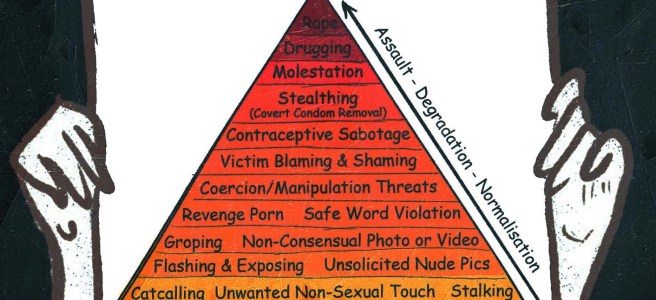
Saving Gudiya: Laws, Rights of Victim, Role of Government, Judiciary, and Society

In the countless cases of rape and sexual assault that we encounter as lawyers, victims often find themselves grappling with confusion and uncertainty. They’re unsure of what to do, what to expect, and the rationale behind each step in both the pre-trial and trial stages. This lack of legal orientation and guidance breeds immense anxiety, leaving victims vulnerable to exploitation as they seek even the most basic legal information. Essential rights—such as timely access to an FIR, support during testimony, compensation, and free medical treatment—are frequently withheld, compounding the trauma they’ve already endured.

Continue reading “Saving Gudiya: Laws, Rights of Victim, Role of Government, Judiciary, and Society”