
The Proposal to Charge Electricity and Water at Commercial Rates for Homestays: A Critical Examination

In a surprising and controversial move, the Himachal Pradesh government recently announced a proposal to impose commercial rates for electricity and water on homestays. This decision was revealed in various news outlets indicating that a proposal to provide electricity and water facilities in the state’s homestays at commercial rates has been placed before the Cabinet Sub-Committee constituted to amend the Home Stay Rules 2024.

For years, homestays have been a lifeline for middle-class and lower-income families, providing a vital source of supplementary income and contributing to the local economy. However, this new policy threatens to undermine the very foundation of homestays, turning what was once an accessible and inclusive form of tourism into a financially burdensome endeavour. The government argues that aligning utility rates with commercial standards is necessary for regulatory consistency and financial sustainability. However, this rationale fails to consider the unique nature of homestays, which operate on a small scale and offer tourists an authentic, home-like experience rather than a commercial service. The proposal raises critical questions about economic inequality, property rights, and the future of sustainable tourism in Himachal Pradesh. In this blog, we will delve into the multifaceted implications of this proposal, examining how it stands to impact local livelihoods, exacerbate economic disparities, and contradict the very principles of the Incredible India scheme.

Continue reading “The Proposal to Charge Electricity and Water at Commercial Rates for Homestays: A Critical Examination”
An Analysis of the Supreme Court’s Judgement in the Shimla Development Plan Case

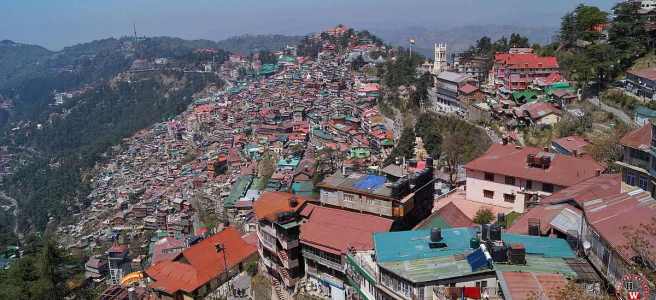
In a landmark decision that has significant implications for urban development, environmental law, and the jurisprudence of legislative powers, the Supreme Court of India delivered a judgment on January 11, 2024, involving the State of Himachal Pradesh. The case centered around the Himachal Pradesh Town & Country Planning Act of 1977 and its application in the Shimla Planning Area, bringing to the forefront complex issues of urban planning, environmental sustainability, and the scope of judicial intervention in legislative matters.

The genesis of the case can be traced back to the establishment of the Shimla Planning Area under the 1977 Act, which set the stage for subsequent development plans in the region. These plans and notifications, however, became a subject of legal scrutiny by the NGT, particularly keeping in view the environmental concerns. The National Green Tribunal (NGT) had previously issued a judgment on November 16, 2017 banning all construction activities in the green and core areas and also within 3 meters of national highways. It also restricted the number of stories to two-and-a-half in other areas where construction was permitted to up to 4 to 5 stories. The Hon’ble Supreme Court has now overturned this Judgment.

(to read the critique of the 2017 NGT Judgment please refer to https://himachalwatcher.com/2019/07/31/the-curse-of-ngt-judgment-undoing-of-urban-planning/)

Continue reading “An Analysis of the Supreme Court’s Judgement in the Shimla Development Plan Case”

The Right to Fair Compensation invoked in a case of land acquisition by the State

In the judgment of Basti Ram and Another vs. State of Himachal Pradesh, CWP No. 966 of 2021, the High Court of Himachal Pradesh, presided over by Justice Ajay Mohan Goel, addressed an issue concerning the right to fair compensation for land acquisition. Decided on November 1, 2023, this case underscores the constitutional rights of property owners under Article 300A and the necessity of following due legal process in land acquisition.

Continue reading “The Right to Fair Compensation invoked in a case of land acquisition by the State”

Land Utilized by the State for Road Construction: High Court Upholds Right to Just Compensation

In significant judgments rendered by Hon’ble Justice Sandeep Sharma, the intricacies of constitutional and property rights were brought to the forefront, highlighting the enduring struggle between individual rights and state obligations. This case, steeped in legal complexities, revolves around the unauthorized utilization of an individual’s land by the state for constructing a road without the payment of any compensation to the landowner. The petitioner, feeling aggrieved by the state’s actions, approached the Court under Article 226 of the Constitution of India, seeking redressal and compensation for the unauthorized utilization of his land. This blog post aims to dissect the legal nuances of this case, exploring the arguments presented, the legal principles invoked, and the final judgment rendered by the Court. The case serves as a poignant reminder of the sanctity of property rights and the paramount importance of upholding constitutional provisions and human rights in the face of state actions.

Continue reading “Land Utilized by the State for Road Construction: High Court Upholds Right to Just Compensation”

Himachal Pradesh High Court: Land Rights and State Accountability

In a recent judgment, the Himachal Pradesh High Court, speaking through M.S. Ramachandra Rao, Hon’ble the Chief Justice, addressed the contentious issues of land rights, state accountability, and the constitutional protection of property.

The case revolved around the utilization of a petitioner’s land by the State without his consent and due compensation. The court’s decision sheds light on the intricate balance between the public interest and individual rights.

Continue reading “Himachal Pradesh High Court: Land Rights and State Accountability”