The Advocates (Amendment) Bill, 2025: A Threat to Judicial Independence and the Sanctity of the Legal Profession

“The legal profession is not merely an occupation; it is the guardian of justice, the voice of the oppressed, and the first line of defense against tyranny. An independent Bar is the cornerstone of an independent judiciary—compromise it, and you compromise the very foundation of democracy.”

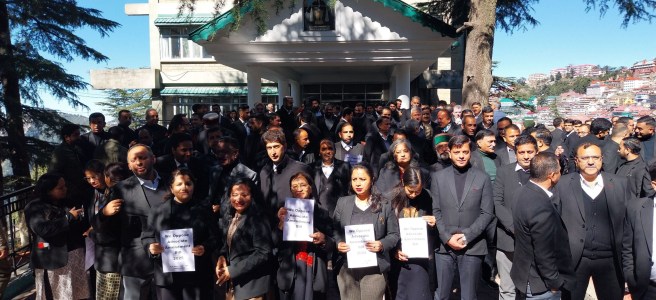
If the Advocates (Amendment) Bill, 2025 had a motto, it would be: “Speak less, comply more, and never question authority.” Wrapped in the language of “reform,” this Bill is less about improving the legal profession and more about taming it. It reads like a playbook for turning fierce, independent advocates into government-approved legal service providers, carefully selected to avoid ruffling any executive feathers. By expanding control over the Bar, criminalizing dissent, and creating a chilling effect on legal activism, the Bill seems designed to ensure that lawyers think twice before taking up cases that challenge the powers that be. In a democracy, advocates are meant to be the watchdogs of justice—but with these amendments, the government appears keen to turn them into obedient house pets, barking only when permitted. The message is clear: fall in line, or risk professional extinction. But history has shown that the legal fraternity does not take kindly to such attempts at subjugation—and the overwhelming resistance to this Bill proves that the fight for an independent Bar is far from over.

Continue reading “The Advocates (Amendment) Bill, 2025: A Threat to Judicial Independence and the Sanctity of the Legal Profession”
Inconvienient Judgments that ruffle too many feathers-The case of the silent majority, Judicial Transfers and Sherlock Holmes

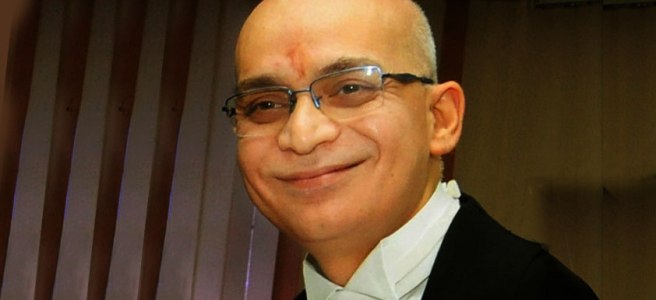
Imagine Sherlock Holmes sitting in his Baker Street flat, scratching his head over the enigma of judicial transfers in India. “It’s quite elementary, my dear Watson,” he might say, “except when it’s not. The transfers happen without consent, reasons are shrouded in secrecy, and the silent majority watches as the plot thickens!”

Continue reading “Inconvienient Judgments that ruffle too many feathers-The case of the silent majority, Judicial Transfers and Sherlock Holmes”

Transfer of Judges – A Tool to Undermine the Institution of Justice

The article was first published 3 years ago on February 27, 2020 at https://himachalwatcher.com/2020/02/27/transfer-of-judges-a-tool-to-undermine-the-institution-of-justice/

Justice S. Murlidhar of the Delhi High Court, who was hearing a petition on the Delhi Riots, sharply condemned both the government and police on Wednesday. His scathing remarks questioned the workings of the police. Following it, orders for his immediate transfer came late at night the same day to the Punjab and Haryana High Court.

Continue reading “Transfer of Judges – A Tool to Undermine the Institution of Justice”

A Scrutiny of Administrative Decisions: The Tale of Sub-Tehsil Bagshad versus Tattapani

Introduction:

In the intricate fabric of administrative law and governance, the creation of a Sub-Tehsil is primarily a matter of administrative convenience aimed at the efficient delivery of governmental services to the populace. However, when such administrative actions collide with public interest and perceived notions of fairness, they demand meticulous scrutiny. This article delves into a case where the creation of Sub-Tehsil Bagshad versus Tattapani in District Mandi raised complex questions about administrative decisions, public interest, and the scope of judicial review.

Continue reading “A Scrutiny of Administrative Decisions: The Tale of Sub-Tehsil Bagshad versus Tattapani”

Academic Merit of the candidate must also reckon the services rendered for the Common Good

In view of ensuring  ‘Right to Health’, adequate medical facilities and an adequate number of doctors in the rural areas, an important order has been passed by the Patna High Court in the current circumstances of  a ‘Pandemic’. The Order is in line with judiciaries endeavor to fulfill its obligation towards securing social justice for the poor and especially for the people living in rural parts of our country.

Continue reading “Academic Merit of the candidate must also reckon the services rendered for the Common Good”

Of Roaring Lions and Squeaking Mice!


In the tapestry of legal history, there are moments that echo with resonance, revealing the courage of those who refuse to be silenced. Consider the words of Francis Bacon, who likened judges to “Lions under the throne,” guardians of justice and truth. Yet, as time unfurled its chapters, another narrative emerged. In the famous Second World War case of Liversidge v Anderson, where Lord Atkin delivered his powerful dissenting speech, he commented on the arguments of the lawyers and stated that this level of reasoning would have been acceptable to the Court of Kings Bench in the time of Charles I (a monarchy) but not in a democracy! sadly, this reasoning was accepted by all of his brother judges. The subjective interpretation adopted by his brother judges who were then pleasing to politicians provoked a letter to Lord Atkin from Mr Justice Wintringham Stable. The letter expressed approval of Lord Atkin’s dissent, and then added:

Continue reading “Of Roaring Lions and Squeaking Mice!”