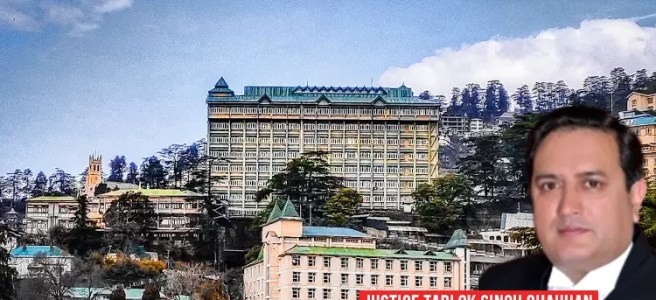
Himachal High Court Pulls Up Authorities Over Parking Chaos, Restricted Roads and Decline of Shimla’s Walking Culture

In an age when cities across the world are rediscovering the joy of walking, Shimla didn’t need reminding. It was built for it. The Mall Road was never just a stretch of tarmac; it was the city’s living room, where the rhythm of footsteps replaced the honk of horns, and strolling with an umbrella and jacket was a way of life. Walking wasn’t an afterthought here, it was the culture.

But the walker’s town is stumbling. What was once a paradise for pedestrians is now tripping over cars that creep into every nook and cranny. Drop-off passes double as overnight parking permits, and even sealed roads are no longer sacred. A town designed for shoes is being hijacked by wheels. And if the sidewalks are choking, the playgrounds are gasping. Grounds that once rang with cricket shots and the laughter of children have been swallowed by rows of parked vehicles. Instead of being the lungs of the town, these spaces are turning into parking lungs for cars. In Shimla today, the choice seems stark: a game of football, or another dozen SUVs. Guess who’s winning?

Continue reading “Himachal High Court Pulls Up Authorities Over Parking Chaos, Restricted Roads and Decline of Shimla’s Walking Culture”

In the Courtroom of Conscience: Reflecting on Justice Tarlok Singh Chauhan

In Shimla, there are two things as certain as the hills themselves: the old town hooter that sounds at ten, and Justice Tarlok Chauhan taking his seat at exactly the same hour. Sharp ten. No dithering, no delay, time, like law, had to be honored. For the bar, this daily certainty meant one thing: if you had a matter before Justice Chauhan, you’d better have your file and your wits in order well before the fog lifted from the Mall Road. Once seated, His Lordship moved through the cause list with a rhythm that was nothing short of orchestral. The courtroom would come alive with movement, petitions called, orders passed, arguments sliced clean with surgical clarity. It wasn’t just speed; it was discipline refined into tempo. Lawyers who fancied a leisurely morning found themselves sprinting through their submissions, their watches forever set to “Justice Chauhan Standard Time.” He didn’t simply hear cases; he breezed through them, but never at the cost of fairness or depth. To witness him in court was to witness the law in motion, not sluggish, not ceremonial, but alive, exacting, and infused with purpose.

Continue reading “In the Courtroom of Conscience: Reflecting on Justice Tarlok Singh Chauhan”

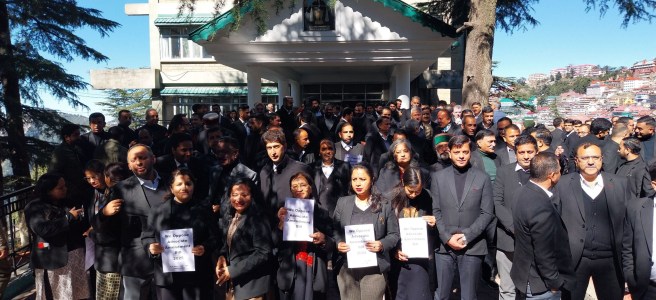
The Advocates (Amendment) Bill, 2025: A Threat to Judicial Independence and the Sanctity of the Legal Profession

“The legal profession is not merely an occupation; it is the guardian of justice, the voice of the oppressed, and the first line of defense against tyranny. An independent Bar is the cornerstone of an independent judiciary—compromise it, and you compromise the very foundation of democracy.”

If the Advocates (Amendment) Bill, 2025 had a motto, it would be: “Speak less, comply more, and never question authority.” Wrapped in the language of “reform,” this Bill is less about improving the legal profession and more about taming it. It reads like a playbook for turning fierce, independent advocates into government-approved legal service providers, carefully selected to avoid ruffling any executive feathers. By expanding control over the Bar, criminalizing dissent, and creating a chilling effect on legal activism, the Bill seems designed to ensure that lawyers think twice before taking up cases that challenge the powers that be. In a democracy, advocates are meant to be the watchdogs of justice—but with these amendments, the government appears keen to turn them into obedient house pets, barking only when permitted. The message is clear: fall in line, or risk professional extinction. But history has shown that the legal fraternity does not take kindly to such attempts at subjugation—and the overwhelming resistance to this Bill proves that the fight for an independent Bar is far from over.

Continue reading “The Advocates (Amendment) Bill, 2025: A Threat to Judicial Independence and the Sanctity of the Legal Profession”

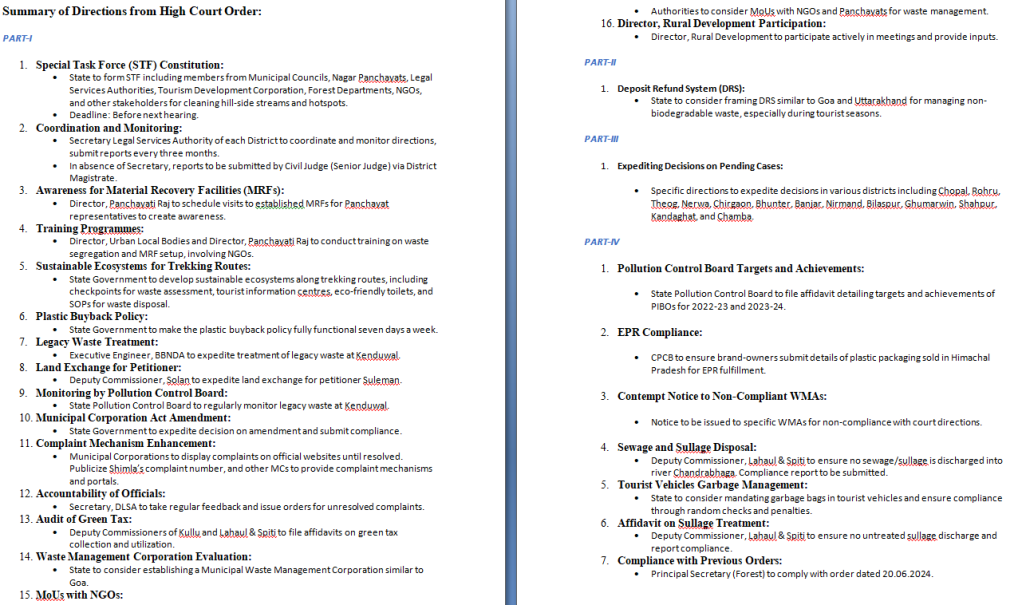
Buy-back policy, HIPA Training, Special Task Force, and other directions by the High Court to Combat Solid Waste Issue

Shimla, August 8, 2024 – The division bench of the High Court of Himachal Pradesh presided over by J. Tarlok Singh Chauhan and J. Sushil Kukreja, in its ongoing commitment to environmental preservation, has issued a series of significant directives aimed at enhancing solid waste management across the state. Building on its earlier orders on March 23May 9, 2024 and July 18, 2024., the court has now introduced new measures to ensure that these efforts reach the most critical areas and involve every level of society. The court’s new order, dated August 8, 2024, builds on these earlier measures with additional, targeted directives. Let’s dive right in:

Continue reading “Buy-back policy, HIPA Training, Special Task Force, and other directions by the High Court to Combat Solid Waste Issue”

High Court Issues Comprehensive Directives to Tackle Solid/Plastic Waste Issue in Himachal Pradesh

 Shimla, July 24, 2024 – In a landmark ruling on July 18, 2024, the High Court of Himachal Pradesh, under the astute guidance of Judges J. Tarlok Singh Chauhan and J. Sushil Kukreja, issued an exhaustive order that promises a greener future. This pivotal decision, following the court’s March 23 and May 9, 2024 Orders, addresses critical aspects of compliance and sets forth robust directives for solid waste management. Lets dive right in:

Continue reading “High Court Issues Comprehensive Directives to Tackle Solid/Plastic Waste Issue in Himachal Pradesh”

State’s Compliance and Waste Management Directives by High Court in Suleman Vs UOI

In a significant decision dated May 9, 2024, the High Court of Himachal Pradesh, presided over by Judges J. Tarlok Singh Chauhan and J. Sushil Kukreja, delivered a comprehensive order addressing multiple matters concerning the compliance with the earlier order, examining the Action taken report of Municipal Corporation Shimla, and issuing directions in furtherance of its March 23 Order for solid waste management. This article deals with the above three aspects of the order in three Parts.

Continue reading “State’s Compliance and Waste Management Directives by High Court in Suleman Vs UOI”

State’s Duty to Honor Pension Commitments | Suneet Singh Jaryal Case

In a recent decision, the High Court of Himachal Pradesh adjudicated the case of Suneet Singh Jaryal v. State of Himachal Pradesh, focusing on the denial of pensionary benefits to a retired government employee. The case underscores the legal obligations of state entities to fulfill financial commitments to their employees post-retirement, emphasizing the constitutional rights underpinning timely pension disbursements.

Continue reading “State’s Duty to Honor Pension Commitments | Suneet Singh Jaryal Case”

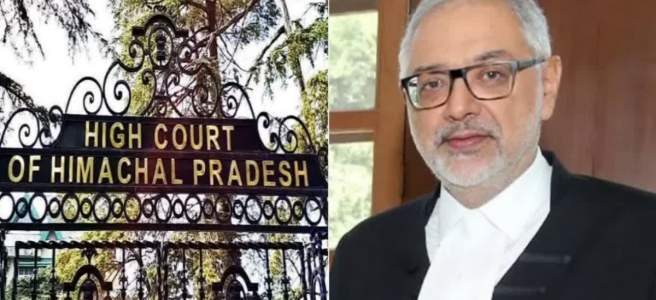
Himachal Pradesh High Court’s Landmark Order: A Beacon for Waste management Stewardship


Shimla, Himachal Pradesh – In a landmark decision that underscores the judiciary’s commitment to environmental sustainability, the High Court of Himachal Pradesh through Hon’ble Justice Tarlok Singh Chauhan, has issued a comprehensive order, setting a new precedent for waste management and environmental protection in the state. The order, stemming from the case “Suleman vs. Union of India,” encompasses a wide array of directives aimed at enhancing waste management practices, promoting sustainable environmental policies, and ensuring strict compliance with environmental laws.(check earlier directions here https://lawumbrella.org/2023/11/26/high-court-of-himachal-pradesh-orders-stringent-implementation-of-solid-waste-management-laws/)

Continue reading “Himachal Pradesh High Court’s Landmark Order: A Beacon for Waste management Stewardship”

Article 16 of the Indian Constitution – Equality and the Evolution of Reservation Policies

The Indian Constitution, a living document, embodies the ethos of democracy and social justice. Its various provisions are designed to ensure not just legal equality but also to promote substantive equality among its citizens. Article 16 stands as a cornerstone in this endeavor, focusing on equality of opportunity in employment. This article presents an intricate balance between the principle of non-discrimination (Article 16(1)) and affirmative action (Article 16(4)), showcasing the Indian state’s commitment to creating a level playing field for all, especially the oppressed classes.

Continue reading “Article 16 of the Indian Constitution – Equality and the Evolution of Reservation Policies”

Non-issuance of NOC and leave to pursue a higher specialization despite qualifying for the NEET exam- The significance of fair, non-arbitrary administrative decisions.

After completing his MBBS from Indira Gandhi Medical College, Shimla, Dr. Anupam Sharma joined as a General Duty Officer (GDO) in the Health Department of Himachal Pradesh. He served at various health centers before being selected for a post-graduate course in general surgery at the same college. After completing his postgraduate studies, Dr. Sharma was appointed as a Senior Resident in the Department of General Surgery at Dr. Y.S. Parmar Government Medical College in Nahan.

Dr. Sharma’s aspirations to further his expertise led him to appear for the NEET Super Specialty Examination (M.CH & DNB SS)-2023, which he cleared successfully. To pursue this higher specialization, he required a No Objection Certificate (NOC) and Extra-Ordinary Leave from his current position, as per the protocols set by the Health Department. However, Dr. Sharma faced a roadblock despite applying for the NOC and the leave. The Health Department did not address his request, leading to a significant professional setback. This non-action by the authorities prompted Dr. Sharma to approach the Himachal Pradesh High Court to seek legal redress.

Continue reading “Non-issuance of NOC and leave to pursue a higher specialization despite qualifying for the NEET exam- The significance of fair, non-arbitrary administrative decisions.”

Legal Perspectives on Re-Evaluation of Answer Sheets – Key Judgments

Introduction: The question regarding the ability of a court to mandate the re-evaluation of examination papers in the absence of a specific statutory provision is a matter of great legal significance. The Supreme Court of India has consistently maintained that re-evaluation of examination papers is not a right that candidates can demand unless there is an explicit provision in the relevant rules or statutes. The jurisprudence pertaining to the re-evaluation of answer scripts in India is marked by a strong reluctance to interfere in the absence of statutory provisions. Nevertheless, the Supreme Court has made exceptions in situations where there are clear errors in evaluation or when statutory rights, such as those enshrined in the Right to Information (RTI) Act, are implicated. Together, these judgments underscore the importance of maintaining a balanced approach that respects the autonomy of educational institutions while ensuring fairness and accuracy in the evaluation process.

Continue reading “Legal Perspectives on Re-Evaluation of Answer Sheets – Key Judgments”