Straying from the Law to Cage Compassion – Supreme Court’s diktat on street dogs – Part 2

Just when it seemed the Supreme Court had overreached beyond repair with its August stray-dog directions,

https://lawumbrella.org/2025/08/13/straying-from-the-law-to-cage-compassion-supreme-courts-diktat-on-street-dogs-of-national-capital/

the Court returned on 7 November with a new order that appears to walk back the worst excesses, only to quietly introduce an entirely new layer of illegality. Yes, the Court has now “restored” the lawful principle of sterilise–vaccinate–return mandated under the ABC Rules, 2023, implicitly acknowledging that the earlier “zero-release” diktat was untenable. But beneath this veneer of correction lies a fresh wave of judicial law-making: new categories of dogs invented out of thin air (“aggressive dogs”), sweeping bans on dogs in institutions not authorised by any statute, mass-removal directions never contemplated by Parliament, and an expansion of executive-style micromanagement across schools, hospitals, stadiums, highways, bus depots, and railway stations.

Continue reading “Straying from the Law to Cage Compassion – Supreme Court’s diktat on street dogs – Part 2”

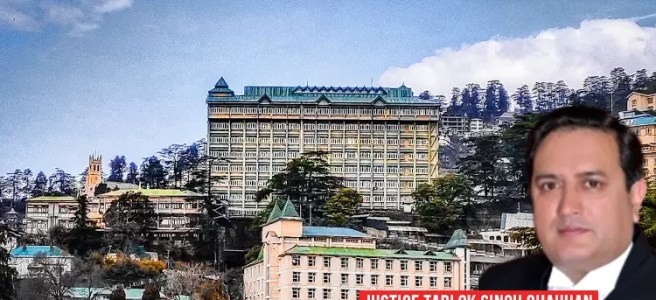
Himachal High Court Pulls Up Authorities Over Parking Chaos, Restricted Roads and Decline of Shimla’s Walking Culture

In an age when cities across the world are rediscovering the joy of walking, Shimla didn’t need reminding. It was built for it. The Mall Road was never just a stretch of tarmac; it was the city’s living room, where the rhythm of footsteps replaced the honk of horns, and strolling with an umbrella and jacket was a way of life. Walking wasn’t an afterthought here, it was the culture.

But the walker’s town is stumbling. What was once a paradise for pedestrians is now tripping over cars that creep into every nook and cranny. Drop-off passes double as overnight parking permits, and even sealed roads are no longer sacred. A town designed for shoes is being hijacked by wheels. And if the sidewalks are choking, the playgrounds are gasping. Grounds that once rang with cricket shots and the laughter of children have been swallowed by rows of parked vehicles. Instead of being the lungs of the town, these spaces are turning into parking lungs for cars. In Shimla today, the choice seems stark: a game of football, or another dozen SUVs. Guess who’s winning?

Continue reading “Himachal High Court Pulls Up Authorities Over Parking Chaos, Restricted Roads and Decline of Shimla’s Walking Culture”

Straying from the Law to Cage Compassion – Supreme Court’s diktat on street dogs of national capital

When the Supreme Court’s August 2025 order on street dogs dropped, it landed with all the subtlety of a bulldozer in a butterfly garden. In one sweep, the Bench declared that every single community dog in Delhi-NCR must be rounded up, carted off to shelters, and never set paw on its old street again dismissing, without ceremony, any voice of dissent from animal welfare groups. The problem? India already has a law for this, the Prevention of Cruelty to Animals Act and the Animal Birth Control Rules, 2023 and that law says precisely the opposite: sterilise, vaccinate, and return them to their home turf, not exile them indefinitely. In the courtroom drama of “public safety versus compassion,” the scriptwriter here seems to have thrown the statute book out of the window.

Continue reading “Straying from the Law to Cage Compassion – Supreme Court’s diktat on street dogs of national capital”

In the Courtroom of Conscience: Reflecting on Justice Tarlok Singh Chauhan

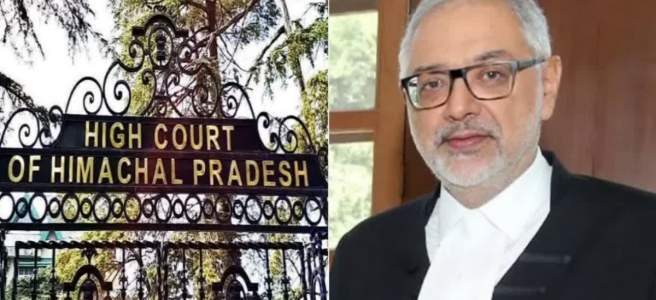
In Shimla, there are two things as certain as the hills themselves: the old town hooter that sounds at ten, and Justice Tarlok Chauhan taking his seat at exactly the same hour. Sharp ten. No dithering, no delay, time, like law, had to be honored. For the bar, this daily certainty meant one thing: if you had a matter before Justice Chauhan, you’d better have your file and your wits in order well before the fog lifted from the Mall Road. Once seated, His Lordship moved through the cause list with a rhythm that was nothing short of orchestral. The courtroom would come alive with movement, petitions called, orders passed, arguments sliced clean with surgical clarity. It wasn’t just speed; it was discipline refined into tempo. Lawyers who fancied a leisurely morning found themselves sprinting through their submissions, their watches forever set to “Justice Chauhan Standard Time.” He didn’t simply hear cases; he breezed through them, but never at the cost of fairness or depth. To witness him in court was to witness the law in motion, not sluggish, not ceremonial, but alive, exacting, and infused with purpose.

Continue reading “In the Courtroom of Conscience: Reflecting on Justice Tarlok Singh Chauhan”

The Advocates (Amendment) Bill, 2025: A Threat to Judicial Independence and the Sanctity of the Legal Profession

“The legal profession is not merely an occupation; it is the guardian of justice, the voice of the oppressed, and the first line of defense against tyranny. An independent Bar is the cornerstone of an independent judiciary—compromise it, and you compromise the very foundation of democracy.”

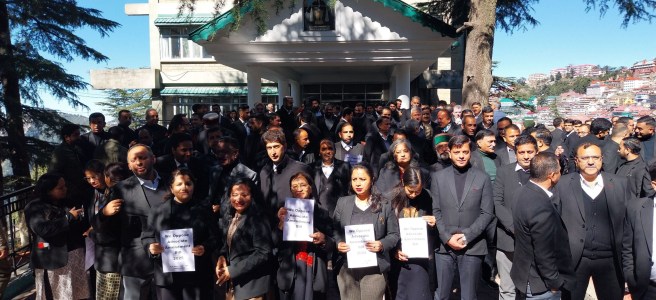
If the Advocates (Amendment) Bill, 2025 had a motto, it would be: “Speak less, comply more, and never question authority.” Wrapped in the language of “reform,” this Bill is less about improving the legal profession and more about taming it. It reads like a playbook for turning fierce, independent advocates into government-approved legal service providers, carefully selected to avoid ruffling any executive feathers. By expanding control over the Bar, criminalizing dissent, and creating a chilling effect on legal activism, the Bill seems designed to ensure that lawyers think twice before taking up cases that challenge the powers that be. In a democracy, advocates are meant to be the watchdogs of justice—but with these amendments, the government appears keen to turn them into obedient house pets, barking only when permitted. The message is clear: fall in line, or risk professional extinction. But history has shown that the legal fraternity does not take kindly to such attempts at subjugation—and the overwhelming resistance to this Bill proves that the fight for an independent Bar is far from over.

Continue reading “The Advocates (Amendment) Bill, 2025: A Threat to Judicial Independence and the Sanctity of the Legal Profession”

High Court seeks Rigorous Compliance of sanitation issues: Respect for shared spaces and lessons from Japan

The scene portrayed above is from a Japanese movie, Perfect Days (2023), directed by Wim Wenders. The film portrays the life of a Tokyo toilet cleaner, Hirayama, who finds profound meaning and dignity in his seemingly mundane job. The philosophy of Perfect Days emphasizes finding dignity, meaning, and beauty in tasks, like cleaning toilets, reflecting the profound connection between care for shared spaces and human respect. As essential public services, sanitation and toilets embody this philosophy by upholding public health, equality, and dignity for all. Together, they remind us that even the simplest actions in maintaining hygiene can have transformative societal impacts.
The High Court’s various directives in CWPIL 6 of 2017 and the philosophy of Perfect Days converge on a universal truth: dignity resides in the care we show for our shared spaces and responsibilities. Just as Hirayama’s work elevates public toilets to sanctuaries of care, the court’s insistence on accountability and sustainable practices transforms sanitation into a symbol of collective respect and progress.

Continue reading “High Court seeks Rigorous Compliance of sanitation issues: Respect for shared spaces and lessons from Japan”

Retrospective Regularization and Pay Fixation Benefits: A Win for Forest Guards

In a case that highlights the perils of administrative inefficiency and its impact on the fundamental right to equality, the Himachal Pradesh High Court delivered a landmark judgment in favor of Forest Guards who were left behind in the race for regularization. At the heart of the matter was a seemingly small, yet significant delay in regularizing the petitioners’ services—a delay that cost them the financial and professional benefits their counterparts in the Dharamshala Circle enjoyed. The courtroom battle underscored a critical question: should employees suffer because of administrative lapses beyond their control? The court’s answer was a resounding no.

Continue reading “Retrospective Regularization and Pay Fixation Benefits: A Win for Forest Guards”

Inconvienient Judgments that ruffle too many feathers-The case of the silent majority, Judicial Transfers and Sherlock Holmes

Imagine Sherlock Holmes sitting in his Baker Street flat, scratching his head over the enigma of judicial transfers in India. “It’s quite elementary, my dear Watson,” he might say, “except when it’s not. The transfers happen without consent, reasons are shrouded in secrecy, and the silent majority watches as the plot thickens!”

Continue reading “Inconvienient Judgments that ruffle too many feathers-The case of the silent majority, Judicial Transfers and Sherlock Holmes”

The Indian Constitution: A Masterpiece of Borrowed Wisdom and Indigenous Innovation

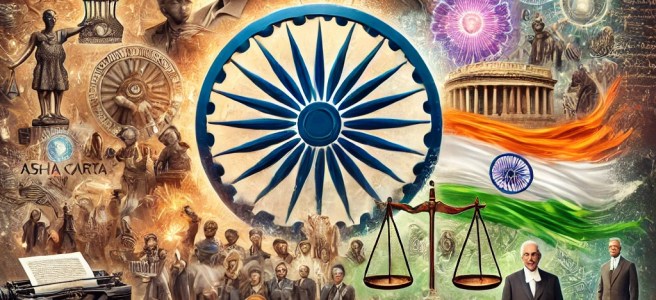
The Indian Constitution is more than a legal framework—it is a testament to the nation’s ability to weave together diverse influences into a coherent whole. It is, in essence, a symphony of ideas, where the wisdom of the ages merges seamlessly with the demands of modernity. As I reflect on this magnificent document, I am reminded of a sculptor chiseling away at a block of marble, revealing a form that is not only beautiful but enduring, adaptable, and deeply reflective of the people it serves.

At its core, the Constitution is a polyglot—a creation born out of a dialogue between India’s ancient civilizational ethos and the great constitutional experiments of the world. It reflects the evolution of human governance, from the flickering flames of Magna Carta to the revolutionary principles of liberty, equality, and fraternity espoused during the French Revolution. Yet, it is uniquely Indian, embodying the spirit of a civilization that has, for millennia, placed a high value on justice, equity, and the welfare of all living beings.

In borrowing from these various traditions, the Indian Constitution becomes more than just a document. It becomes a living organism, growing and evolving as our nation changes. In the words of Justice Felix Frankfurter, “The ultimate touchstone of constitutionality is the Constitution itself and not what we have said about it.” It is in this spirit that we must explore how this monumental text has guided us, not just in times of prosperity, but in moments of profound challenge and transformation.

Continue reading “The Indian Constitution: A Masterpiece of Borrowed Wisdom and Indigenous Innovation”

Buy-back policy, HIPA Training, Special Task Force, and other directions by the High Court to Combat Solid Waste Issue

Shimla, August 8, 2024 – The division bench of the High Court of Himachal Pradesh presided over by J. Tarlok Singh Chauhan and J. Sushil Kukreja, in its ongoing commitment to environmental preservation, has issued a series of significant directives aimed at enhancing solid waste management across the state. Building on its earlier orders on March 23May 9, 2024 and July 18, 2024., the court has now introduced new measures to ensure that these efforts reach the most critical areas and involve every level of society. The court’s new order, dated August 8, 2024, builds on these earlier measures with additional, targeted directives. Let’s dive right in:

Continue reading “Buy-back policy, HIPA Training, Special Task Force, and other directions by the High Court to Combat Solid Waste Issue”

High Court Issues Comprehensive Directives to Tackle Solid/Plastic Waste Issue in Himachal Pradesh

 Shimla, July 24, 2024 – In a landmark ruling on July 18, 2024, the High Court of Himachal Pradesh, under the astute guidance of Judges J. Tarlok Singh Chauhan and J. Sushil Kukreja, issued an exhaustive order that promises a greener future. This pivotal decision, following the court’s March 23 and May 9, 2024 Orders, addresses critical aspects of compliance and sets forth robust directives for solid waste management. Lets dive right in:

Continue reading “High Court Issues Comprehensive Directives to Tackle Solid/Plastic Waste Issue in Himachal Pradesh”