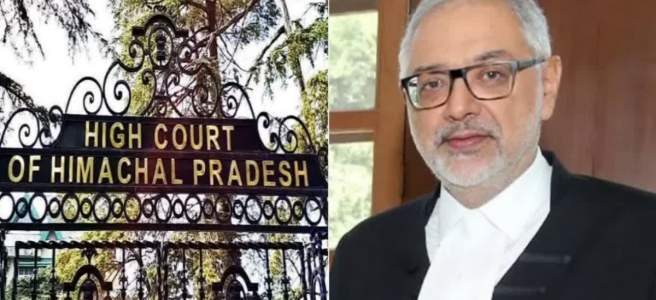
Shimla, March 18, 2026
The High Court of Himachal Pradesh has continued its close monitoring of solid waste management across the State in the long-pending Suleman vs Union of India & Ors. batch of matters, issuing further directions to ensure effective implementation of waste management systems, financial accountability, clearance of legacy waste dumps, and enforcement of the recently notified Deposit Refund Scheme (DRS), 2025.
The latest order dated 18 March 2026, passed by the Bench headed by the Hon’ble Chief Justice, forms part of a series of continuing directions issued since 2018 to ensure compliance with the Solid Waste Management Rules, 2016, Plastic Waste Management Rules and the principle of environmental accountability across Himachal Pradesh.
The Court reviewed affidavits filed by various departments including the Urban Development Department, Rural Development Department, Pollution Control Board and district authorities, and noted progress in certain areas while identifying continuing gaps in infrastructure, enforcement and funding.
Key Highlights of the Latest High Court Order (18.03.2026)
Focus on the financial sustainability of waste management system
The Court examined the financial position relating to solid waste management infrastructure and observed that substantial funds have been allocated under Finance Commission grants and tied grants for waste management.
However, the Court sought clarification regarding the actual release and utilization of approximately ₹111 crore, directing authorities to place on record details of:
- amount released
- manner of utilisation
- allocation towards infrastructure such as Material Recovery Facilities (MRFs)
- operational expenditure on collection, transportation and disposal
The Court also noted a deficit between user charges demanded and amounts actually collected by Urban Local Bodies, and directed authorities to rationalise collection mechanisms and recover dues from defaulters.
The emphasis on financial transparency indicates the Court’s attempt to ensure that lack of funds does not remain a recurring justification for non-compliance.
Legacy waste at Kenduwal (Baddi) continues to concern Court
One of the most significant issues addressed in the order relates to legacy waste accumulated at the Kenduwal waste processing site under the Baddi Barotiwala Nalagarh Development Authority (BBNDA).
The Court noted that large quantities of unprocessed waste remain accumulated at the site, and that the existing processing capacity is insufficient compared to the daily waste inflow.
Authorities have been directed to:
- prepare a clear time-bound action plan for clearance of legacy waste
- ensure segregation of fresh and legacy waste streams
- provide proper fencing and demarcation of waste areas
- ensure monitoring through CCTV surveillance
- address land constraints affecting processing capacity
- submit periodic progress reports
The Court has consistently monitored the Kenduwal site over several hearings, treating it as a critical test case for scientific waste management in the State.
Deposit Refund Scheme 2025 recognised as significant reform
The Court took note of the notification of the Himachal Pradesh Deposit Refund Scheme (DRS), 2025, which introduces a system for return and refund of deposits on beverage containers and packaging materials including:
- glass bottles
- plastic beverage containers
- aluminium cans
- tetra packs
- multilayer packaging
The scheme places responsibility on manufacturers, distributors and retailers to ensure collection of packaging waste through a traceable system based on unique identifiers and escrow mechanisms.
The Court described the scheme as a significant step and directed authorities to ensure effective implementation.
The scheme is expected to strengthen extended producer responsibility by shifting the burden of waste collection from local bodies to producers and supply chains.
Expansion of waste management infrastructure
The Court recorded progress relating to upgrading Material Recovery Facilities and establishment of cluster-based biogas plants at locations including:
- Solan
- Una
- Hamirpur
- Palampur
- Baddi
Technical support is being provided through collaboration with CSIR-IICT Hyderabad for development of biogas-based waste processing systems.
The Court emphasised the need to expedite tender processes and ensure operationalisation of facilities.
Digitisation of waste monitoring systems
The Urban Development Department informed the Court that digital Garbage IDs have been generated for a large number of households to improve monitoring of waste collection and identify non-payment of user charges.
The Court observed that digitisation can improve service delivery and strengthen accountability.
Action against polluters
The Court also directed the Pollution Control Board to take action against companies found dumping bottles and packaging material near river areas, reiterating application of the “polluter pays” principle.
Authorities have been directed to investigate the matter and impose penalties where violations are established.
Role of District Legal Services Authorities strengthened
The Court directed Secretaries of District Legal Services Authorities (DLSA) across the State to continue identifying garbage hotspots and bring them to the notice of Deputy Commissioners and Pollution Control Board authorities.
This direction effectively introduces an independent monitoring channel to supplement departmental compliance reports.
DLSA inspections are expected to strengthen ground-level verification of waste management conditions.
Rural waste management framework
The Court recorded that Model Bye-laws relating to rural solid waste management have been framed under the Panchayati Raj framework and that Panchayats have been empowered to levy user charges for waste management services.
Authorities have been directed to ensure implementation of the rural waste management framework across districts.
Background of the Suleman Case
The Suleman litigation began as a dispute relating to waste processing facilities in the Baddi area, but over time expanded into a comprehensive judicial examination of waste management systems across Himachal Pradesh.
The High Court has issued continuing directions covering:
- solid waste management infrastructure
- plastic waste regulation
- legacy waste clearance
- extended producer responsibility
- financial mechanisms for waste management
- institutional coordination between departments
- monitoring of waste hotspots
- enforcement of environmental norms
The case has effectively evolved into a statewide environmental compliance proceeding.
Earlier Directions of the High Court (Summary) read earlier reports (here, here, here and here)
Identification and clearance of waste hotspots
The Court had directed authorities to identify waste dumping hotspots across districts and ensure scientific disposal of accumulated waste.
Hundreds of hotspots were identified through district administrations and monitoring mechanisms.
District administrations were directed to ensure removal of accumulated waste and prevent reappearance of dumping sites.
Creation of institutional monitoring mechanism
A Multi Member Committee was constituted to monitor compliance with the Court’s directions.
The Committee includes representation from:
- Urban Development Department
- Pollution Control Board
- Rural Development Department
- Forest Department
- Tourism Department
- District Administrations
- NGOs
- District Legal Services Authorities
The Committee periodically reviews compliance and prepares status reports.
Directions regarding trekking routes and eco-sensitive areas
The Court recognised that trekking routes and eco-sensitive tourist areas generate significant plastic waste and directed authorities to ensure waste collection mechanisms along such routes.
Authorities were expected to coordinate with local bodies and stakeholders to prevent dumping of waste in forest areas and mountain trails.
Waste management at religious places
The Court also directed district administrations to ensure implementation of waste management systems at major religious and pilgrimage sites where large quantities of waste are generated.
Authorities were required to ensure:
- segregation of waste
- collection systems
- coordination with temple authorities
- prevention of littering near religious premises
Major religious destinations were identified as priority locations for implementation of structured waste management systems.
Land identification for waste processing facilities
Deputy Commissioners were directed to identify suitable land for waste processing facilities where deficiencies existed.
Authorities were directed to ensure timely processing of forest clearance proposals and land transfer cases.
Land availability has been one of the recurring issues affecting implementation of waste management infrastructure.
Enforcement measures and penalties
Authorities were directed to enforce penalties under relevant waste management laws including provisions relating to plastic waste and littering.
Challan mechanisms were required to be operationalised to ensure compliance by individuals and establishments.
Collaboration with cement industry for waste disposal
The Court also examined mechanisms for disposal of refuse-derived fuel (RDF) through cement plants as part of scientific waste disposal processes.
Authorities were directed to develop operational frameworks for transportation and utilisation of RDF waste.
Role of Panchayats in rural waste management
The Court directed development of bye-laws empowering Panchayats to implement waste management systems in rural areas.
This step was intended to extend waste management beyond urban municipal areas.
Compliance sought in continuing proceedings
The High Court has consistently sought:
- district-wise compliance reports
- status of waste processing infrastructure
- utilisation of funds allocated for waste management
- progress in clearing legacy waste dumps
- enforcement of penalties for violations
- institutional coordination between departments
- verification of compliance through inspections
The Court has emphasised that compliance must be practical and measurable rather than merely procedural.
Next hearing
The matter is now listed for further consideration on 14 May 2026, by which time the Court expects updated compliance reports from State authorities, Union agencies and local bodies.
The outcome of the proceedings is likely to influence future environmental governance and waste management practices in Himachal Pradesh.

 LawUmbrella