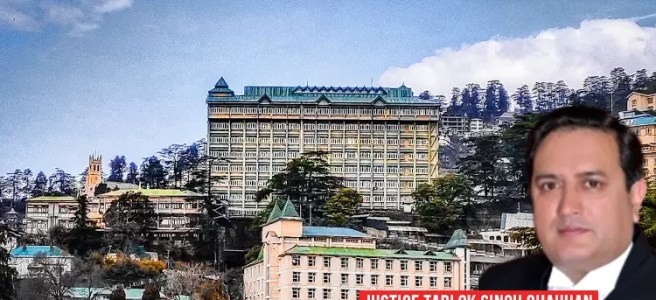
In Shimla, there are two things as certain as the hills themselves: the old town hooter that sounds at ten, and Justice Tarlok Chauhan taking his seat at exactly the same hour. Sharp ten. No dithering, no delay, time, like law, had to be honored. For the bar, this daily certainty meant one thing: if you had a matter before Justice Chauhan, you’d better have your file and your wits in order well before the fog lifted from the Mall Road. Once seated, His Lordship moved through the cause list with a rhythm that was nothing short of orchestral. The courtroom would come alive with movement, petitions called, orders passed, arguments sliced clean with surgical clarity. It wasn’t just speed; it was discipline refined into tempo. Lawyers who fancied a leisurely morning found themselves sprinting through their submissions, their watches forever set to “Justice Chauhan Standard Time.” He didn’t simply hear cases; he breezed through them, but never at the cost of fairness or depth. To witness him in court was to witness the law in motion, not sluggish, not ceremonial, but alive, exacting, and infused with purpose.
There are judges whose judgments change lives — and then there are judges whose presence, even outside the bounds of the courtroom, restores faith in the very idea of justice. Justice Chauhan has been both. For over a decade, his pen carved meaning into the Constitution’s most solemn promises, and his presence in Courtroom No. 1 of the Himachal Pradesh High Court often felt less like a display of legal theatre and more like a restoration of moral order. A courtroom where silence spoke, precision mattered, and where the law did not merely breathe, it resonated.
His judgments rarely announced themselves with pomp, but once passed, they echoed through the corridors of governance. In matters of environmental law, for instance, he became something of a cartographer of conscience. When the solid waste of hill towns began to choke not just rivers and ravines but the spirit of the State itself, it was Justice Chauhan who turned judicial prose into administrative action. Through orders that were as precise as they were poetic, he reminded municipalities that cleanliness wasn’t a cultural slogan, it was a constitutional imperative. And then there was the toilet case, yes, toilets. Few judges would treat the absence of urinals for women or a discriminatory charge on its usage by them as a matter of constitutional dignity, but Justice Chauhan did. Where others saw plumbing, he saw the politics of exclusion. His orders ensured not only infrastructure but inclusion, a reaffirmation that Article 21 extends to public spaces, and to the daily needs of women who should not have to beg for sanitation. (A detailed article on the toilet case is here)
He understood that law, left to itself, could become technocratic. But law, when lit by principle, becomes transformative. And so whether it was a contractor awarded 66 road projects and completing none, or a plastic buy-back scheme lying dormant in the files of bureaucracy, he knew when to wield the carrot and when to drop the gavel.
In every case, he asked not just: what is the law? But: what is right, and what will endure? His courtroom may have run at a furious pace, but his judgments landed with the quiet, confident weight of a hand placed on the Constitution.
Significant Judgments by Honourable Justice Chauhan

Himachal Pradesh High Court in Shimla, where Justice Tarlok Singh Chauhan has delivered numerous impactful judgments across diverse areas of law.
Justice Tarlok Singh Chauhan (appointed to the Himachal Pradesh High Court in 2014) has authored or co-authored many notable judgments. His rulings span constitutional rights, civil and criminal law, environmental protection, service law, administrative accountability, gender justice, and heritage conservation, often drawing public attention and citations in media and appellate courts. Below is a very short list of some of his important and publicly reported judgments, each with a summary of facts, legal issues, key observations, and the significance of the decision.
Constitutional Rights and Privacy
Upholding Privacy – Right to Be Forgotten in POCSO Acquittal (2024)
Case: State of H.P. v. X (Name Withheld) – POCSO Act Acquittal & Right to Be Forgotten (Decision August 2024).
An accused in a POCSO (child sexual offense) case was acquitted by the trial court. On appeal, the High Court not only upheld the acquittal but also addressed the privacy rights of the acquitted person. The question fell for consideration that was whether an individual acquitted of heinous charges has the right to anonymity or erasure of personal data (a form of the “Right to Be Forgotten”) in public records, given the stigma attached to such accusations. A Division Bench of Justice Chauhan and Justice Sushil Kukreja emphasized that the right to privacy – including the right to be forgotten and the right to be left alone – is an inherent aspect of personal liberty (livelaw.in). The Court directed that the names of both the acquitted accused and the prosecutrix/victim be masked in digital records to protect their identity (livelaw.in). This recognition of the Right to Be Forgotten aligns with the constitutional right to privacy under Article 21 (as expounded by the Supreme Court in Puttaswamy).
This judgment was significant as one of the early High Court affirmations of the Right to Be Forgotten in India. It underscored the importance of reputational privacy, especially when someone is found not guilty, and has been noted in discussions on privacy law. By ensuring that online court records do not perpetually expose the identities involved, the ruling advanced privacy protections for individuals cleared of charges, balancing open justice with personal dignity (livelaw.in.)
Environmental Protection

Curbing Illegal Constructions – Shimla “Concrete Jungle” Case (2015)
Case: Court on Its Own Motion v. State of H.P. – Suo Motu PIL on Illegal Constructions in Shimla (Judgment May 2015).
In the wake of the April 2015 Nepal earthquake, the High Court took suo motu cognizance of haphazard and unsafe construction in Shimla, the hill capital. Studies showed most of Himachal Pradesh lies in high-risk seismic zones IV-V, yet unauthorized multi-story buildings and encroachments were rampant. The Court was concerned that Shimla’s unchecked construction and encroachments (“buildings precariously hanging” on steep hillsides) put lives at risk. The matter centered on enforcing town-planning laws, building codes, and constitutional duties of the state to ensure safety and environmental stability. The question was how to push authorities to act against illegal structures that violated building bye-laws and endangered public safety.
In a strongly worded 29-page judgment, the Division Bench of Justice Rajiv Sharma and Justice Chauhan rebuked the authorities for allowing Shimla to turn into a “slum” and a “concrete jungle”. The Court warned that a moderate earthquake could have catastrophic consequences in the congested hill city, given structures clinging to unstable slopes without proper seismic considerations. It categorically asserted that illegal and unplanned constructions would not be regularized, criticizing the administration for “slumber” and failure to enforce the law. The judges invoked the Nepal quake as a wake-up call, directing the state to amend building by-laws to account for seismic risks and to take immediate action against unauthorized buildings.
This landmark ruling had wide impact in Himachal Pradesh and beyond. It prompted stricter enforcement of building regulations in eco-sensitive hill areas. The judgment has been cited as an example of judicial intervention for urban planning and disaster risk mitigation. It put local authorities on notice that public safety cannot be compromised for unplanned growth, thereby protecting both the environment and heritage of Shimla (once known for its scenic seven hills).
Tackling Solid Waste – Suleman v. Union of India (Solid Waste Management PIL)
Case: Suleman v. Union of India, CWP No. 2369 of 2018 – Solid Waste Management in Himachal (Ongoing orders, key directions in Nov 2023). (also dealt in detail in other articles here, here , here and here)
This sweeping PIL addressed the longstanding garbage and solid waste management crisis in Himachal Pradesh. Despite environmental laws like the Solid Waste Management Rules, implementation was lagging. By late 2023, various orders had been passed to galvanize compliance. High Court summoned the Chief Secretary of Himachal Pradesh (Mr. Prabodh Saxena) to personally appear and explain the lack of progress (lawumbrella.org). The Chief Secretary, along with other top officials, assured the Court of a concrete roadmap for enforcing waste management laws.
The PIL dealt with the enforcement of environmental and public health laws – specifically, whether the state and urban local bodies were fulfilling their statutory duties under waste management regulations. The issue extended to administrative coordination: multiple stakeholders (municipal bodies, pollution board, state authorities, even central agencies) needed to act in concert.
Presided by Justice Chauhan, the Court issued stringent, multi-pronged directives to tackle the garbage menace (lawumbrella.orglawumbrella.org). All Urban Local Bodies (ULBs) were ordered to comply with the State Pollution Control Board’s scientific waste-management suggestions, and to file affidavits if they faced any compliance hurdles (lawumbrella.org). The Chief Secretary, Secretary (Rural Development & Panchayati Raj), and others had to submit affidavits detailing time-bound plans for effective implementation of environmental laws (lawumbrella.org). The Court also directed the Central Pollution Control Board (through the Deputy SG of India) to report on how producers and brand owners were fulfilling their obligations under the Plastic Waste Management Rules, 2016 (lawumbrella.org). Further, municipal authorities were instructed to ensure segregated collection and transport of solid and wet waste, and given two weeks to augment infrastructure accordingly (lawumbrella.org). The Court put the onus on municipal commissioners, executive officers, etc., requiring them to file personal affidavits on compliance by the next hearing (lawumbrella.org). Importantly, the Court publicized a toll-free helpline for citizens to report garbage dumps in hillsides, streams, and roads, directing the Municipal Corporation to widely advertise this number (lawumbrella.org).
These directions significantly accelerated the state’s response to waste management. The summons of the Chief Secretary was an extraordinary step reflecting judicial impatience with bureaucratic delays. The case became a catalyst for coordinated action: soon after, the state announced new waste processing facilities and stricter oversight of municipal bodies. The judgment underscores Justice Chauhan’s proactive approach to environmental governance, ensuring that existing laws (often ignored) are actually implemented. By involving the highest officials and mandating accountability through affidavits, the Court set a precedent for treating environmental protection as a governance priority. Media and environmental law forums have cited this case as a model of judicially-driven administrative reform in waste management (lawumbrella.orglawumbrella.org.)
This Public Interest Litigation highlighted the degradation of the environment due to plastic waste, especially in Himachal’s hills and tourist spots. Litter in hillside streams, forests, and along trekking routes was rampant, despite a state ban on certain plastics. A Division Bench of Justice Chauhan and Justice Sushil Kukreja took up the matter to protect the ecology of the hills. In July 2024, the Court passed a detailed order aiming to create a clean, pollution-free environment by mobilizing various agencies.
The issue was the State’s failure to effectively implement waste management and anti-plastic regulations. The PIL examined government accountability in maintaining a clean environment (a duty under Article 48A of the Constitution and various environmental laws). The legal question was how far the court could direct executive action to enforce environmental safeguards and whether innovative measures (like task forces or buy-back schemes) could be judicially mandated.
The High Court directed the government to constitute a Special Task Force comprising municipal bodies, nagar panchayats, the tourism department, forest officials, legal services authorities, NGOs and other stakeholders, dedicated to cleaning up hillside streams and garbage “hotspots”. It specifically ordered the State to fully activate its Plastic Buyback Policy – ensuring that collection centers operate seven days a week so that citizens (especially rag-pickers) have an incentive to gather and turn in plastic waste for payment. This was intended to remove litter from streets, jungles and streams while providing livelihood benefits The Bench also directed the Urban Local Bodies and Panchayati Raj departments to conduct training programs on waste segregation for local officials. Additional suggestions included setting up eco-friendly facilities (tourist information centers, toilets) at trekking routes and enforcing Standard Operating Procedures for tour operators to manage waste responsibly. The Court even mooted establishing a dedicated Municipal Waste Management Corporation (on the lines of Goa’s model) to institutionalize these efforts.
The order was lauded in the press as a timely intervention to preserve Himachal’s natural beauty. It led to intensified clean-up drives and better coordination between government departments and civil society. The mandated plastic buy-back scheme once implemented helped reduce litter by attaching monetary value to waste. This case exemplifies Justice Chauhan’s commitment to environmental protection through creative judicial measures. By blending judicial directives with policy suggestions (like task forces and buyback incentives), the judgment had a practical impact on ground-level environmental management. It reinforced that protecting the environment is a collective responsibility and that the court will step in to ensure government compliance with that duty.
Service and Employment Law
Timely Pension is a Right – Suneet Singh Jaryal v. State of H.P. (2024)
Case: Suneet Singh Jaryal v. State of H.P. & Anr. – Pension Delays Case (Decision March 18, 2024).
Suneet Singh Jaryal, a retired government Superintendent Grade-II, fought for his long-pending pension arrears. Upon retirement, his pension and dues were recomputed under revised pay rules (effective 2016), totaling about ₹6 lakh in arrears. However, the state failed to pay a large part of this sum for an extended period, citing financial constraints and procedural delays(lawumbrella.orglawumbrella.org). After repeated requests went unheeded, Jaryal petitioned the High Court seeking release of his full pensionary benefits with interest.
The case raised the issue of the State’s obligation to honor pension commitments and whether fiscal difficulties can justify indefinite delay. At stake were the constitutional rights of retired employees – pension is considered property (under Article 300A) and part of the right to live with dignity post-retirement (Article 21). The Court examined if withholding pension violated these rights and past precedents that disallow using financial crunch as an excuse for defaulting on employee benefits(lawumbrella.org).
The Bench (Justice Chauhan and Justice Satyen Vaidya) delivered a clear message: once the State promises and calculates pension benefits, it cannot shirk their timely disbursal. The Court stressed that pension is not a bounty or gratuitous payment but a vested right of the retiree. It cited Supreme Court precedents (e.g., Siraj Ahmad v. State of U.P.) affirming that even in tough economic times, “financial constraints are not a valid defense for denying or delaying vested rights”(lawumbrella.org). Any substantial delay in paying retirement dues was deemed unconstitutional. Consequently, the High Court issued a decisive mandamus compelling the State to release Jaryal’s pending dues along with appropriate interest for the delay. The judgment also observed that bureaucratic or procedural excuses cannot justify hardship to an elderly pensioner who relies on these funds for livelihood(lawumbrella.orglawumbrella.org).
This ruling had a wide ripple effect for government employees in Himachal Pradesh. Following the judgment, the state government expedited clearance of many pending pension cases to avoid contempt. The case has been referenced in legal forums and by employee unions to reiterate that pension is a fundamental obligation of the employer government. By rooting the right to pension in constitutional principles of right to life and property, Justice Chauhan’s judgment strengthened welfare state jurisprudence. It serves as a warning that courts will enforce accountability when governments default on promises made to public servants (lawumbrella.orglawtrend.in.)
Administrative Accountability and Governance
Enforcing Police Cadre Rules – PIL for Police Reforms (2025)
Case: Court on Its Own Motion (PIL) vs. State of H.P. & Ors. – Appointment of Non-IPS Officers to IPS Posts (Interim Order April 24, 2025).
A 2024 Public Interest Litigation for police reforms led to a close examination of how Himachal Pradesh was staffing senior police posts. The issue arose when the state government filled certain Superintendent of Police (SP) positions, meant for IPS officers, with officers from the state cadre (Himachal Pradesh Police Service, HPPS) on an ad-hoc basis. For instance, the posts of SP Sirmaur and SP Baddi – listed as IPS cadre posts – were occupied by HPPS officers instead of regular IPS officers(indianexpress.com). The petition (and subsequent suo motu attention) highlighted that such appointments might violate the Indian Police Service Cadre Rules.
Whether the state government’s practice of appointing state-cadre police officers to cadre posts reserved for IPS violated the IPS (Cadre) Rules and undermined the constitutional scheme of an All-India Service. The case also touched on broader police reform issues, including personnel management and welfare measures, raising questions about compliance with court directives in improving policing standards.
A Division Bench headed by Acting Chief Justice Tarlok Singh Chauhan (with Justice Sushil Kukreja) found the state’s actions contrary to law. Citing Rule 9 of the IPS Cadre Rules (which mandates that cadre posts must be filled by cadre IPS officers), the Court noted that “presently, some HPS officers are posted on cadre (IPS) posts… The IPS (Cadre) Rules… make it clear that IPS cadre posts must be occupied by IPS officers only. The state government is, therefore, in violation of these rules.”. The bench expressed serious concern over this bypassing of the cadre system, effectively calling it illegal. In the same hearing, Justice Chauhan’s bench also took a comprehensive view of police reforms: it referenced a landmark 2018 Uttarakhand High Court judgment (Arun Kumar Bhadoria v. State of Uttarakhand) which had issued 14 directives for police welfare (e.g. 8-hour duty shifts, extra pay for extra hours, a police welfare corpus, etc.). The Himachal Pradesh High Court directed that “as far as practicable” those Uttarakhand directives be implemented in Himachal Pradesh as well – signalling an overhaul in police working conditions. The Court instructed the State to submit a compliance report on these reforms by the next hearing, underlining the urgency of improving police administration.
This intervention was widely reported in national media. It immediately pressured the government to reconsider off-cadre appointments – shortly after, some HPPS officers were reverted and IPS officers posted in their stead to cure the illegality. The acknowledgment of the Uttarakhand guidelines also set in motion discussions within the state police department on modernizing their work norms (e.g., introducing shift duties and better facilities for officers). In sum, the judgment advanced administrative accountability by upholding rule of law in cadre management, and it championed systemic reforms to address what the Court flagged as “moral and professional decline” in the force. The significance lies in the Court’s dual approach: strictly enforcing legal rules on appointments, while also proactively suggesting measures for institutional improvement.
Cracking Down on Contractor Fraud – Sanjeev Kumar Bhandari v. State of H.P. (2023)
Case: S.K. Bhandari v. State of Himachal Pradesh – 66 Incomplete Road Contracts Case (Order June 23, 2023).
This case exposed a major lapse in governance within the Public Works Department (PWD). A contractor, Sanjeev Kumar Bhandari, had astonishingly been awarded 66 different road construction contracts in Mandi district, many on paper at the same time. He filed a petition complaining that one of his contract allotments (for a road project in Dharampur division) was cancelled and re-tendered by the PWD, which he claimed was unjust. However, during the hearing, it emerged that Bhandari had failed to start or complete most of the 66 works he was given – yet no action had been taken against him by officials, and he kept receiving new contracts. This pointed to possible collusion or negligence by PWD officers.
The core issue was administrative accountability and probity in public contracting. The case questioned how one contractor could corner so many contracts without performance, and whether PWD officials breached their duty by not blacklisting or penalizing him. Legally, the Court examined the scope of its power to intervene in government contracts to prevent misuse of public funds and ensure works are completed as per tender conditions.
The Division Bench of Justice Chauhan and Justice Satyen Vaidya took a hard line. It expressed shock at the “staggering” number of projects allotted to one individual and the blatant non-completion. The Court ordered Bhandari to submit an affidavit with a clear timeline for finishing every pending project, effectively holding his feet to the fire. Crucially, the Court restrained all government departments, boards, and corporations from releasing any further payments to this contractor without express permission of the Court. This freeze was to ensure no public money would be paid for unfinished work. Moreover, the Principal Secretary, PWD was directed to take action against the errant PWD officials who had allowed this situation to persist. The Court noted that despite Bhandari’s repeated failures, officials kept awarding him new contracts – a serious lapse suggesting negligence or worse. The High Court demanded a fresh status report on all these works by the next date, indicating that it would monitor the cleanup of this mess closely.
The immediate effect was that the PWD initiated departmental inquiries against certain engineers and officers in Mandi for their role in the fiasco. Bhandari, on his part, faced the risk of blacklisting and hurried to complete some of the works to avoid further wrath. This judgment sent a strong message against contractor-official nexus and the misuse of public funds. By consolidating all 66 contracts in judicial scrutiny, Justice Chauhan ensured a systemic solution rather than a narrow one. The case has been cited in debates on public procurement as an example of the High Court enforcing accountability – essentially compelling the government to “audit” and fix its processes. It underscored that courts can intervene in administrative matters where inaction results in inefficiency or corruption, thereby protecting taxpayer money and the public interest.
Discouraging Frivolous PILs – Ajai Srivastava (Umang Foundation) Case (2024)
Case: Ajai Srivastava (Umang Foundation) vs. State of H.P. – Costs Imposed for Misusing PIL (Order December 23, 2024).
Social activist Prof. Ajai Srivastava, who heads an NGO “Umang Foundation”, wrote to the Chief Justice alleging “gross human rights violations” at an observation home for juveniles (children in conflict with law) in Shimla(hindustantimes.com). He claimed an inmate had been assaulted and tortured by staff. The High Court treated the letter as a PIL. Upon inquiry, however, the allegations turned out baseless – the juvenile home staff were cleared of wrongdoing, and it appeared the petition was filed on half-baked information or perhaps to gain publicity. Meanwhile, the mere filing of the PIL had led to the suspension of the home’s superintendent and tarnished the reputation of the institution’s staff before the truth was established.
The issue was abuse of Public Interest Litigation. The court examined whether this PIL was genuinely for public good or a “publicity interest litigation,” and what consequences should follow if a petitioner misleads the court. The broader question was maintaining the sanctity of PIL mechanism – filtering out personal/vindictive agendas masquerading as public interest.
The Division Bench of Acting CJ Tarlok Singh Chauhan and Justice Satyen Vaidya did not mince words in reprimanding the petitioner. They noted that PIL is a powerful tool that must be used with utmost care and “circumspection”, lest it be misused for personal or malicious ends. In a telling line, the Court observed: “behind the beautiful veil of public interest an ugly private malice, vested interest or publicity seeking may be lurking”. It labeled this case as “publicity interest litigation” rather than bona fide public interest. Since the false allegations had caused harm – an officer’s service was terminated and his reputation maligned – the Court found it fit to impose exemplary costs. It fined Prof. Srivastava ₹50,000 and directed that this amount be paid as compensation to the affected staff of the juvenile home. The bench further admonished the petitioner to “be careful in future”, noting that having past good work (as an activist) does not give anyone a license to do something bad (like filing frivolous claims). Importantly, Justice Chauhan’s order also stated a broader principle: even a good cause can be lost if the petition is based on incomplete or unverified facts.
This judgment was widely reported as a cautionary tale to well-known activists and lawyers alike. It reinforced that the High Court will not tolerate misuse of its PIL docket – a reminder that false or careless claims under the banner of public interest will attract punishment. The imposition of costs in this case has been cited in later cases to deter frivolous PILs. It also helped restore the reputation of the juvenile home staff by officially recording that the allegations were unfounded. In sum, Justice Chauhan’s handling of the case preserved the integrity of PIL jurisprudence in Himachal Pradesh, ensuring that genuine issues are not drowned out by motivated or baseless petitions.
Gender Justice and Social Equity
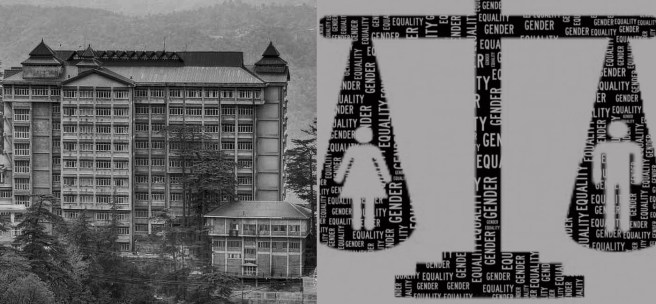
Equal Access to Public Toilets – Suo Motu Urinals Case (2024)
Case: Court on Its Own Motion v. State of H.P. & Ors. – Shimla Public Urinals for Women (Contempt Warning Order June 26, 2024).
In Shimla, it came to light that women were being charged a ₹5 fee to use public urinals, even though such facilities were meant to be free for all. Back in 2017, in a bid to improve public sanitation, the High Court had initiated a suo motu PIL concerning the upkeep of public toilets along the Shimla–Parwanoo highway and within Shimla city. Sulabh International, an NGO maintaining many public conveniences, had given an undertaking to the Court that urinal use would be free for both men and women. Despite this, by 2024 reports showed that certain public toilets were still extracting a fee from female users – effectively a gender-based denial of a basic amenity.
The issue was enforcement of the Court’s earlier orders and the fundamental right to equality and dignity. Charging women (and not men) for toilet use raised questions under Articles 14 and 15 (prohibition of gender discrimination) and Article 21 (right to dignity and sanitation). Additionally, it involved contempt of court since an explicit undertaking to provide free access was being flouted.
The Division Bench of Justice Chauhan and Justice Sushil Kukreja was emphatic that such practices must stop. The High Court “cautioned the Shimla Municipal Corporation and Sulabh International of contempt action” if they did not immediately ensure compliance with the earlier directive of free usage. The judges expressed dismay that despite clear orders, women were still being “fleeced” for ₹5 at public urinals. Terming it “indeed a serious matter,” the Bench ordered the authorities to strictly comply with the Court’s instructions or face contempt proceedings. They directed the Municipal Corporation and Sulabh to prominently publicize, through print and electronic media, that all urinals are free for ladies and gents. The Court’s quoted warning was stern: “ensure strict compliance of orders… or else this Court shall be constrained to initiate contempt proceedings” against the responsible officials. By impleading the Union Ministry of Environment as a party, the Court also tied the issue to broader public amenities in highway development plans, underlining that women’s sanitation needs are part of environmental and infrastructural planning.
This order had immediate practical effect – the very next day, “Free Toilet” signs went up on Shimla’s public conveniences, and the city-wide practice of charging women was halted. The case stands out as an example of the High Court advancing gender equality in daily life. Justice Chauhan’s intervention affirmed that something as basic as bathroom access falls within the realm of gender justice and administrative duty. The contempt threat gave teeth to women’s rights in this context, forcing municipal bodies to treat women users on par with men. The media hailed the move, noting that the Court had to step in to protect women’s dignity in public spaces. This judgment is often cited to show that no issue is too small for the Court when it involves fundamental rights – here, the simple act of using a toilet without discrimination was upheld as a matter of constitutional fairness.
Heritage and Cultural Conservation

Protecting a Heritage Cemetery – Kanlog Cemetery Case (2023)
Case: Residents of Kanlog v. State of H.P. – Heritage Graveyard Preservation (Interim Order May 19, 2023).
Local residents of Kanlog in Shimla filed a petition regarding the Kanlog Cemetery, a British-era heritage cemetery dating back to the 19th century. They alleged that construction activities and encroachments were disturbing this historical site, violating Shimla’s Interim Development Plan (IDP) which contains protections for heritage structures. Essentially, the concern was that a piece of Shimla’s cultural history was being desecrated or lost due to illegal developments. the violators had made 14 illegal structures at the cemetery during corona lockdown and desecrated more than 50 graves that were 200 years old and a significant piece of history of the town’s heritage.
The case dealt with the enforcement of heritage conservation laws – specifically, whether authorities were upholding provisions of the Ancient Monuments and Archaeological Sites and Remains Act, 1958, and local town planning laws meant to safeguard heritage sites. The legal question was how to prevent irreparable damage to a notified heritage site and ensure any development complied with preservation norms.
A Division Bench of Justice Chauhan and Justice Virender Singh took swift action to investigate the claims. The High Court directed the state government’s Heritage Conservation Committee to conduct an on-site inspection of the Kanlog cemetery and file a status report on any violations of the Interim Development Plan. The Committee was specifically instructed to identify any breaches of the 1958 Ancient Monuments Act or other applicable protections. By involving the Heritage Committee, the Court brought in expert eyes to assess the ground reality. The orders effectively put a freeze on any further construction and eventually removal of all unauthorized structures at the site.
The court’s intervention prevented further damage to the Kanlog cemetery and protected this heritage site for future genrations. The case raised public awareness about Shimla’s lesser-known heritage spots and the need to preserve them amid illegal encroachment and land grabbing. Following the High Court’s orders, now the site is effectively being protected by the municipal corporation which has deployed a chowkidar at the site and all encrochers have been removed. This matter contributed to the jurisprudence that green areas and heritage must be protected from encroachments and land grabbing. It showcased Justice Chauhan’s alertness to cultural heritage issues, treating an old cemetery with the same respect as a monument, and ensuring the government remains accountable to its own heritage laws. The case serves as a precedent that local heritage, merits judicial protection when threatened.
Video Recording of Evidence
Justice Tarlok Chauhan, had initiated an important shift in judicial processes by permitting evidence to be recorded via video conferencing, particularly for expert witnesses like doctors. This approach helps alleviate the burden on healthcare professionals who might otherwise neglect patient care due to court appearances. Studies indicate that this method reduces transportation costs and time related to court duties significantly. Similar precedents exist in Indian courts, showcasing a gradual acceptance of technology in legal settings. Overall, the order marks a hopeful step toward modernizing court procedures amid evolving societal needs.
the details of the order can be gone through in the following article .
A personal Note
Beyond courtroom, there was a moment perhaps the most fragile of my life — when illness had drawn its curtain down on clarity, and doubt had crept into the wings. Laid low by a serious health condition, at this time Justice Chauhan made sure i, as a member of the bar and a regular at his court was provided medical care. At that time I found myself not only fighting a bodily battle, but also fending off a quieter, more insidious adversary: superstition. The whispers had begun, as they always do in moments of vulnerability — that my illness was some cosmic consequence of a petition I had once pursued, a litigation that led to the demolition of an unauthorized religious structure, one whispered to be a hub of dark practices and black magic. I, of all people, who had always believed in the Constitution more than karma, suddenly found myself wondering: could this be retribution?
It was then amidst intravenous drips and existential nonsense that Justice Tarlok Singh Chauhan cleared fog of uncertainty with all the quiet force of reason. In a voice at once steel and silk, he looked at me and said:
“When you choose to work in public interest and uphold the rule of law, be prepared for bricks, stones — and the occasional accusation of having angered invisible forces. That does not make them real. And don’t you ever confuse causation with coincidence. Never mistake superstition for consequence.”
He went on with the precision of a surgeon and the wit of a philosopher to remind me that, as a judge, he had passed countless orders, handing out severe punishment, orders against encroachment, against illegal structures, etc. “And look at me,” he smiled dryly, “I’m perfectly fine. Mostly.”
That moment cleared the fog like a verdict. His was not just an act of kindness; it was an intervention of clarity. He rescued me not only from delay in treatment, but from drowning in my own self-doubt. And I will forever remember that day as the one where law, reason, and compassion dressed in court shoes came to visit me at my lowest.
A Farewell That Feels Like a Loss — and a Legacy That Endures
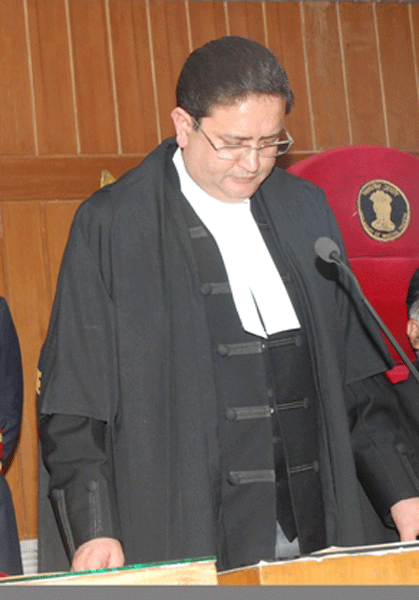
With his elevation as the Chief Justice of the Jharkhand High Court, Justice Tarlok Singh Chauhan ascends to a new constitutional calling, one that befits the strength, clarity, and integrity he has displayed from the very first day he took his seat in Shimla. It is a moment of quiet pride for the Himachal judiciary, and yet, for those of us who have known his court, his words, and his way, it feels like the turning of a page we weren’t quite ready to let go of.
For the Himachal Pradesh High Court, this is not merely a transfer — it is the departure of a conscience. Of a judge who brought not just learning to the bench, but courage. Who believed that every PIL, no matter how small, was a voice waiting to be heard. Who saw heritage in cemeteries, dignity in toilets, justice in municipal orders, and poetry in the rule of law.
He is leaving behind more than judgments. He is leaving behind a standard. A courtroom culture where punctuality was sacred, clarity was expected, and the Constitution was never a distant text, but a living promise. For every young lawyer who scrambled to be ready at 10 a.m. sharp — and for every citizen whose voice found echo through his orders, his legacy will not be in archives, but in muscle memory.
Himachal loses a remarkable judge. Jharkhand gains a resolute Chief Justice. And the rest of us? We gain the privilege of having seen, up close, what judicial grace looks like when it is matched by moral steel.
As Justice Chauhan rises to his new office, one can only say: he does not take leave, he leaves a mark.

 LawUmbrella